Codetown
Codetown ::: a software developer's community
Monday, July 20, 2015
-
OSCON
July 20, 2015 to July 24, 2015 – Portland OSCON celebrates, defines, and demonstrates the power of open source in the world today. From small businesses to the enterprise, open source is the first choice of IT everywhere. OSCON, the open… Organized by O'Reilly Press | Type: conference
-
Cultivate (a leadership conference)
July 20, 2015 to July 21, 2015 – Oregon Convention Center To be a leader today, you need to master the new essentials—data-informed decision-making, design-first thinking, and rapid, iterative development—and to create a productive work environment for all… Organized by O'Reilly Media | Type: conference
Happy 10th year, JCertif!
Notes
Welcome to Codetown!
 Codetown is a social network. It's got blogs, forums, groups, personal pages and more! You might think of Codetown as a funky camper van with lots of compartments for your stuff and a great multimedia system, too! Best of all, Codetown has room for all of your friends.
Created by Michael Levin Dec 18, 2008 at 6:56pm. Last updated by Michael Levin May 4, 2018.
Looking for Jobs or Staff?
Check out the Codetown Jobs group.
InfoQ Reading List
Google Introduces Middleware Architecture for Genkit Applications
Google has introduced Middleware for Genkit, its open-source framework for building AI-powered and agentic applications. The update adds a programmable interception layer around model calls, tool execution, and generation loops, giving developers more control over reliability, safety, and orchestration inside production AI systems.
By Robert KrzaczyńskiAWS MCP Server Reaches GA with Full API Coverage and IAM-Based Governance

AWS has recently made its managed Model Context Protocol (MCP) server generally available, giving AI coding agents controlled access to AWS APIs, documentation, and operational workflows through a standard interface. It provides a safer and more auditable way to connect AI agents to AWS services without handing over broad credentials.
By Renato LosioGoogle Cloud Introduces Cross-Engine Iceberg Support in BigQuery

At the Apache Iceberg Summit last month, Google announced new interoperability features for Apache Iceberg in BigQuery. The preview of the serverless Iceberg REST catalog lets teams create, update, and query the same Apache Iceberg tables in BigQuery and in engines like Spark, Flink, and Trino without duplicating data.
By Renato LosioUber Improves Restaurant Recommendations Using Real-Time Signals and Listwise Ranking
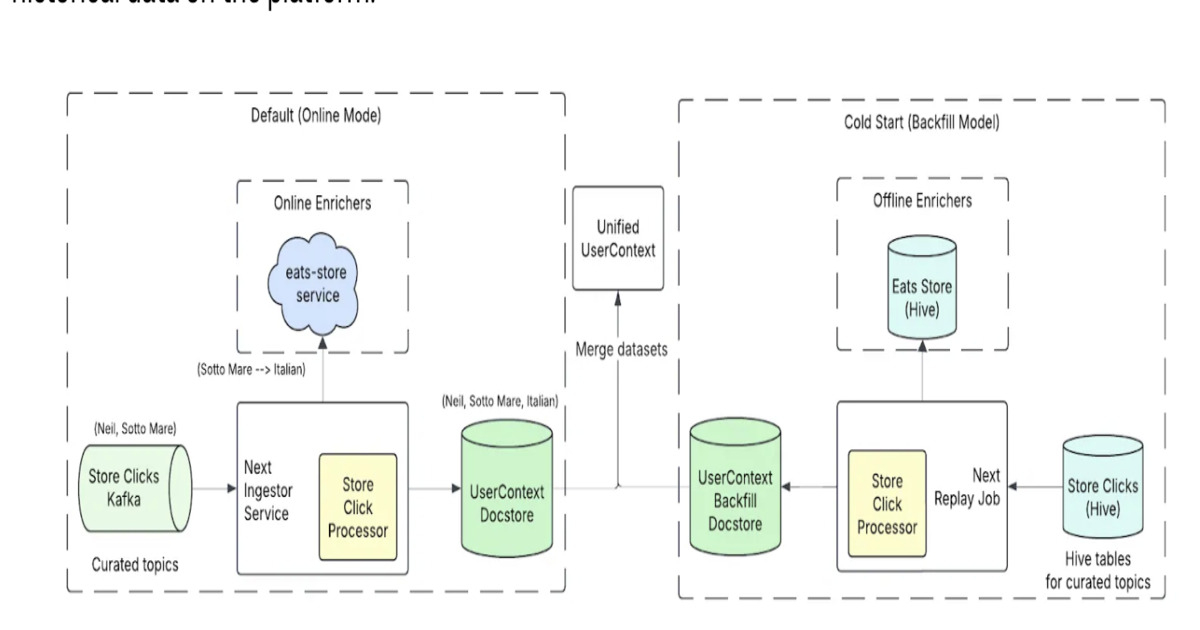
Uber updates its Uber Eats Home Feed recommendation system using near real-time user sequence features and a Generative Recommender model. The system evolves from hand-crafted features to transformer-based sequence modeling, reduces feature freshness from 24 hours to seconds, and shifts from pointwise scoring to listwise GenRec for improved contextual ranking and real-time personalization.
By Leela KumiliInfoQ Launches Online AI Engineering Cohort and Certification for Senior Software Practitioners
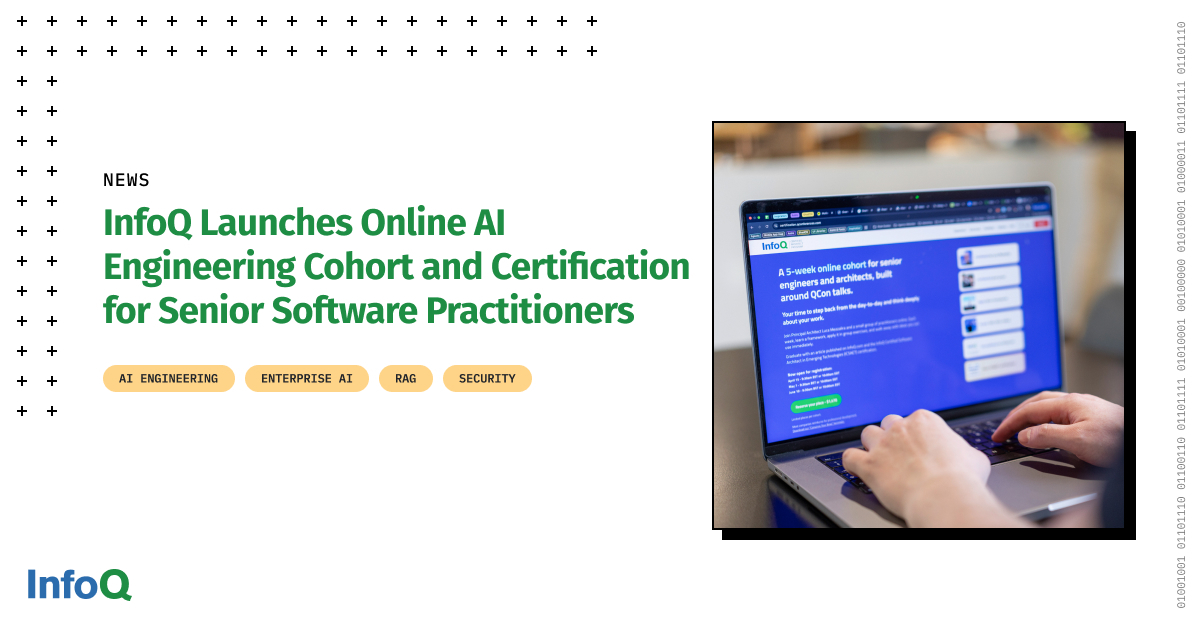
InfoQ has launched a five-week online AI Engineering certification for senior practitioners working on production AI systems, covering RAG, agents, AI platforms, evals, reliability, and operational trade-offs.
By Artenisa Chatziou
© 2026 Created by Michael Levin.
Powered by

