Codetown
Codetown ::: a software developer's community
OrlandoJUG - Google Web Toolkit!
Event Details
Time: September 24, 2015 from 6pm to 8pm
Location: Canvs
City/Town: Orlando
Website or Map: http://www.canvs.org
Phone: 321-252-9322 @mikelevin @codetown
Event Type: meeting
Organized By: Michael Levin
Latest Activity: Sep 18, 2015
Event Description
This month we'll have a presentation on the Google Web Toolkit! Google Web Toolkit (GWT), used by Google internally on some of their biggest applications, is growing and quite good. Learn about the technology, and plans for GWT to become a singular development platform on web and beyond.
Speaker:
Co-founder of www.diy.fund, an online investment platform
Recently moved to Orlando, FL from NY, spent his career on wall street developing and managing technology for multi-billion dollar hedge funds. Has been using Java most of his career, and specifically GWT which he loves evangelizing.
This meeting is sponsored by Cambridge ::: Working Software Developers ::: www.cambridgeweb.ie
Comment Wall
Comment
Happy 10th year, JCertif!
Notes
Welcome to Codetown!
 Codetown is a social network. It's got blogs, forums, groups, personal pages and more! You might think of Codetown as a funky camper van with lots of compartments for your stuff and a great multimedia system, too! Best of all, Codetown has room for all of your friends.
Created by Michael Levin Dec 18, 2008 at 6:56pm. Last updated by Michael Levin May 4, 2018.
Looking for Jobs or Staff?
Check out the Codetown Jobs group.
InfoQ Reading List
ExtendDB: Open Source Amazon DynamoDB Compatible Adapter with Pluggable Storage Backends

AWS recently announced ExtendDB, a DynamoDB-compatible adapter that lets developers use the DynamoDB API with different storage backends, starting with PostgreSQL. The project supports existing SDKs and tools without modification, giving teams greater flexibility to run DynamoDB-style workloads outside of native DynamoDB while maintaining compatibility with current applications and workflows.
By Renato LosioCloudflare Identifies Query Planning Bottleneck in ClickHouse

Cloudflare recently described how a slowdown in its billing pipeline was traced to contention inside the query planning stage of ClickHouse. The team profiled the bottleneck and patched ClickHouse to replace an exclusive lock with a shared lock, drop the per-query copy of the parts list, and improve part filtering.
By Renato LosioHow OpenAI Built a Secure Windows Sandbox for Codex Agents
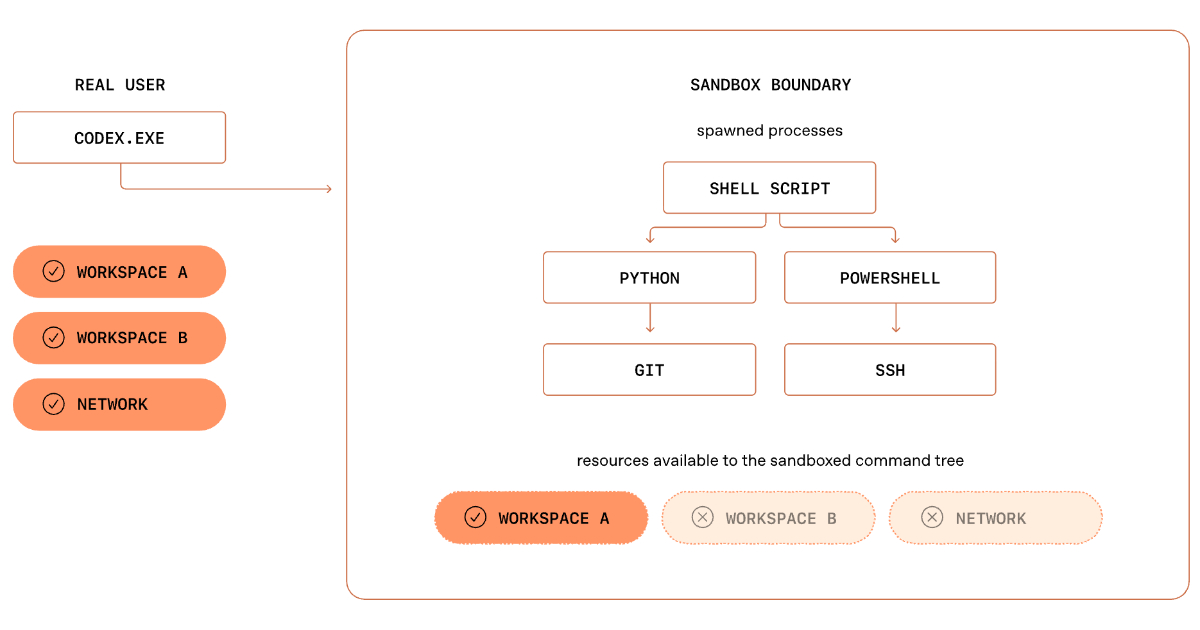
OpenAI details Codex Windows sandbox architecture, showing how SIDs, ACLs, restricted tokens, and dedicated sandbox accounts enable safe execution of autonomous coding tasks. The design balances isolation with real developer workflows and shows how OS security primitives must be composed for AI agents on local development environments.
By Leela KumiliPresentation: Platform Teams Enabling AI - MCP/Multi-Agentic Tools across Linkedin

LinkedIn’s Karthik Ramgopal and Prince Valluri discuss leveraging AI as a new execution model for large-scale engineering. They explain how to move beyond fragmented implementations by building platform abstractions for orchestration, structured context, and safe tooling like MCP. They share architectural insights from real-world coding, observation, and UI testing agents built at LinkedIn.
By Karthik Ramgopal, Prince ValluriHow Netflix Maps Thousands of Microservices in Real-Time

Netflix has shared details about Service Topology. This internal system creates and updates a live dependency graph for thousands of microservices. It helps engineers see how services connect and resolve issues more quickly. The system merges three separate data sources into a single, queryable graph. It updates almost in real-time as traffic patterns shift.
By Claudio Masolo
© 2026 Created by Michael Levin.
Powered by


RSVP for OrlandoJUG - Google Web Toolkit! to add comments!
Join Codetown