Codetown
Codetown ::: a software developer's community
OrlandoJUG October Meetup - Distributed Caching with JCache and Beyond
Event Details
Time: October 22, 2015 from 6pm to 8pm
Location: Canvs
Street: 101 S Garland Ave. Suite #108
City/Town: Orlando, FL 32801
Website or Map: https://www.google.com/maps/p…
Phone: (407) 741-3005
Event Type: meeting
Organized By: Alex Buckles & Greg Groves
Latest Activity: Oct 14, 2015
Event Description
Hello OrlandoJUG!
This month I will be in San Francisco for Java One, Oracle's annual Java conference. Fortunately, Alex Buckles and Gregg Groves will be here to lead the meeting. Thanks, guys!
Our topic this month is Distributed Caching with JCache and Beyond. JCache is vendor-neutral caching specification for Java. No need for proprietary non-standard caching solutions in Java land anymore. In this talk, Greg Luck will cover how distributed caching works in general, capabilities of JCache API, use cases, best practices and the future of JCache.
Viktor Gamov is our presenter. Viktor joined Hazelcast with over 5 years of experience in architecting and building enterprise applications using open source technologies. In his previous roles, he has helped financial companies and startups with various Java and HTML5 projects. He holds an MS in Computer Science. He is a co-author of the O’Reilly book «Enterprise Web Development. From Desktop To Mobile». Viktor has presented at various international conferences (http://lanyrd.com/gamussa) on Java and JavaScript related topics. Find him on Twitter @gamussa.
We usually socialize from 6-7 and the meeting begins at around 7. So, don't worry if you can't get to Canvs by 6.
Meanwhile, thanks for your interest and have fun at this month's JUG meeting. Please feel free to spread the word: you can use Codetown's invite feature to invite your friends.
I'll have a lot to tell you after JavaOne. Oh, and if you'd like a discount code good for 20% off J1, just let me know.

This meeting is sponsored by Cambridge Web Design - We provide custom software development and professional services. www.cambridgeweb.ie
All the best,
Michael Levin
Chairman, OrlandoJUG
mike@orlandoJUG.com
321-252-9322
Should you have any topic suggestions or general questions, please email Michael Levin at mike@cambridgeweb.ie or Alex Buckles at alex@alexbuckles.com.
Comment Wall
Comment
Happy 10th year, JCertif!
Notes
Welcome to Codetown!
 Codetown is a social network. It's got blogs, forums, groups, personal pages and more! You might think of Codetown as a funky camper van with lots of compartments for your stuff and a great multimedia system, too! Best of all, Codetown has room for all of your friends.
Created by Michael Levin Dec 18, 2008 at 6:56pm. Last updated by Michael Levin May 4, 2018.
Looking for Jobs or Staff?
Check out the Codetown Jobs group.
InfoQ Reading List
ExtendDB: Open Source Amazon DynamoDB Compatible Adapter with Pluggable Storage Backends

AWS recently announced ExtendDB, a DynamoDB-compatible adapter that lets developers use the DynamoDB API with different storage backends, starting with PostgreSQL. The project supports existing SDKs and tools without modification, giving teams greater flexibility to run DynamoDB-style workloads outside of native DynamoDB while maintaining compatibility with current applications and workflows.
By Renato LosioCloudflare Identifies Query Planning Bottleneck in ClickHouse

Cloudflare recently described how a slowdown in its billing pipeline was traced to contention inside the query planning stage of ClickHouse. The team profiled the bottleneck and patched ClickHouse to replace an exclusive lock with a shared lock, drop the per-query copy of the parts list, and improve part filtering.
By Renato LosioHow OpenAI Built a Secure Windows Sandbox for Codex Agents
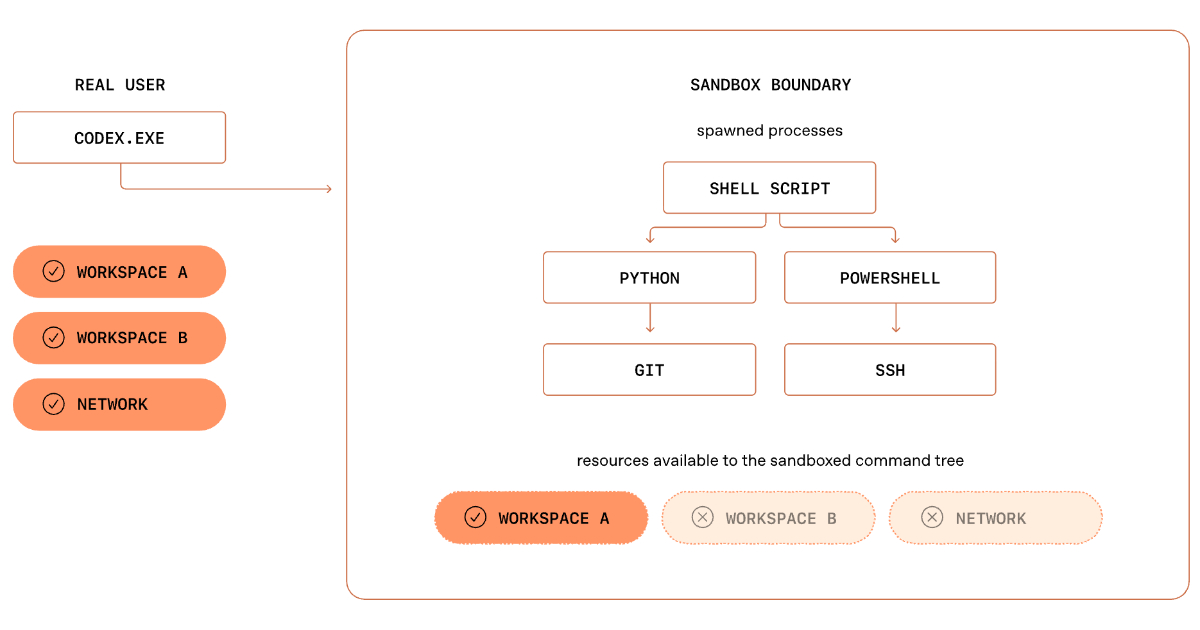
OpenAI details Codex Windows sandbox architecture, showing how SIDs, ACLs, restricted tokens, and dedicated sandbox accounts enable safe execution of autonomous coding tasks. The design balances isolation with real developer workflows and shows how OS security primitives must be composed for AI agents on local development environments.
By Leela KumiliPresentation: Platform Teams Enabling AI - MCP/Multi-Agentic Tools across Linkedin
LinkedIn’s Karthik Ramgopal and Prince Valluri discuss leveraging AI as a new execution model for large-scale engineering. They explain how to move beyond fragmented implementations by building platform abstractions for orchestration, structured context, and safe tooling like MCP. They share architectural insights from real-world coding, observation, and UI testing agents built at LinkedIn.
By Karthik Ramgopal, Prince ValluriHow Netflix Maps Thousands of Microservices in Real-Time

Netflix has shared details about Service Topology. This internal system creates and updates a live dependency graph for thousands of microservices. It helps engineers see how services connect and resolve issues more quickly. The system merges three separate data sources into a single, queryable graph. It updates almost in real-time as traffic patterns shift.
By Claudio Masolo
© 2026 Created by Michael Levin.
Powered by


RSVP for OrlandoJUG October Meetup - Distributed Caching with JCache and Beyond to add comments!
Join Codetown