Codetown
Codetown ::: a software developer's community
Has anyone gotten a Distribution Certificate for an iPhone app?
Views: 129
Replies to This Discussion
-
Permalink Reply by Walt Sellers on
-
I'm not sure why you can't see the button, but if you already have a distribution certificate in your account you can't get another.
If you created one for ad-hoc distribution, use that one for submitting to the App Store by creating a new distribution provisioning profile. -
-
Permalink Reply by Kevin Neelands on
-
First it turned out the 'Add Certificate' button the docs referred to were not on that page, but if you select the "how to " tab it was at the bottom of that page. By that time I was confused enough I started from scratch, and what you pointed out - if you have one distribution certificate you can't get another - bunged me up for a while. So I decided to start from scratch a third time, starting with getting a development certificate, and somehow I got things so screwed up I can't even compile and install working versions on my iPhone. I've worked on the mac 3 times and each time it's just been incredibly frustrating.
-
Happy 10th year, JCertif!
Notes
Welcome to Codetown!
 Codetown is a social network. It's got blogs, forums, groups, personal pages and more! You might think of Codetown as a funky camper van with lots of compartments for your stuff and a great multimedia system, too! Best of all, Codetown has room for all of your friends.
Created by Michael Levin Dec 18, 2008 at 6:56pm. Last updated by Michael Levin May 4, 2018.
Looking for Jobs or Staff?
Check out the Codetown Jobs group.
InfoQ Reading List
Presentation: Beyond Prompting: Context Engineering and Memory Management for AI Systems at Scale
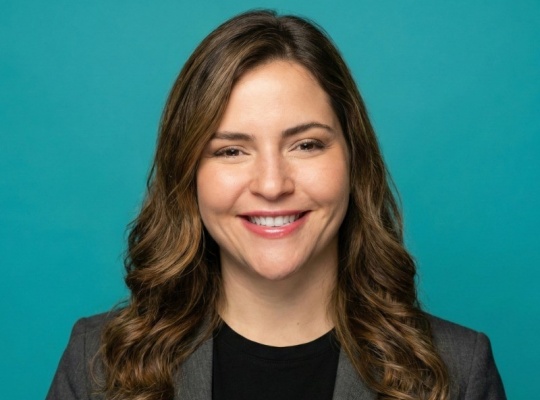
Adi Polak discusses the architecture required to transition from stateless prompts to state-aware, context-rich AI agents. Drawing on 15 years in distributed systems, she shares how engineering leaders can leverage Apache Kafka and Flink for real-time stream processing, dynamic memory tiering, and tool orchestration via MCP to solve token limits, cost spikes, and latency bottlenecks.
By Adi PolakAzure API Management Ships Unified Model API and MCP Content Safety at Build 2026

Azure API Management shipped a Unified Model API that lets clients speak one format while APIM transforms requests to Anthropic, Vertex AI, and other backends. Content safety policies now cover MCP tool calls and Agent-to-Agent payloads alongside LLM traffic. Token metrics expanded to track reasoning, cached, and audio tokens across providers.
By Steef-Jan WiggersPresentation: Confidently Automating Changes Across a Diverse Fleet
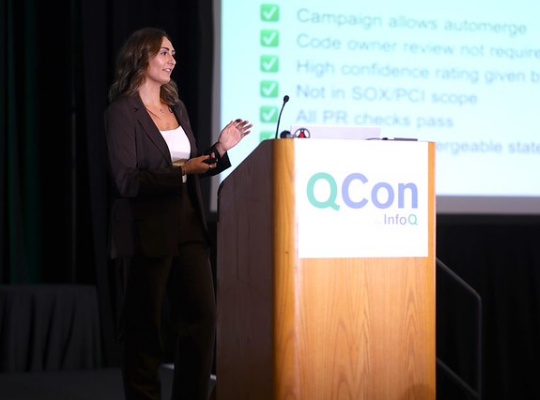
Netflix engineer Casey Bleifer shares how to achieve rapid, automated code changes across a massive, diverse software fleet. She discusses building an event-driven orchestration platform using composable, Lego-like steps, and explains how Netflix utilizes automated canary validation, compliance checks, and a custom "confidence metric" to eliminate the long tail of manual engineering migrations.
By Casey BleiferIBM Vault Enterprise 2.0 Brings Automated LDAP Secrets Management to Enterprise Identity Security

IBM and HashiCorp have announced new LDAP secrets management capabilities in IBM Vault Enterprise 2.0, introducing a redesigned architecture to manage LDAP credentials, support password rotation, and automate the identity lifecycle.
By Craig RisiMicrosoft Foundry Adds Runtime, Tooling, and Governance for Production Agents

Microsoft used their Build 2026 event to announce new functionality for Microsoft Foundry. Citing Foundry as "the place where AI agents move from experiments to production systems," in a blog post, Nick Brady writes that the release brings “runtime, tools, memory, grounding, models, observability, and governance” that developers need for production agents, rather than just new model endpoints.
By Matt Saunders
© 2026 Created by Michael Levin.
Powered by

