Codetown
Codetown ::: a software developer's community
-
Jim Clarke
- Male
- Lake Mary, FL
- United States
- Blog Posts (3)
- Discussions
- Events
- Groups (1)
- Photos
- Photo Albums
- Videos
Gifts Received

Jim Clarke has not received any gifts yet
Jim Clarke's Page
Profile Information
- What are your main interests in software development?
- Java, JavaFX, Rich Internet Applications
- Do you have a website?
- http://blogs.sun.com/clarkeman/
Jim Clarke's Blog
JavaFX and SteelSeries gauges using FXML
Posted on June 25, 2012 at 9:30pm 0 Comments 1 Like
Gerrit Grunwald, aka @hansolo_ on twitter, has just ported his Swing based gauges and meters framework known as SteelSeries to JavaFX as part of the JFXtras-lab project. I can't tell you how many times since Java AWT first came out, that I have had to use meters…
ContinueJavaFX 2.2 Canvas
Posted on June 3, 2012 at 8:11pm 0 Comments 0 Likes
One of the cool new features of the JavaFX 2.2 developer preview release is a new Canvas node that allows you to do free drawing within an area on the JavaFX scene similar to the HTML 5 Canvas. You can download this release for Windows, Mac, and Linux from JavaFX Developer Preview.
Being adventurous, I decided to take the JavaFX Canvas for a spin around the block. In doing…
ContinueGroovyFX, Getting started.
Posted on September 27, 2011 at 4:51pm 0 Comments 0 Likes
Dean Iverson and I have been working on an open source project called GroovyFX that provides a Groovy binding that sits on the new JavaFX 2.0 platform. Dean has written a good blog on how to get started with GroovyFX here. It is already a little dated, but if you ignore the JavaFX build numbers and just download the…
ContinueHappy 10th year, JCertif!
Notes
Welcome to Codetown!
 Codetown is a social network. It's got blogs, forums, groups, personal pages and more! You might think of Codetown as a funky camper van with lots of compartments for your stuff and a great multimedia system, too! Best of all, Codetown has room for all of your friends.
Created by Michael Levin Dec 18, 2008 at 6:56pm. Last updated by Michael Levin May 4, 2018.
Looking for Jobs or Staff?
Check out the Codetown Jobs group.
InfoQ Reading List
Backstage 1.55 Adds Scaffolder Task Recovery and Removes Deprecated Catalog APIs

Backstage 1.55 adds opt-in recovery for Software Template tasks, resuming crashed or timed-out runs from the last completed step. The release also carries breaking changes to the catalog, search and TechDocs, so teams should review their configuration before upgrading to the current 1.55.3 patch.
By Mark SilvesterZCS Command Injection via SNMP Handlers Enables Unauthenticated Remote Code Execution

A critical remote command execution vulnerability in the Zimbra Collaboration Suite, identified as CVE-2026-73570, poses risks by allowing unauthorized access to mailbox data and credentials. This flaw, stemming from improper input sanitization, has been actively exploited. Organizations are advised to upgrade to version 10.1.20 or disable susceptible SNMP services to mitigate risks.
By Olimpiu PopAWS Reworks EventBridge Custom Buses for Enterprise-Scale Event-Driven Architectures

AWS has introduced an enhanced Custom Event Bus for Amazon EventBridge, targeting a problem that often emerges when event-driven architectures move beyond a single team or AWS account: the event infrastructure itself becomes fragmented.
By Craig RisiProduction Patterns for Agents, Evals, and LLM Costs: QCon AI New York 2026
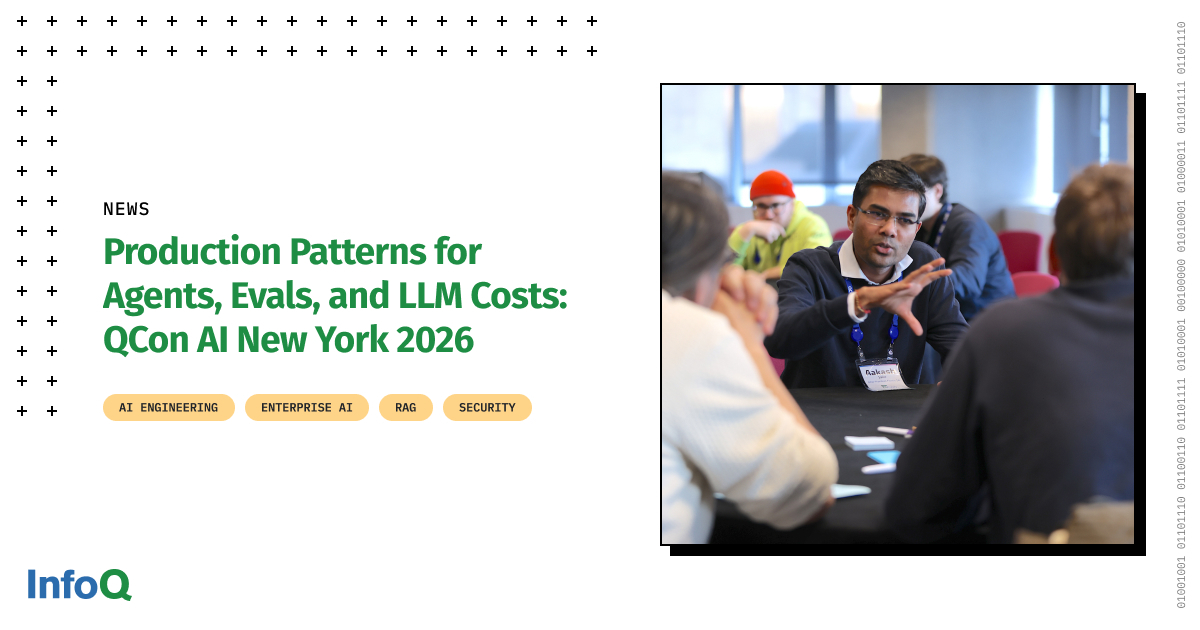
Once AI is in production, code arrives faster than it can be reviewed, token costs rise, evals have to be good enough to act on, and agents need permissions and guardrails. QCon AI New York 2026 (December 15-16) has confirmed sessions from engineers sharing how they handle these constraints.
By Artenisa ChatziouPresentation: How Eve Online Leverages Head Based Sampling to Observe "Fun"
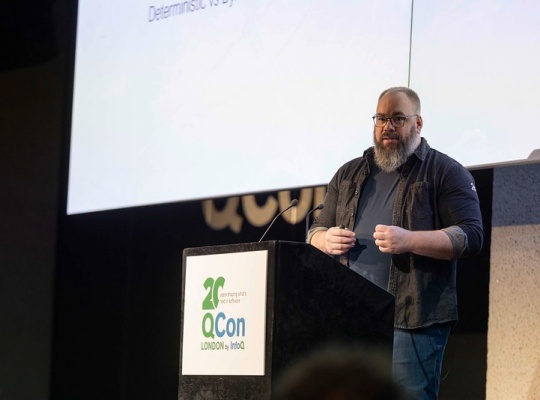
Nicholas Herring shares how EVE Online tackles distributed tracing and observability across a 20-year-old MMO architecture. He discusses leveraging head-based, dynamic exponential moving average (EMA), and deterministic sampling techniques to maintain high system fidelity, control telemetry costs, and avoid performance degradation under high-throughput real-time game simulations.
By Nicholas Herring
© 2026 Created by Michael Levin.
Powered by


Comment Wall (3 comments)
You need to be a member of Codetown to add comments!
Join Codetown
JIm,
Thanks for the great presentation last night. We all enjoyed it!
All the best,
Mike