Codetown
Codetown ::: a software developer's community
-
Naomi Butterfield
- Female
- Winter Park, FL
- United States
- Blog Posts
- Discussions (2)
- Events
- Groups (4)
- Photos
- Photo Albums
- Videos
Naomi Butterfield's Apps
Naomi Butterfield hasn't added any Apps yet.
Happy 10th year, JCertif!
Notes
Welcome to Codetown!
 Codetown is a social network. It's got blogs, forums, groups, personal pages and more! You might think of Codetown as a funky camper van with lots of compartments for your stuff and a great multimedia system, too! Best of all, Codetown has room for all of your friends.
Created by Michael Levin Dec 18, 2008 at 6:56pm. Last updated by Michael Levin May 4, 2018.
Looking for Jobs or Staff?
Check out the Codetown Jobs group.
InfoQ Reading List
Presentation: Serving LLMs at Scale: The Hidden KV Cache Advantage

Khawaja Shams shares a distributed systems perspective on scaling LLM inference stacks efficiently. He discusses practical strategies for optimizing GPU utilization, managing KV cache memory cliffs, leveraging tiered storage, reducing tail latency, and implementing disaggregated prefill and decode architectures to improve overall fleet performance, cost economics, and availability.
By Khawaja ShamsAWS Shows Use of AI Agents to Triage Linux Kernel CVEs
Engineers from Amazon Web Services (AWS) have described how the team that maintains the Linux kernel for EC2 infrastructure handles kernel CVEs. The process combines an automated filter, an AI agent and human review. The team also argues that it needs to move to newer long-term-support (LTS) kernels, as older branches collect fixes that are never backported.
By Matt SaundersCloudflare and VoidZero Introduce tsrs: An AI-Generated Rust Port of TypeScript

Cloudflare, VoidZero and Max Schwenk announced tsrs, an experimental Rust port of the TypeScript compiler, built with the TypeScript team's involvement. Cloudflare claims up to 8x faster checking and 70% less memory than TypeScript 7.0, though one test against 7.1 beta showed 2.7x. It lacks watch mode and a language server, and exits with code 2 on type errors.
By Daniel CurtisDevelopers Reporting Double-Digit Weekly Time Savings From AI Fell From 68% to 26%

Atlassian’s State of Developer Experience 2026 finds the share of developers saving ten or more hours a week with AI dropped from 68% to 26% year over year, while only 28% report noticeably less friction than before AI. Engineering leaders report spending more time managing and correcting AI output than developers do.
By Steef-Jan WiggersAGNTCon + MCPCon 2026: Agentic AI Foundation Adds Four Projects as MCP Turns to Security
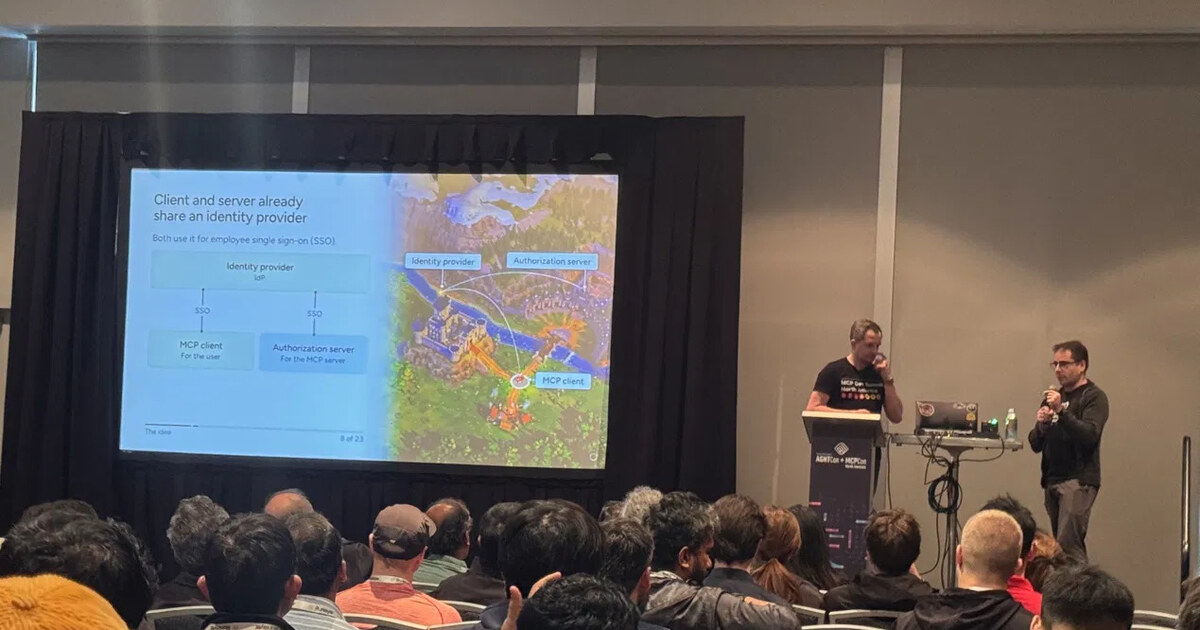
At AGNTCon + MCPCon North America 2026, the Agentic AI Foundation added OpenSandbox, Open Responses, Agent Skills, and OpenEnv, reaching ten projects in its first year. Keynotes from Anthropic, OpenAI, Google, and UC Berkeley focused on MCP in production, security, and agents with their own identities.
By Andrew Hoblitzell
© 2026 Created by Michael Levin.
Powered by

