Codetown
Codetown ::: a software developer's community
-
Jim Clarke
- Male
- Lake Mary, FL
- United States
- Blog Posts (3)
- Discussions
- Events
- Groups (1)
- Photos
- Photo Albums
- Videos
Gifts Received

Jim Clarke has not received any gifts yet
Jim Clarke's Page
Profile Information
- What are your main interests in software development?
- Java, JavaFX, Rich Internet Applications
- Do you have a website?
- http://blogs.sun.com/clarkeman/
Jim Clarke's Blog
JavaFX and SteelSeries gauges using FXML
Posted on June 25, 2012 at 9:30pm 0 Comments 1 Like
Gerrit Grunwald, aka @hansolo_ on twitter, has just ported his Swing based gauges and meters framework known as SteelSeries to JavaFX as part of the JFXtras-lab project. I can't tell you how many times since Java AWT first came out, that I have had to use meters…
ContinueJavaFX 2.2 Canvas
Posted on June 3, 2012 at 8:11pm 0 Comments 0 Likes
One of the cool new features of the JavaFX 2.2 developer preview release is a new Canvas node that allows you to do free drawing within an area on the JavaFX scene similar to the HTML 5 Canvas. You can download this release for Windows, Mac, and Linux from JavaFX Developer Preview.
Being adventurous, I decided to take the JavaFX Canvas for a spin around the block. In doing…
ContinueGroovyFX, Getting started.
Posted on September 27, 2011 at 4:51pm 0 Comments 0 Likes
Dean Iverson and I have been working on an open source project called GroovyFX that provides a Groovy binding that sits on the new JavaFX 2.0 platform. Dean has written a good blog on how to get started with GroovyFX here. It is already a little dated, but if you ignore the JavaFX build numbers and just download the…
ContinueHappy 10th year, JCertif!
Notes
Welcome to Codetown!
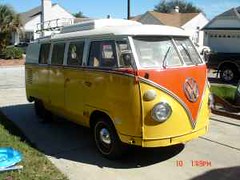 Codetown is a social network. It's got blogs, forums, groups, personal pages and more! You might think of Codetown as a funky camper van with lots of compartments for your stuff and a great multimedia system, too! Best of all, Codetown has room for all of your friends.
Created by Michael Levin Dec 18, 2008 at 6:56pm. Last updated by Michael Levin May 4, 2018.
Looking for Jobs or Staff?
Check out the Codetown Jobs group.
InfoQ Reading List
Cloudflare Ships Agent Skills for Zero Trust Deployment and Migration

Cloudflare released the Cloudflare One stack, an open-source library of agent skills for planning, deploying, and managing Zero Trust environments. The skills include automated migration logic for Zscaler and Palo Alto Networks, the same logic used in Cloudflare's Descaler program that has moved enterprise customers in hours rather than months.
By Steef-Jan WiggersSlack Outlines Four-Phase Journey to a Multi-Cloud AI Serving Platform

Slack has outlined how its AI serving infrastructure evolved through four distinct phases, moving from a self-managed Amazon SageMaker deployment to a multi-cloud architecture spanning AWS Bedrock and Google Cloud Vertex AI.
By Matt FosterGrab Builds Secure Agentic AI Workload Platform

Grab's security team built Palana, a Kubernetes-native secure execution platform, to run autonomous AI agents safely. Unlike deterministic software, model-driven agents exhibit unpredictable tool-use, code-writing, and prompt injection risks. Palana contains these threats at the infrastructure level using isolated namespaces, out-of-process control planes, and proxy-mediated, Vault-backed secrets.
By Patrick FarryAnthropic Lead: HTML Increasingly Better Than Markdown at Keeping Humans Engaged in Agentic Loops

Thariq Shihipar, engineering lead for the Claude Code team, recently published a blog post (Using Claude Code: The Unreasonable Effectiveness of HTML) arguing that HTML, with its richer visualizations, color, and interactivity, improves the productivity of human-agent communication in many settings, especially when compared to default Markdown outputs.
By Bruno CouriolGoogle OpenRL is an Experimental Self-hosted API for LLM Post-Training Fine-tuning

Google's GKE Labs has introduced OpenRL, an open-source project that provides a self-hosted API for post-training and fine-tuning Large Language Models (LLMs) on standard Kubernetes clusters.
By Sergio De Simone
© 2026 Created by Michael Levin.
Powered by


Comment Wall (3 comments)
You need to be a member of Codetown to add comments!
Join Codetown
JIm,
Thanks for the great presentation last night. We all enjoyed it!
All the best,
Mike