Codetown
Codetown ::: a software developer's community
Kotlin Town
Information
Interested in Kotlin? Are you a practitioner?
Kotlin is a statically typed language that runs on JVM that may compile to JavaScript source code or use the LLVM compiler infrastructure. Since then, it’s grown exponentially in popularity. In 2017, Google officially backed Kotlin as the official language for Android.
And that's just the beginning! Join us here at Kotlin Town and be a part of the evolution of this exciting new language.
Website: http://kotlinlang.org/
Members: 6
Latest Activity: Nov 18, 2019
Kotlin is a statically typed language developed by a small JetBrains team in St. Petersburg, Russia that runs on the JVM. The open-source community is growing quickly, and everyone is invited: novices, hobbyists, industrialists, and experts alike!
Kotlin Features:
- less verbose than Java
- can be compiled to JavaScript or run on an LLVM
- introduces null safety to prevent runtime NPE
- tool friendly with any IDE or CLI
- backwards compatible with existing Java projects and libraries
- supported by a global community
Our objective here is to provide a friendly forum to meet fellow programmers and exchange ideas about Kotlin as we grow together.
Here is an extensive list of links to Kotlin projects, libraries and other resources: https://kotlin.link/
Discussion Forum
Coroutine-First Android Architecture w/ Rick Busarow
Chicago Kotlin User Group x Android ListenersHosted at GrubHub, July 17Coroutines are the new hot stuff, and right now they’re being added to lots of libraries. But what if you don’t want to use an…Continue
Tags: Kotlin
Started by Amanda Hinchman-Dominguez Jul 20, 2019.
Coroutine-First Android Architecture w/ Rick Busarow
Chicago Kotlin User Group x Android ListenersHosted at GrubHub, July 17Coroutines are the new hot stuff, and right now they’re being added to lots of libraries. But what if you don’t want to use an…Continue
Tags: Kotlin
Started by Amanda Hinchman-Dominguez Jul 20, 2019.
Kotlin Thursdays - Networking in Android and Kotlin
We have an existing Android Avocado Facts application created in an …Continue
Tags: #networking, #android, #kotlinthursdays, #kotlin
Started by Amanda Hinchman-Dominguez Apr 11, 2019.
Kotlin Thursdays - Introduction to Functional Programming Part 2
ResourcesHigher-Order Functions and Lambdas:…Continue
Tags: #functionalprogramming, #kotlinthursdays, #kotlin
Started by Amanda Hinchman-Dominguez Apr 11, 2019.
Kotlin Daily
 Loading feed
Happy 10th year, JCertif!
Notes
Welcome to Codetown!
 Codetown is a social network. It's got blogs, forums, groups, personal pages and more! You might think of Codetown as a funky camper van with lots of compartments for your stuff and a great multimedia system, too! Best of all, Codetown has room for all of your friends.
Created by Michael Levin Dec 18, 2008 at 6:56pm. Last updated by Michael Levin May 4, 2018.
Looking for Jobs or Staff?
Check out the Codetown Jobs group.
InfoQ Reading List
Cycle Introduces EU Control Plane as Sovereignty Debate Continues

Cycle recently introduced a separate EU-based control plane, allowing European customers to keep platform management data and telemetry within Europe. The new offering is designed to improve compliance, operational isolation, and responsiveness for European organizations.
By Renato LosioCloudflare Details Unified Data Platform Where Billing Workloads Account for 53% of Queries
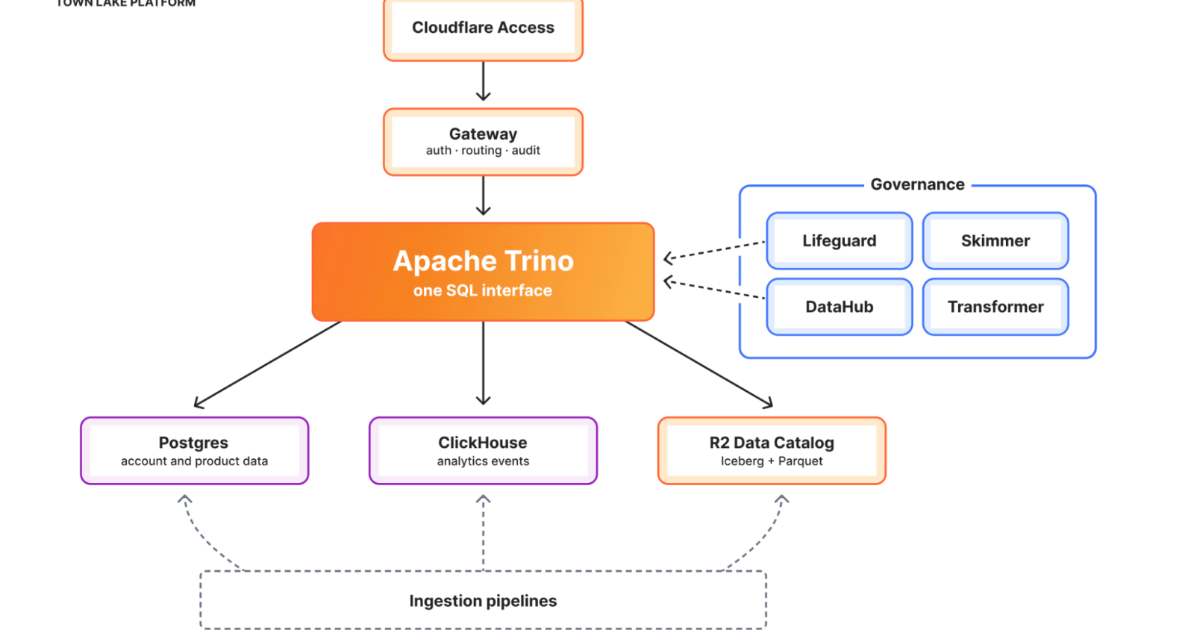
Cloudflare details Town Lake, an internal unified data platform, and Skipper, an AI analytics agent unifying access to operational, billing, security, and business data. The platform processed ~91K billing queries, with billing forming majority usage. Built on a lakehouse architecture using Trino, Iceberg, R2, and DataHub, it enables governed cross-system analytics and natural language access.
By Leela KumiliHardwood Promises High-Speed JVM Apache Parquet Processing with Zero Mandatory Dependencies

Hardwood, the project Gunnar Morling kick-started to improve the handling of Parquet files in Java, reached version 1. Its multi-threaded approach and zero mandatory external dependencies promise a simpler, optimal alternative to the Apache Parquet Java implementation. For now, the library provides a reading via API and a CLI for visualisation; writing support is expected in the upcoming versions.
By Olimpiu PopOpenTelemetry Graduates to CNCF's Highest Maturity Level

The Cloud Native Computing Foundation (CNCF) has announced the graduation of OpenTelemetry, elevating the project to the foundation's highest level of maturity and formally recognizing it as production-ready for enterprise use.
By Craig RisiMini book: Agentic AI Architecture

In this eMag, we try to establish agentic AI architecture as a new type of software architecture that will likely dominate the industry for years to come. The articles, written by industry experts, cover various elements and aspects of agentic AI architecture. We aim to present the latest trends and developments shaping the new type of architecture as it enters the mainstream.
By InfoQ
© 2026 Created by Michael Levin.
Powered by


You need to be a member of Kotlin Town to add comments!