Codetown
Codetown ::: a software developer's community
Whats the best iPhone development environment?
Views: 305
Replies to This Discussion
-
Permalink Reply by Robert Hedin on
-
If you're wanting to write for the App Store, XCode is pretty much it. All of the iPhone libraries are either Objective-C (user interface) with some C level under pinnings.
As far as books go, to be honest I don't believe anything really talks about the current 3.1 OS, so I'm a bit hesitant to recommend anything today. The Apple docs on the dev site aren't too bad.
rob. -
-
Permalink Reply by Kevin Neelands on
-
Mara said:
Let's just say I've been better.how are you -
-
Permalink Reply by Walt Sellers on
-
If you look at some of the developer agreements, at least one of them specified that the software must be developed on a Mac.
The Mac Mini is the cheapest to buy new, but any Intel-based Mac will do. I recommend against any of the single-core Macs myself.
I've read Zdziarski's "iPhone Forensics" book and it was really good. (Perhaps outdated now.) And its an O'Reilly book. So his other books might also be good.
I've looked through a "cookbook" in the bookstore. It seemed really straight-forward, except that it kept mentioning things that were not in the public API's (Apple's agreements require using only public API's in apps for the App Store.)
Aaron Hillegass and the Big Nerd Ranch have been doing Cocoa training and books for many years. His Cocoa and Mac OS X books are very good. (Objective-C is rolled up in there too.)
Once you have your developer account with Apple, you can access some videos on iPhone programming.
There are some alternative iPhone App generators out there, but they are usually specific to games and such. Apparently Adobe has a Flash-to-iPhone app generator as well. (Turns a flash show into a stand-alone app.)
It is possible to do Objective-C coding with any computer that can run the gcc compiler. I've seen a friend using it to write Objective-C on a Linux box (intending to transfer to a Mac sometime later.) However, that does not include the Cocoa frameworks that ship with the Apple OS's.
XCode does have some very good features for programming on iPhone or Mac. In particular, the code-completion feature makes entering the very-long method names very easy. (Not only do you know there is no typo in the name, but the argument list is completed as well.) -
-
-
Thanks! I'll start looking at getting a mac and diving into this.
-
-
-
Hi Kevin,
I noticed that, like me, you are getting into iPhone development.
I joined the iPhone Development group and pretty new to iPhone development. I am looking to network with other developers, share my experiences and learn from others. I have been an applications developer for a large corporations in Jax, FL for more than 25 years. I got involved with iPhone development as a fall back due to many layoffs at my company. Fortunately I am still employed and enjoying working with Apple's XCODE SDK.
I just released my first iPhone App, Party Twacker, on December 11, 2009. If you ever get stumped on and iPhone dev issues, feel free to send me a message.
Take Care,
Kevin Collins -
-
-
I checked out the party Twacker - cool! Sadly, I am not into the bar or even the drinking scene anymore, but if I was I'm sure I'd use it. You can see some of my stuff here:
http://user.gru.net/nemesis/iphoneAppPages/ -
-
-
You have been busy! Six apps already in iTunes. That's impressive. I am not trying to get personal but how has your marketing been going? I am in the process of publishing a Lite Version of my app to try get more interested buyers. With the App Store not having a return policy, people are more reluctant to purchase apps. I am checking out your apps now and they look really cool. Best of Luck with your Apps.
Kevin
Kevin Neelands said:I checked out the party Twacker - cool! Sadly, I am not into the bar or even the drinking scene anymore, but if I was I'm sure I'd use it. You can see some of my stuff here:
http://user.gru.net/nemesis/iphoneAppPages/ -
-
-
How's marketing going? I'm earning enough to treat myself to delivery pizza once a week. I *think* good reviews help the marketing process, so if you enjoy and of my apps please write one! The picture-kaleidoscope is a rather good fit with party twacker - take a photo of a cute girl, create a a kaleidoscope image of her, and she'll be tickled pink!
-
Happy 10th year, JCertif!
Notes
Welcome to Codetown!
 Codetown is a social network. It's got blogs, forums, groups, personal pages and more! You might think of Codetown as a funky camper van with lots of compartments for your stuff and a great multimedia system, too! Best of all, Codetown has room for all of your friends.
Created by Michael Levin Dec 18, 2008 at 6:56pm. Last updated by Michael Levin May 4, 2018.
Looking for Jobs or Staff?
Check out the Codetown Jobs group.
InfoQ Reading List
Pinterest Uses Event Time Watermarks to Finalize Petabyte Scale Data Partitions
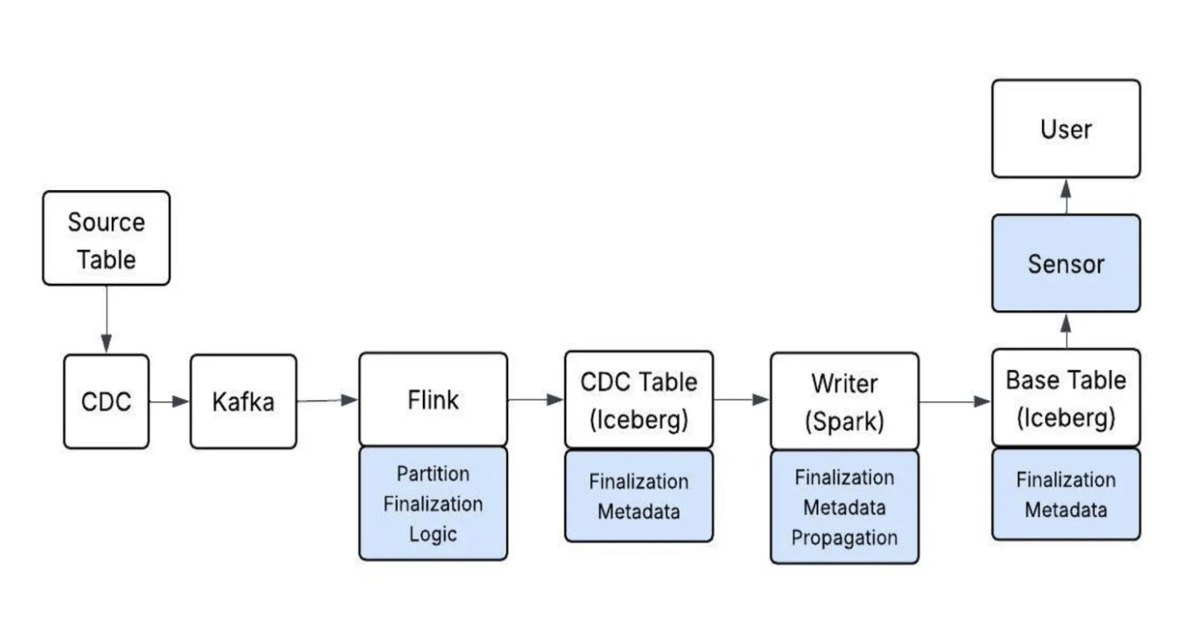
Pinterest has introduced event time-based partition finalization for its database ingestion framework. The mechanism uses Apache Flink to track event time and Apache Iceberg metadata to publish a non-regressing watermark, helping downstream jobs determine when continuously ingested CDC data is sufficiently complete for processing.
By Leela KumiliJEP 543 Finalizes Structured Concurrency in JDK 28, Ending Seven Preview Rounds

JDK 28 finalizes structured concurrency through JEP 543, with no API changes from JDK 27. Teams on JDK 27 only need to drop --enable-preview and recompile. Code written for JDK 25 or 26 must adapt to the R_X exception type parameter, ExecutionException wrapping, and the abstract timeout() joiner callback.
By A N M Bazlur RahmanPodcast: The Future of Web Apps: Will AI Agents Generate UIs on the Fly?

Rachel Lee Nabors, former React core team member, dives into the architecture and philosophy behind local-first applications, exploring how small language models (SLMs) running directly on-device can deliver privacy-focused, low-latency, and cost-effective alternatives to cloud-hosted LLM wrappers.
By Rachel Lee NaborsArticle: From Microservices to Agents: The Next Evolution of Distributed Systems

The article examines the transition from microservices to agentic AI architecture in distributed systems. Microservices allow for functional decomposition, while agentic systems focus on decision decomposition. This shift introduces new complexities in observability, reliability, and system design, highlighting the need for updated architectural patterns and practices.
By Mallika RaoEmbeddingGemma 2 Expands Beyond Text to Support Code, Images, Video, and Audio
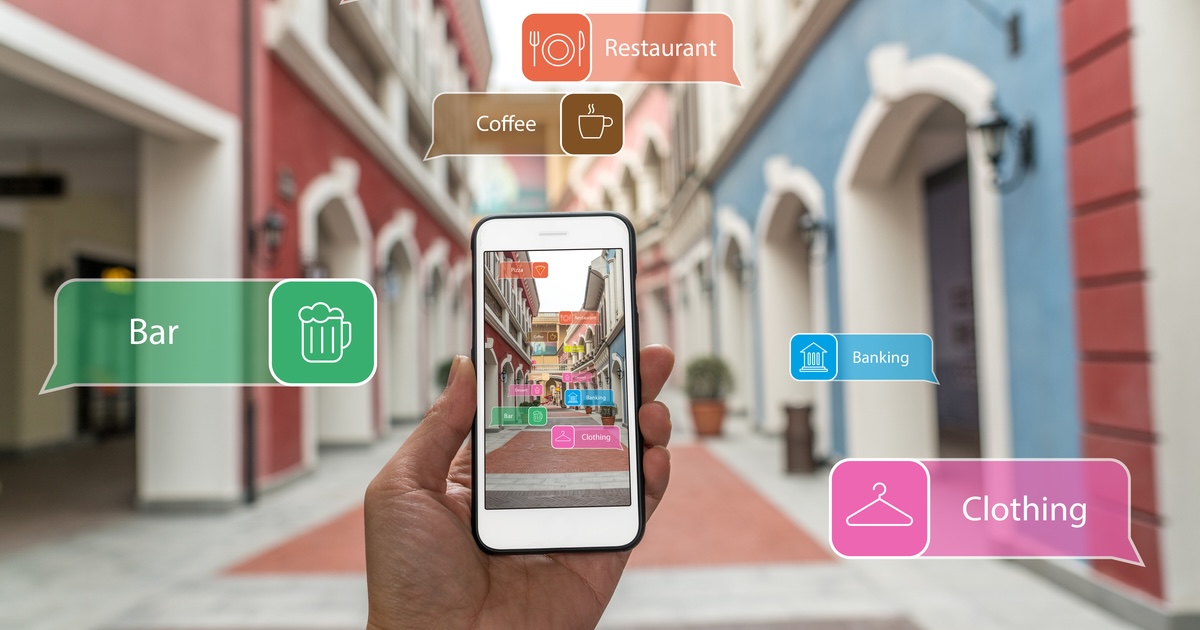
Based on Gemma 4 and released under the Apache 2.0 license, Google's EmbeddingGemma 2 is a compact, open-weight, multimodal embedding model designed to make semantic search and retrieval-augmented generation (RAG) more efficient while optimizing performance for on-device deployment.
By Sergio De Simone
© 2026 Created by Michael Levin.
Powered by

