Codetown
Codetown ::: a software developer's community
OrlandoJUG ::: Programming Platform Growth: Table Stakes or Deal Makes?
Event Details
Time: March 7, 2019 from 6pm to 8pm
Location: Starter Studio
Street: 101 Garland (Church Street Station) Suite 101
City/Town: Orlando
Website or Map: http://www.starterstudio.org
Phone: 3212529322
Event Type: meetup
Organized By: Michael Levin
Latest Activity: Feb 20, 2019
Event Description
Hello Java Enthusiasts!
You're in for a treat! We have a great presentation coming up, Here are the details.
experience, spanning many languages, operating systems, and platforms,
to survey what it takes to make a programming language platform
successful in terms of widespread use. Ed will look at Java, Python,
Node, Go, and Swift and evaluate the ingredients that brought each one
its own form of success. Finally, Ed will draw some lessons that apply
to anyone trying to grow their computing platform, because, at some
level, we are all in the platform business.
## Purpose of the Talk
IT practitioners are often faced with platform selection choices when
building solutions for their customers. The set of available choices is
always subject to lots of churn and chaos. This talk looks at what
separates successful platforms from others in terms of how each one
deals with technical and non-technical concerns.
## Target Audience
* Architect level developers who are faced with technology selection choices.
* Developers who want the platforms they are building to be successful.
## Audience Takeaway
Success is never an accident, and when it comes to programming platforms
thare are many checkbox-type things your platform must have to ensure
success. But implementing these things requires lots of grit,
determination, and polish.
Comment Wall
Comment
Happy 10th year, JCertif!
Notes
Welcome to Codetown!
 Codetown is a social network. It's got blogs, forums, groups, personal pages and more! You might think of Codetown as a funky camper van with lots of compartments for your stuff and a great multimedia system, too! Best of all, Codetown has room for all of your friends.
Created by Michael Levin Dec 18, 2008 at 6:56pm. Last updated by Michael Levin May 4, 2018.
Looking for Jobs or Staff?
Check out the Codetown Jobs group.
InfoQ Reading List
Cycle Introduces EU Control Plane as Sovereignty Debate Continues

Cycle recently introduced a separate EU-based control plane, allowing European customers to keep platform management data and telemetry within Europe. The new offering is designed to improve compliance, operational isolation, and responsiveness for European organizations.
By Renato LosioCloudflare Details Unified Data Platform Where Billing Workloads Account for 53% of Queries
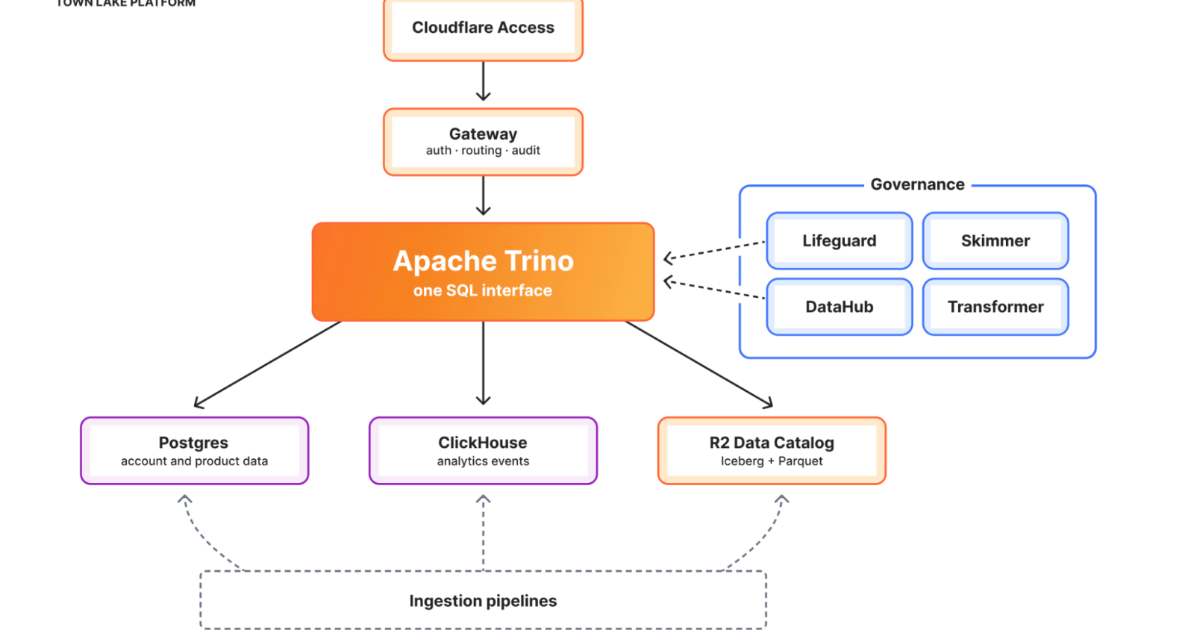
Cloudflare details Town Lake, an internal unified data platform, and Skipper, an AI analytics agent unifying access to operational, billing, security, and business data. The platform processed ~91K billing queries, with billing forming majority usage. Built on a lakehouse architecture using Trino, Iceberg, R2, and DataHub, it enables governed cross-system analytics and natural language access.
By Leela KumiliHardwood Promises High-Speed JVM Apache Parquet Processing with Zero Mandatory Dependencies

Hardwood, the project Gunnar Morling kick-started to improve the handling of Parquet files in Java, reached version 1. Its multi-threaded approach and zero mandatory external dependencies promise a simpler, optimal alternative to the Apache Parquet Java implementation. For now, the library provides a reading via API and a CLI for visualisation; writing support is expected in the upcoming versions.
By Olimpiu PopOpenTelemetry Graduates to CNCF's Highest Maturity Level

The Cloud Native Computing Foundation (CNCF) has announced the graduation of OpenTelemetry, elevating the project to the foundation's highest level of maturity and formally recognizing it as production-ready for enterprise use.
By Craig RisiMini book: Agentic AI Architecture
In this eMag, we try to establish agentic AI architecture as a new type of software architecture that will likely dominate the industry for years to come. The articles, written by industry experts, cover various elements and aspects of agentic AI architecture. We aim to present the latest trends and developments shaping the new type of architecture as it enters the mainstream.
By InfoQ
© 2026 Created by Michael Levin.
Powered by


RSVP for OrlandoJUG ::: Programming Platform Growth: Table Stakes or Deal Makes? to add comments!
Join Codetown