Codetown
Codetown ::: a software developer's community
GatorJUG - on iPhone Development, with a Clojure case study too!
Event Details
Time: January 13, 2010 from 6pm to 9pm
Location: Santa Fe College, room S326
Street: 3000 NW 83rd Street http://www.sfcollege.edu/information/maps/
City/Town: Gainesville, FL 32606 (352) 395-5000
Website or Map: http://www.gatorjug.org
Phone: http://www.codetown.us/profile/MichaelLevin
Event Type: gatorjug, meeting
Organized By: Michael Levin, Co-chairman
Latest Activity: Jan 13, 2010
Event Description
Welcome to the first meeting of 2010! GatorJUG is here for you to learn about Java and all of the software development lifecycle, in general. There are no fees, lots of good presentations and free giveaways...and munchies every meeting.
Please join the GatorJUG group here on Codetown. It makes inviting you to these meetings much easier!
We'll have an iPhone development meeting with open forum. I think that would be interesting to a broad range of developers, especially the ones that do Java apps on the Blackberry. Bring us your case studies! We'll also hear about Clojure development from Eric Lavigne, the winner of the first Contest Town coding contest!
Feel free to invite a friend. Please RSVP here so we'll know how much pizza to order.
We're looking for a sponsor for this meeting. If you or your company is interested, please contact Mike Levin...thanks in advance!
Comment Wall
Comment
-
Comment by Michael Levin on January 11, 2010 at 12:05pm
-
Thanks, Eric. I corrected the RSVP link on the www.gatorlug.org website announcing this event. I hope the word gets out. We want lots of people to attend and learn about Clojure, iPhone dev and ... Wari! Did you know Starbucks is selling Wari games now? I came back from Senegal with only rules in my memory I learned in the market in the village called Kaolack where I bought my game. I copied the rules one day at Starbucks from a game there. It's truly deceptively challenging. Great job on your implementation of the Wari game using Clojure.
Do you think you could invite some of your colleagues at University of Florida and elsewhere to the meeting? That would be great! Thanks again, Mike
-
Comment by Eric Lavigne on January 11, 2010 at 10:01am
-
The RSVP link at http://www.gatorlug.org/node/255 is broken because it points to gatorjug-2 instead of gatorjug-on-iphone
Happy 10th year, JCertif!
Notes
Welcome to Codetown!
 Codetown is a social network. It's got blogs, forums, groups, personal pages and more! You might think of Codetown as a funky camper van with lots of compartments for your stuff and a great multimedia system, too! Best of all, Codetown has room for all of your friends.
Created by Michael Levin Dec 18, 2008 at 6:56pm. Last updated by Michael Levin May 4, 2018.
Looking for Jobs or Staff?
Check out the Codetown Jobs group.
InfoQ Reading List
Anthropic Reports Claude Now Handles 95% of Internal Analytics Queries

Anthropic recently reported that Claude now handles around 95% of its internal analytics requests, letting employees query business data independently instead of relying on data teams. The company attributes this result less to advances in models and more to data governance, semantic definitions, and operational discipline.
By Renato LosioInside Atlassian’s Forge Billing Architecture for Distributed Usage Tracking at Scale
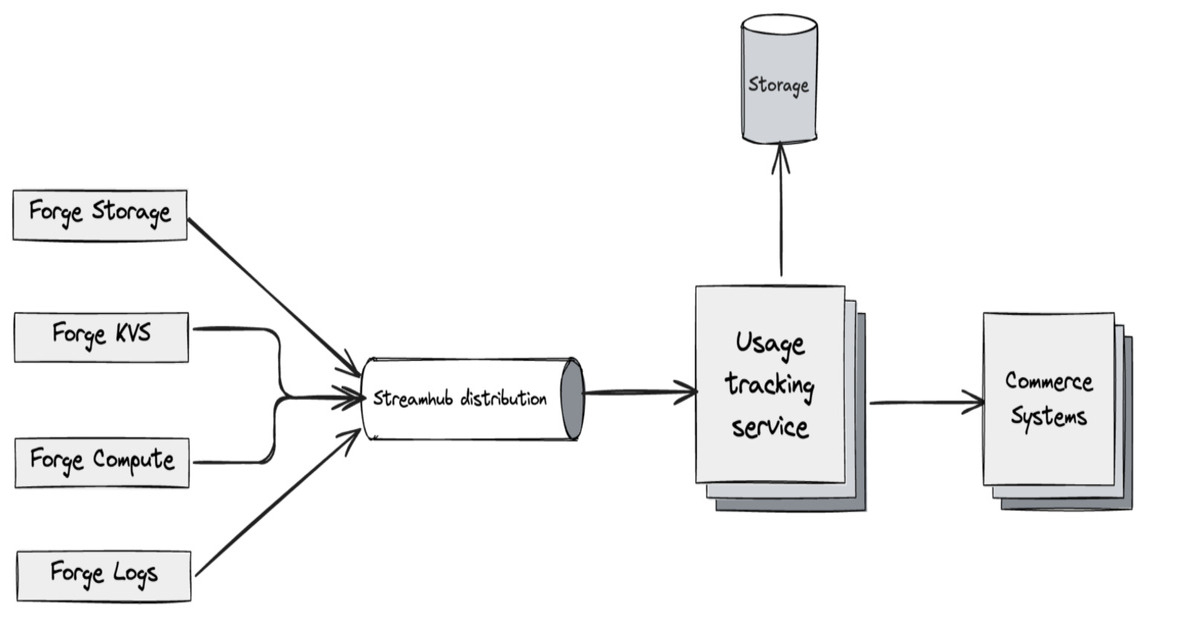
Atlassian details the Forge billing platform built for usage-based pricing across its cloud ecosystem. It processes large-scale usage events with correct attribution, deduplication, and aggregation using a streaming pipeline, idempotent processing, and layered storage to enable accurate billing, near real-time visibility, and reliable reconciliation across distributed services.
By Leela KumiliApple Launches Core AI for Apple-Silicon Optimized On-Device Generative AI

At WWDC 26, Apple announced the Core AI framework, the official successor to Core ML. It is designed to allow developers to run large language models and generative AI entirely on-device, supporting both custom-converted PyTorch models and pre-optimized open-source models.
By Sergio De SimoneAWS Adds Multi-Region Replication to Amazon Cognito Identity Service

AWS recently introduced Amazon Cognito multi-region replication, which automatically replicates user identities and user pool configurations from a primary region to a secondary one. This enables applications to continue authenticating users from a replica region during outages, without requiring custom replication and failover mechanisms.
By Renato LosioBehind the Scenes: Block 450 JVM Repositories into Monorepo to Reduce Dependency Drift

Block, Inc. describes migrating ~450 JVM repositories into a monorepo across Cash App and Square engineering to reduce dependency drift and coordination overhead. The system supports ~8,800 weekly builds with ~10 min p90 CI time. The approach improves cross-service changes, build visibility, and developer experience through dependency graph–based builds, selective CI, and custom IDE tooling.
By Leela Kumili
© 2026 Created by Michael Levin.
Powered by


RSVP for GatorJUG - on iPhone Development, with a Clojure case study too! to add comments!
Join Codetown