Codetown
Codetown ::: a software developer's community
OrlandoJUG ::: Secrets of the Rockstar Programmers
Event Details
Time: July 12, 2018 from 6pm to 8pm
Location: Oracle Intrepid Conference Room
Street: 7453 TG Lee Boulevard
City/Town: Orlando, FL 32822-4416
Website or Map: https://www.amazon.com/Secret…
Phone: 3212529322
Event Type: meeting
Organized By: Michael Levin
Latest Activity: Jul 12, 2018
Event Description
Hey, Gang: We have a special presenter this month. Ed Burns, author of Secrets of the Rock Star Programmers will be here to talk about the interviews that make up this fabulous book. I'll be at JCrete when we normally meet, so this meeting is 7/12, Thursday. Please RSVP so we'll know how much food and bev to get. Thanks in advance to TekSystems for the pizza!
Abstract
How in the world can I keep up with all this information coming at me every day?
What can I do to ensure that I keep bringing value to my employer or client and to help ensure continued career success?
What will the practice of software development look like in ten years time?
How do I know where to invest time and effort in stewarding my skillset?
In 2008, Ed Burns interviewed top programmers from a variety of software disciplines for the book “Secrets of the Rock Star Programmers”. Now in 2018, Ed revisits the cross section of secrets (aka character attributes) exhibited by these rockstars for the current world of programming.
Join this session to learn more about these characteristics that can help you become a better programmer.
Purpose of the Talk
Ed interviews some of the best programmers of our time and shares their strategies for success.
Target Audience
- Any developer wanting to improve their career skills.
Audience Takeaway
A set of concrete, actionable steps you can take right now to become a better developer.
Comment Wall
Comment
Happy 10th year, JCertif!
Notes
Welcome to Codetown!
 Codetown is a social network. It's got blogs, forums, groups, personal pages and more! You might think of Codetown as a funky camper van with lots of compartments for your stuff and a great multimedia system, too! Best of all, Codetown has room for all of your friends.
Created by Michael Levin Dec 18, 2008 at 6:56pm. Last updated by Michael Levin May 4, 2018.
Looking for Jobs or Staff?
Check out the Codetown Jobs group.
InfoQ Reading List
Cloudflare Details Unified Data Platform Where Billing Workloads Account for 53% of Queries
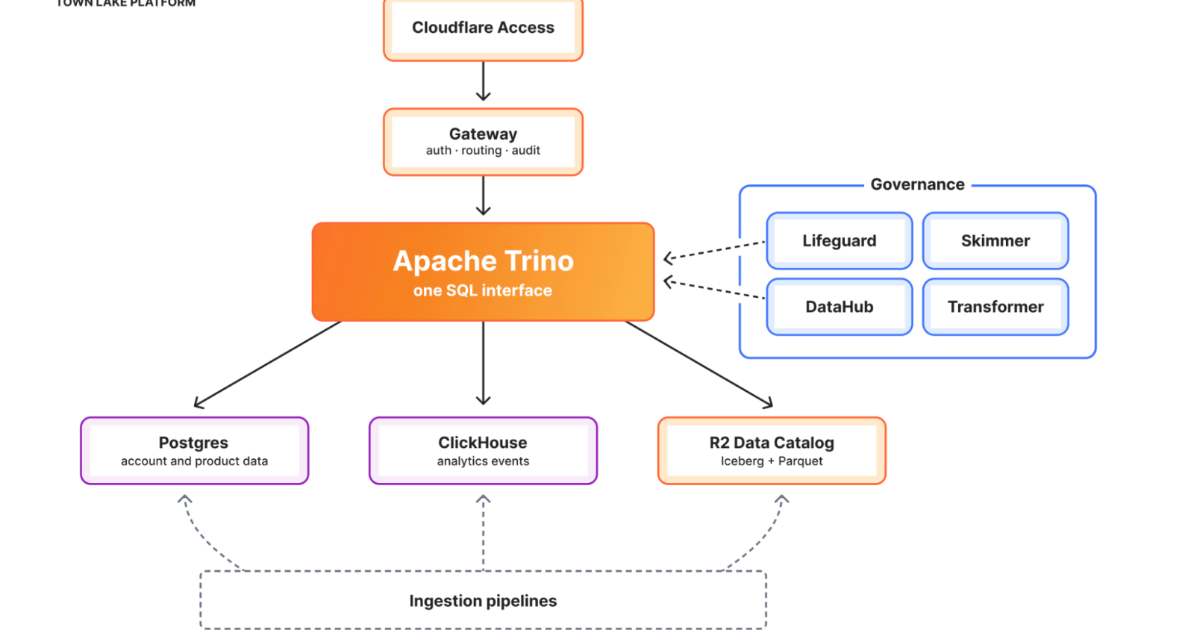
Cloudflare details Town Lake, an internal unified data platform, and Skipper, an AI analytics agent unifying access to operational, billing, security, and business data. The platform processed ~91K billing queries, with billing forming majority usage. Built on a lakehouse architecture using Trino, Iceberg, R2, and DataHub, it enables governed cross-system analytics and natural language access.
By Leela KumiliHardwood Promises High-Speed JVM Apache Parquet Processing with Zero Mandatory Dependencies

Hardwood, the project Gunnar Morling kick-started to improve the handling of Parquet files in Java, reached version 1. Its multi-threaded approach and zero mandatory external dependencies promise a simpler, optimal alternative to the Apache Parquet Java implementation. For now, the library provides a reading via API and a CLI for visualisation; writing support is expected in the upcoming versions.
By Olimpiu PopOpenTelemetry Graduates to CNCF's Highest Maturity Level

The Cloud Native Computing Foundation (CNCF) has announced the graduation of OpenTelemetry, elevating the project to the foundation's highest level of maturity and formally recognizing it as production-ready for enterprise use.
By Craig RisiMini book: Agentic AI Architecture

In this eMag, we try to establish agentic AI architecture as a new type of software architecture that will likely dominate the industry for years to come. The articles, written by industry experts, cover various elements and aspects of agentic AI architecture. We aim to present the latest trends and developments shaping the new type of architecture as it enters the mainstream.
By InfoQOracle Quietly Halves Free Tier Ampere A1 Compute Limits with No Public Announcement

Oracle halved the Always Free Ampere A1 compute allowance from 4 OCPUs and 24 GB RAM to 2 OCPUs and 12 GB RAM with no public announcement. Support agents gave conflicting answers on whether PAYG accounts are affected. Documentation states the new limits apply to "all tenancies" while support emails say only free-tier accounts.
By Steef-Jan Wiggers
© 2026 Created by Michael Levin.
Powered by


RSVP for OrlandoJUG ::: Secrets of the Rockstar Programmers to add comments!
Join Codetown