Codetown
Codetown ::: a software developer's community
CajunJUG: Flex
Event Details

Time: April 16, 2009 from 6:30pm to 8pm
Location: Celebration Church
Street: 2701 Transcontinental Dr
City/Town: Metairie
Event Type: meeting
Organized By: Allan Davis
Latest Activity: Apr 2, 2009
Event Description
Fill out the form to rsvp at:
https://spreadsheets.google.com/viewform?hl=en&formkey=cFdQTjc1V1dzR2hlN2hTRlU0cGlhQXc6MA..
This month James Ward will speak
Topic:
Title: Sexier Software with Flex and Java
Outline:
Intro to Rich Internet Applications
- RIA as the next generation of Software
- Back to the Client-Server Model
- Adobe's RIA Software Development Platform
Intro to building software with Flex
- What is Flex?
- Open Source SDK
- ActionScript & MXML Languages
- Components
- How do you use Flex?
- Compiler
- Debugging
Intro to BlazeDS (Java Integration)
- Installing BlazeDS into a Web App (WAR File)
- Remoting (RPC style object invocations over HTTP)
- Pub/Sub Messaging
- Spring Integration
Author Bio:
James Ward is a Technical Evangelist for Flex at Adobe and Adobe’s JCP
representative to JSR 286, 299, and 301. Much like his love for
climbing mountains he enjoys programming because it provides endless
new discoveries, elegant workarounds, summits and valleys. His
adventures in climbing have taken him many places. Likewise,
technology has brought him many adventures, including: Pascal and
Assembly back in the early 90’s; Perl, HTML, and JavaScript in the mid
90’s; then Java and many of it’s frameworks beginning in the late
90’s. Today he primarily uses Flex to build beautiful front-ends for
Java based back-ends. Prior to Adobe, James built a rich marketing and
customer service portal for Pillar Data Systems.
Comment Wall
Happy 10th year, JCertif!
Notes
Welcome to Codetown!
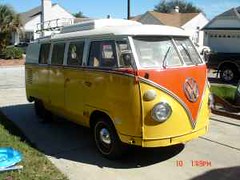 Codetown is a social network. It's got blogs, forums, groups, personal pages and more! You might think of Codetown as a funky camper van with lots of compartments for your stuff and a great multimedia system, too! Best of all, Codetown has room for all of your friends.
Created by Michael Levin Dec 18, 2008 at 6:56pm. Last updated by Michael Levin May 4, 2018.
Looking for Jobs or Staff?
Check out the Codetown Jobs group.
InfoQ Reading List
Google Cloud Introduces Cross-Engine Iceberg Support in BigQuery

At the Apache Iceberg Summit last month, Google announced new interoperability features for Apache Iceberg in BigQuery. The preview of the serverless Iceberg REST catalog lets teams create, update, and query the same Apache Iceberg tables in BigQuery and in engines like Spark, Flink, and Trino without duplicating data.
By Renato LosioUber Improves Restaurant Recommendations Using Real-Time Signals and Listwise Ranking
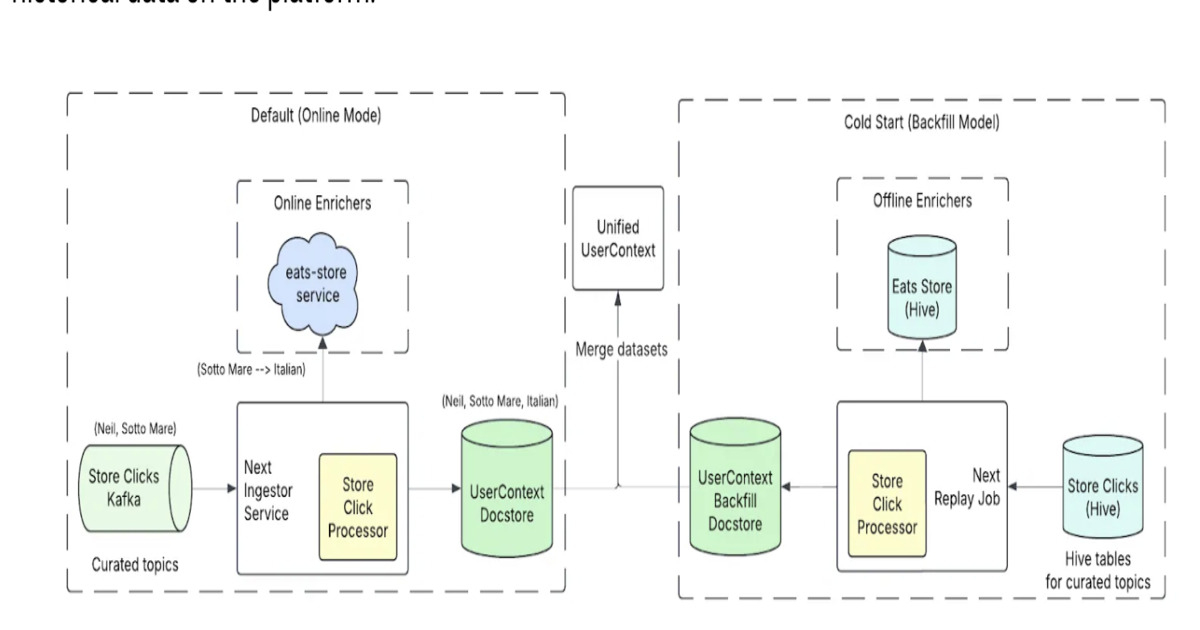
Uber updates its Uber Eats Home Feed recommendation system using near real-time user sequence features and a Generative Recommender model. The system evolves from hand-crafted features to transformer-based sequence modeling, reduces feature freshness from 24 hours to seconds, and shifts from pointwise scoring to listwise GenRec for improved contextual ranking and real-time personalization.
By Leela KumiliInfoQ Launches Online AI Engineering Cohort and Certification for Senior Software Practitioners

InfoQ has launched a five-week online AI Engineering certification for senior practitioners working on production AI systems, covering RAG, agents, AI platforms, evals, reliability, and operational trade-offs.
By Artenisa ChatziouDiscord Rebuilds Database Operations Around Automation to Manage ScyllaDB at Massive Scale

Discord has detailed how it rebuilt its database operations around a new internal orchestration framework called the Scylla Control Plane (SCP), enabling its small infrastructure team to automate large-scale ScyllaDB cluster management tasks that previously took days of manual work.
By Craig RisixAI Releases Grok Skills and Updates Tool Calling Responses API

xAI has released Grok Skills together with enhancements to the Responses API for Grok 4.3, enabling persistent custom expertise that the model retains across all conversations.
By Daniel Dominguez
© 2026 Created by Michael Levin.
Powered by

