Codetown
Codetown ::: a software developer's community
AJUG on Stimulus Package
While these are scary times, the Atlanta Java job market continues to be healthy and the demand for talent remains strong. Atlanta-based companies want people who can deliver projects, on time, under budget and exceeding the needs of end-users. They are looking for software professionals who understand how to apply the right tool at the right time with the right techniques to the right problem, right now.
Several recruiters have placed open positions on AJUG Jobs in the last couple of weeks
(http://www.ajug.org/ajugjobs/showJobs.do) and they are often looking for the same skills:
Java (of course), XML, Ant, Web Services, JBoss, JUnit, Tomcat, Flex, Spring, AJAX, Hibernate, Grails, REST, etc.
We recognize that times are tough and that budgets are tight and that company travel & training budgets are often the first to go. DevNexus 2009, at $185 per ticket (team discounts available), is the most economical educational value in Atlanta. We have lined up speakers from the most popular open source projects and gurus from local teams for two full-days of lectures, demonstrations and interaction. Your event ticket also covers meals & breaks which are the best times to spend meeting other engineers from the local Java market.
http://www.devnexus.com/
Comment
-
Comment by Tim Stevesi on March 12, 2009 at 1:53pm
-
Thanks! A lot of interesting topics being covered.
Happy 10th year, JCertif!
Notes
Welcome to Codetown!
 Codetown is a social network. It's got blogs, forums, groups, personal pages and more! You might think of Codetown as a funky camper van with lots of compartments for your stuff and a great multimedia system, too! Best of all, Codetown has room for all of your friends.
Created by Michael Levin Dec 18, 2008 at 6:56pm. Last updated by Michael Levin May 4, 2018.
Looking for Jobs or Staff?
Check out the Codetown Jobs group.
InfoQ Reading List
AGNTCon + MCPCon 2026: Agentic AI Foundation Adds Four Projects as MCP Turns to Security
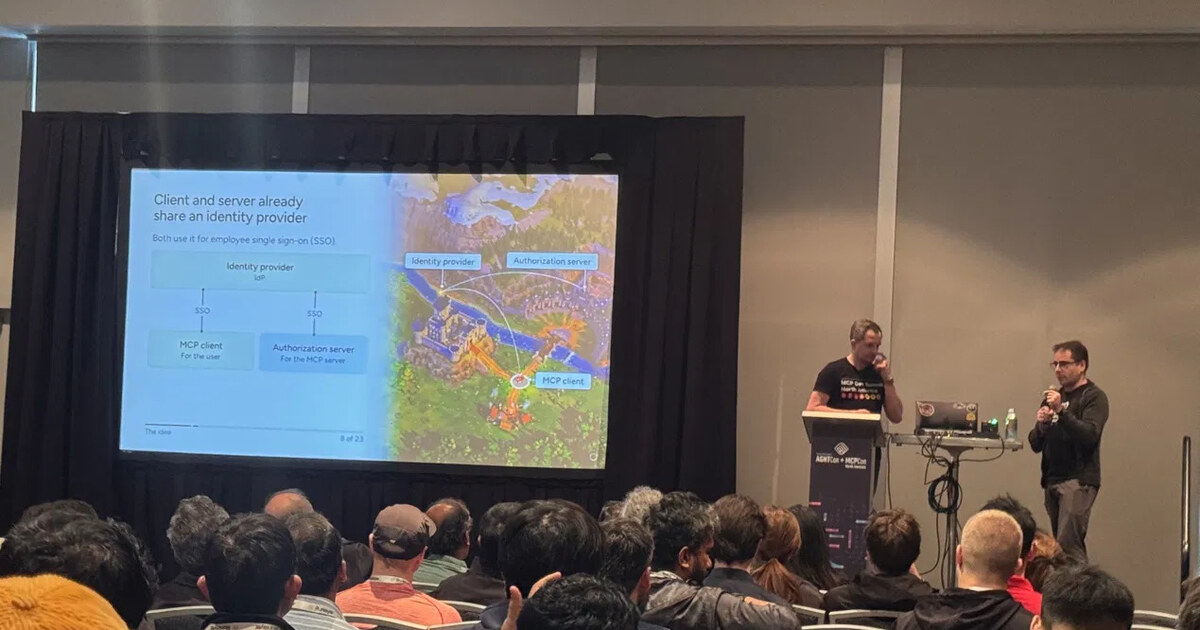
At AGNTCon + MCPCon North America 2026, the Agentic AI Foundation added OpenSandbox, Open Responses, Agent Skills, and OpenEnv, reaching ten projects in its first year. Keynotes from Anthropic, OpenAI, Google, and UC Berkeley focused on MCP in production, security, and agents with their own identities.
By Andrew HoblitzellOpenTofu 1.13 Lets Module Authors Reduce Unknown Values at Plan Time

OpenTofu 1.13 adds convert and assume... functions that let module authors give the planner type and value hints for unknown values, so more expressions resolve during tofu plan. If a value unknown during planning later violates a guarantee, OpenTofu reports an error during apply.
By Mark SilvesterDigitalOcean Launches Learning and Data Services to Enable Self-Improving AI Agents

DigitalOcean has announced the public preview of Learning Services and Agent Data Services, enabling developers to build, evaluate, and continuously improve AI agents within a unified, AI-native, cloud platform.
By Sergio De SimoneProduction AI and Engineering Team Design: InfoQ’s November Certification Cohorts
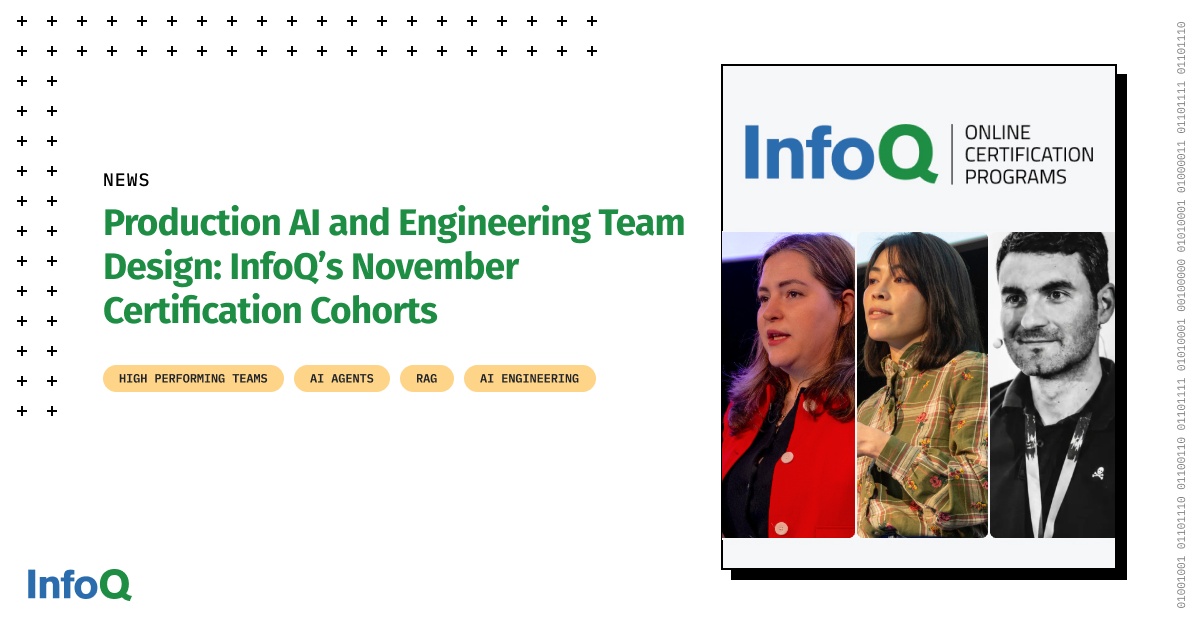
A preview of three November InfoQ online certification cohorts covering production AI systems, retrieval and agent design, engineering team flow, AI roles, and measurement, facilitated by Adi Polak, Lan Chu, and Olimpiu Pop.
By Artenisa ChatziouJava News Roundup: JDK 28 Schedule, Oracle CPUs, eMudhra Certs, Apache POI, WildFly, Azul, BellSoft
This week's Java roundup for October 19th, 2026, features news highlighting: the proposed release schedule for JDK 28; the eMudhra Intermediate CA certificates breach; the October 2026 Critical Patch Update; Azul and BellSoft CPUs; GA releases of WildFly 42 and Apache POI 6.0; the beta release of Open Liberty 26.0.0.11; and maintenance releases of Micronaut and JobRunr.
By Michael Redlich
© 2026 Created by Michael Levin.
Powered by


You need to be a member of Codetown to add comments!
Join Codetown