Codetown
Codetown ::: a software developer's community
$11 Billion Swapmeet
First of all, relax, I'm not announcing an exclusive executive swapmeet. The market for used cell phones has ramped up to a whopping $11 billion as of 2016[1]. That's a big number by itself, especially since the market scarcely existed just ten years ago. By comparison, everything sold in every category by everyone worldwide on Ebay, new or used, was $84 billion total in 2016[2].
Unless you are actually a senior exec and can offer your device, refurbished, to other employees then you have a couple options to pass along your once-glorious smartphone. Most of us in the US still sell back our devices to our carriers or directly to manufacturers. In other countries, especially Europe, (and for slightly older phones) people turn to sites akin to Ebay and Craigslist for quick cash. Or you could do what I do and strip everything down, install a paint app, remove the wi-fi password, and give the phone to your three-your-old.
Finally, I'd like to mention a gem in our greater Orlando, FL area: Computers Plus Cell Phones[3]. Having a local shop that offers up-front prices means you get even quicker cash and an honest human face. Full disclosure: their owner is a good friend of mine. You can even get a quote online before heading to one of their stores[4] and compare to your carrier's deal.
* Ismail Jones is a freelance web and mobile developer, owner of Azizah Solutions, and software architect at Cerner Corporation.
Sources:
[1] https://www2.deloitte.com/lb/en/pages/technology-media-and-telecomm...
[2] https://investors.ebayinc.com/releasedetail.cfm?ReleaseID=1009166
Comments are closed for this blog post
Happy 10th year, JCertif!
Notes
Welcome to Codetown!
 Codetown is a social network. It's got blogs, forums, groups, personal pages and more! You might think of Codetown as a funky camper van with lots of compartments for your stuff and a great multimedia system, too! Best of all, Codetown has room for all of your friends.
Created by Michael Levin Dec 18, 2008 at 6:56pm. Last updated by Michael Levin May 4, 2018.
Looking for Jobs or Staff?
Check out the Codetown Jobs group.
InfoQ Reading List
Cloudflare’s Auto Router Rates Each Request for Stakes, from the Most Recent Turns

Cloudflare has released Auto Router in public beta through AI Gateway, picking a model per request from a classifier that scores complexity, ambiguity, stakes and context dependence. Cloudflare’s own benchmark puts it ten points below Claude Opus 5.5 on success rate at a third of the cost, and practitioners have questioned how stakes survive a long agent session.
By Steef-Jan WiggersMCP C# SDK 2.0 Makes HTTP Stateless by Default and Adds Multi Round-Trip Requests

Microsoft announced version 2.0 of the official MCP C# SDK, which implements the 2026-07-28 revision of the Model Context Protocol with stateless HTTP servers by default, standardised routing headers and Multi Round-Trip Requests. Releases 2.1 to 2.3 have since added hybrid session serving, a subscriptions/listen handler and a series of discovery, OAuth and shutdown fixes.
By Edin KapićPHP Patches Two Critical RCE Flaws That Were Already Under Attack

PHP released 8.5.12, 8.4.27, 8.3.36, and 8.2.35 to fix two critical vulnerabilities allowing unauthenticated remote code execution. Amazon recorded an exploitation attempt four days before the patches shipped, and operators spent the day working out whether they ran PHP, where to get the package, and how to tell it had landed.
By Steef-Jan WiggersPyTorch Conference 2026: Google and Meta Open-Source TorchTPU for Native PyTorch on TPUs
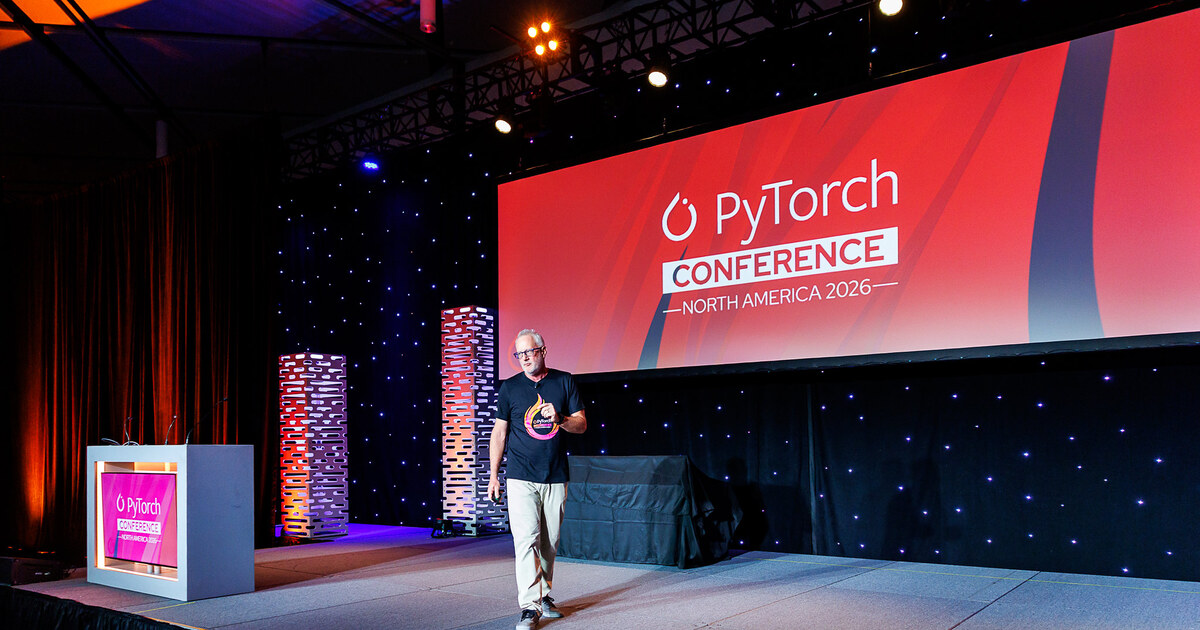
Google and Meta open-sourced TorchTPU, a native PyTorch backend for Google's TPUs, at PyTorch Conference North America 2026, and Meta said it plans to move larger LLM workloads onto TPUs with it. AWS released TorchNeuron for Trainium the same week, while developers questioned TPU availability and where vendor lock-in now sits.
By Andrew HoblitzellGoogle ML Drift Accelerates On-Device AI Inference Across Diverse GPUs

Google has released ML Drift, an open-source, cross-platform GPU compute engine designed for on-device AI and machine learning inference. Licensed under Apache 2.0, it abstracts the complexities of different GPU hardware and low-level APIs, supporting OpenGL ES, OpenCL, Metal, and WebGPU.
By Sergio De Simone
© 2026 Created by Michael Levin.
Powered by

