Codetown
Codetown ::: a software developer's community
Eric Lavigne's Groups (7)
Computational Linguistics Village
15 members Latest Activity: May 6, 2018 Ever wonder how Google Translate works? It's computational linguistics! Join us here and learn all about it and more. Jim White will be our guide.…
Startup City
24 members Latest Activity: Jun 10, 2016 Have you got a great idea you'd like to put into action? This is the place for you! We'll talk about ideas and how to turn them into businesses here.
Contest Town
9 members Latest Activity: Apr 13, 2010 Everyone likes a challenge. How about a contest? If you like to flex your muscle, why not join us here at Contest Town. You'll find some challenging…
.Net Town
18 members Latest Activity: Apr 13, 2020 What's up with .Net in your neck of the woods? We'll discuss all the basics here. Eventually, we'l break out separate groups for C#, etc...
iPhone Development
40 members Latest Activity: Jan 29, 2015 iPhone development is going nuts! All the apps, all the possibilities. Objective-C is the language. The SDK is out. Shops are springing up everywhere…
JEE Town
28 members Latest Activity: Dec 11, 2012 Here's your Java Enterprise Edition group. JEE powers distributed software.
Clojure
8 members Latest Activity: Feb 13, 2014 Clojure is a programming language that shares the powerful meta-programming facilities of Lisp, has an agent-based approach to concurrency like…
Happy 10th year, JCertif!
Notes
Welcome to Codetown!
 Codetown is a social network. It's got blogs, forums, groups, personal pages and more! You might think of Codetown as a funky camper van with lots of compartments for your stuff and a great multimedia system, too! Best of all, Codetown has room for all of your friends.
Created by Michael Levin Dec 18, 2008 at 6:56pm. Last updated by Michael Levin May 4, 2018.
Looking for Jobs or Staff?
Check out the Codetown Jobs group.
InfoQ Reading List
Reverse Engineer Anything Project Brings AI Agents to Binary Analysis

Reverse Engineer Anything (REA) is an open-source project with over 200K GitHub stars that connects coding agents such as Claude Code and Codex to reverse-engineering tools like Ghidra, Hopper, and IDA. The project lets developers inspect compiled binaries, trace function calls, and investigate how applications implement specific features.
By Renato LosioAmazon Acquires DuckLabs and Integrates DuckDB in Amazon Aurora PostgreSQL
Amazon has acquired DuckLabs, the company behind the analytical database DuckDB. Co-founders Hannes Mühleisen and Mark Raasveldt will continue to lead the team under AWS. The acquisition aims to enhance the development and reach of DuckDB while maintaining its open-source status. Amazon Aurora PostgreSQL gets its first DuckDB-powered feature following the acquisition.
By Gianmarco NalinGoogle EnvHarness Enables Self-Evolving Agents to Learn in Dynamics Environments

Google researchers open sourced EnvHarness, a framework that dynamically adapts agent-training environments to an agent's weaknesses without modifying the agent, environment, or evaluation system. According to the researchers, this approach can improve both learning effectiveness and efficiency while helping agents overcome their weaknesses.
By Sergio De SimoneZod Brings In-Process Schema Compilation and a 9x Cut in Memory Footprint
Zod is a TypeScript-focused schema validation library that recently released versions 4.5 and 4.6. Key updates include schema compilation for faster data parsing, significant memory usage reductions, and new validation features. The library supports efficient validation processes and remains popular in the JavaScript ecosystem, achieving millions of downloads weekly.
By Daniel CurtisUber Automates Dependency Analysis Across Its Service Mesh
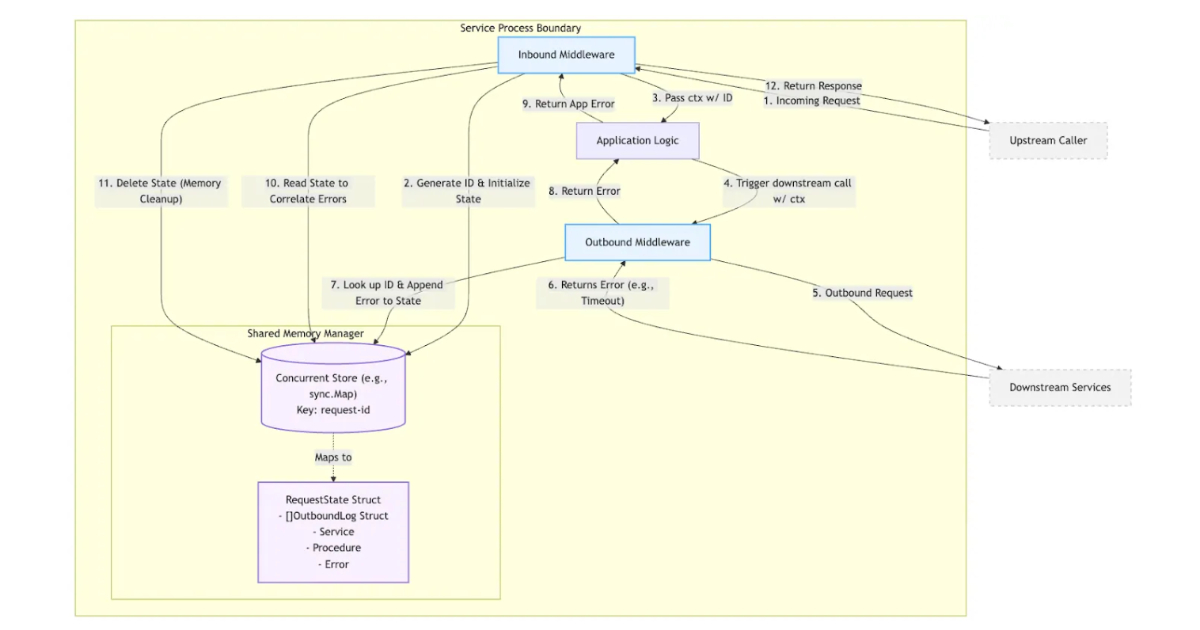
Uber has developed an automated dependency analysis system that uses RPC middleware and production metrics to correlate caller and downstream failures. The approach classifies dependencies as fail-close, fail-open, or unknown and addresses limitations of sampled distributed tracing for rare failures across Uber’s large service mesh.
By Leela Kumili
© 2026 Created by Michael Levin.
Powered by

