Codetown
Codetown ::: a software developer's community
SunJUG - Sarasota :: Continuous Deployment
Event Details
Time: July 25, 2012 from 6pm to 9pm
Location: Community Foundation of Sarasota
Street: 2635 Fruitville Rd
City/Town: Sarasota
Website or Map: http://www.sunjug.org
Event Type: meeting
Organized By: Steve Goldsmith
Latest Activity: Jul 26, 2012
Event Description
Hello, Codetown! This last minute announcement comes to you because I just got a reminder about tonight's meeting. Looks like a superior meeting, not only because of the presentation, but also because it's a chance to try some good beer. Here's the scoop:
"July's topic will be an end to end Maven developed web application built on a Jenkins continuous integration server and deployed to Nexus repository and Tomcat server presented by Doug Rothauser, Senior Java Application Server Administrator at FCCI Insurance Group.
Continuous Integration is not just about automatically building and testing software, but can also help in the broader context of the software product development and release life cycle. In many organizations, the life of a particular version of an application or product starts out in development. When it is deemed ready, it is passed on to a QA team for testing. If they consider the version acceptable, they pass it on to selected users for more testing in a User Acceptance Testing (UAT) environment. And if the users are happy, it is shipped out into production. Of course, there are almost as many variations on this as there are software development teams, but one common principle is that specific versions of your software are selected, according to certain quality-related criteria, to be “promoted” to the next stage of the life cycle. This is known as build promotion, and the broader process is known as a build pipeline.
An important part of any build pipeline is a well-defined release strategy. This involves, among other things, deciding how and when to cut a new release, and how to identify it with a unique label or version number. If you are working with Maven projects, using the Maven Release plugin to handle version numbers comes as a highly recommended practice.
The agenda consists of:
- Utilize Servlet 3.0 and JAX-WS RI
- Maven unit testing with Surefire plugin
- Maven functional/integration testing with Failsafe plugin
- Automated web-application testing using Selenium Maven plugin
- Creating a build pipeline using Maven, Jenkins, Git and Nexus
John Holton of RITA Technologies. John was able to hook me up, so if you are looking for employment prospects get in contact with him.
 I will bring samples of my Brewsmith Rye Ale. Freshly brewed by a true Brewmeister
Wednesday, July 25th at 6:00 PM.
The event will be hosted by Community Foundation of Sarasota, located at 2635 Fruitville Rd, Sarasota, FL 34237, which is west of exit 210 off I75. http://g.co/maps/c84e5"
Comment Wall
Comment
Happy 10th year, JCertif!
Notes
Welcome to Codetown!
 Codetown is a social network. It's got blogs, forums, groups, personal pages and more! You might think of Codetown as a funky camper van with lots of compartments for your stuff and a great multimedia system, too! Best of all, Codetown has room for all of your friends.
Created by Michael Levin Dec 18, 2008 at 6:56pm. Last updated by Michael Levin May 4, 2018.
Looking for Jobs or Staff?
Check out the Codetown Jobs group.
InfoQ Reading List
Cloudflare Identifies Query Planning Bottleneck in ClickHouse

Cloudflare recently described how a slowdown in its billing pipeline was traced to contention inside the query planning stage of ClickHouse. The team profiled the bottleneck and patched ClickHouse to replace an exclusive lock with a shared lock, drop the per-query copy of the parts list, and improve part filtering.
By Renato LosioHow OpenAI Built a Secure Windows Sandbox for Codex Agents
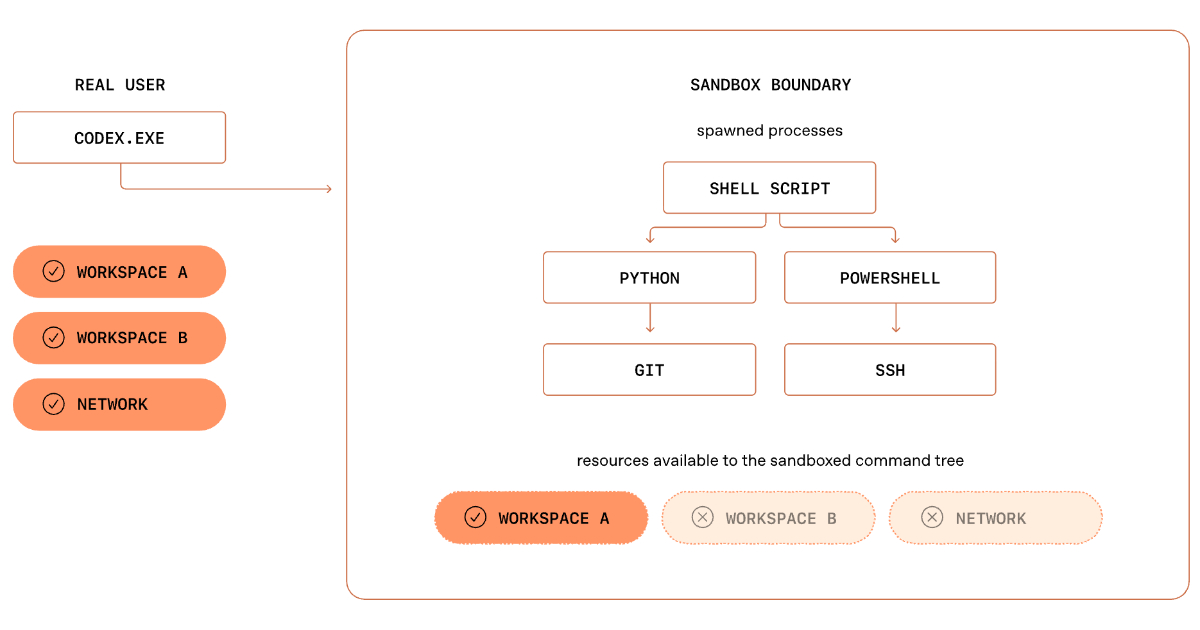
OpenAI details Codex Windows sandbox architecture, showing how SIDs, ACLs, restricted tokens, and dedicated sandbox accounts enable safe execution of autonomous coding tasks. The design balances isolation with real developer workflows and shows how OS security primitives must be composed for AI agents on local development environments.
By Leela KumiliPresentation: Platform Teams Enabling AI - MCP/Multi-Agentic Tools Across Linkedin

LinkedIn’s Karthik Ramgopal and Prince Valluri discuss leveraging AI as a new execution model for large-scale engineering. They explain how to move beyond fragmented implementations by building platform abstractions for orchestration, structured context, and safe tooling like MCP. They share architectural insights from real-world coding, observation, and UI testing agents built at LinkedIn.
By Karthik Ramgopal, Prince ValluriHow Netflix Maps Thousands of Microservices in Real-Time

Netflix has shared details about Service Topology. This internal system creates and updates a live dependency graph for thousands of microservices. It helps engineers see how services connect and resolve issues more quickly. The system merges three separate data sources into a single, queryable graph. It updates almost in real-time as traffic patterns shift.
By Claudio MasoloDropbox Introduces Nova, an Internal Platform for Running AI Coding Agents at Scale

Dropbox has unveiled Nova, an internal platform designed to orchestrate and operationalize AI coding agents across the company's engineering workflows.
By Craig Risi
© 2026 Created by Michael Levin.
Powered by


RSVP for SunJUG - Sarasota :: Continuous Deployment to add comments!
Join Codetown