Codetown
Codetown ::: a software developer's community
OSCON
Event Details
Time: July 20, 2015 to July 24, 2015
Location: Portland
City/Town: Portland, OR
Website or Map: http://www.oscon.com/open-sou…
Event Type: conference
Organized By: O'Reilly Press
Latest Activity: Mar 10, 2015
Event Description
OSCON celebrates, defines, and demonstrates the power of open source in the world today. From small businesses to the enterprise, open source is the first choice of IT everywhere.
OSCON, the open source community's annual gathering
Open source is now found everywhere--from the bottom of the programming stack to the very top--so we're changing the way we organize these stories at OSCON. We've adopted a more holistic approach, focusing on the following topics as a means to consider and solve critical, real-world problems:
- Identity – An emerging and nuanced facet in the digital age and an exciting cross-functional track at OSCON 2015.
- Security – We'll explore security from top to bottom, offering frameworks and libraries, strategies for testing, and field reports of both security failure and success.
- Privacy – Computers remember our interactions at a level of detail the physical world never has. Do we want to be remembered, and for how long?
- Performance – From compilation and interpreter time to DOM manipulation, browser responsiveness, and network latency, we'll explore performance in all its facets.
- Mobility – We'll look at what it means to have a successful mobile game plan, from wearables to native apps.
- People – Making projects work requires communications, collaboration, and respect; we'll look at the ways a new generation of tools and approaches can help you work.
- Architecture – Software architecture is a massive multidisciplinary subject, covering many roles and responsibilities--and a key position in the success of any business.
- Scale – You’ve created a great web interface that is well designed, secure, and works well in a beta with 100 consumers, but how about 10,000, 1,000,000, or more?
- Storage – Find your way among the myriad choices for storing data and optimizing your systems for stability, distribution, convenience, and performance.
- Teaching – You want to share your best practices, projects, and tools with the world, but how do you go about sharing this knowledge? We'll examine learning theory and methods of teaching.
- Design – It's critical for success; learn how to incorporate design best practices from the very beginning of your project and all the way through.
- Solve – Harness the power of math to manipulate, secure, and create data.
- Data – Let's tackle data’s continued, growing influence over the entire business world and how you can make it work for you.
- Foundations – A strong foundation in computational thinking, problem solving, and programming best practices makes for a successful programmer.
Stay tuned. We'll unveil the preliminary program and open registration in March.
Important Dates
- All proposers notified - By March 2015
- Program Announced and Registration Opens - March 2015
Comment Wall
Comment
Happy 10th year, JCertif!
Notes
Welcome to Codetown!
 Codetown is a social network. It's got blogs, forums, groups, personal pages and more! You might think of Codetown as a funky camper van with lots of compartments for your stuff and a great multimedia system, too! Best of all, Codetown has room for all of your friends.
Created by Michael Levin Dec 18, 2008 at 6:56pm. Last updated by Michael Levin May 4, 2018.
Looking for Jobs or Staff?
Check out the Codetown Jobs group.
InfoQ Reading List
DuckDB Quack: Client/Server Protocol over HTTP for Multi-User Analytics

DuckDB has recently announced Quack, a new remote protocol over HTTP that lets multiple DuckDB instances connect to and work with the same database over a network. The protocol introduces client-server capabilities to a database that was previously mostly local and embedded.
By Renato LosioArm Open-Sources Metis, an AI Security Framework Outperforming Traditional SAST Tools

Arm has open-sourced Metis, an agentic AI security framework designed to autonomously uncover complex software vulnerabilities. Unlike traditional pattern-based tools, Metis applies semantic reasoning to analyze cross-component dependencies and provides clear, natural language explanations for its findings.
By Sergio De SimoneGoogle Cloud Suspends Railway's Production Account, Causing Eight-Hour Platform-Wide Outage

Google Cloud's automated systems suspended Railway's production account without notice, triggering an eight-hour platform-wide outage affecting 3 million users. The cascade took down workloads across all providers including AWS and bare metal because Railway's control plane was hosted on GCP. Railway is demoting GCP to backup-only status.
By Steef-Jan WiggersHow Meta Rebuilt Data Ingestion for Petabyte-Scale Reliability
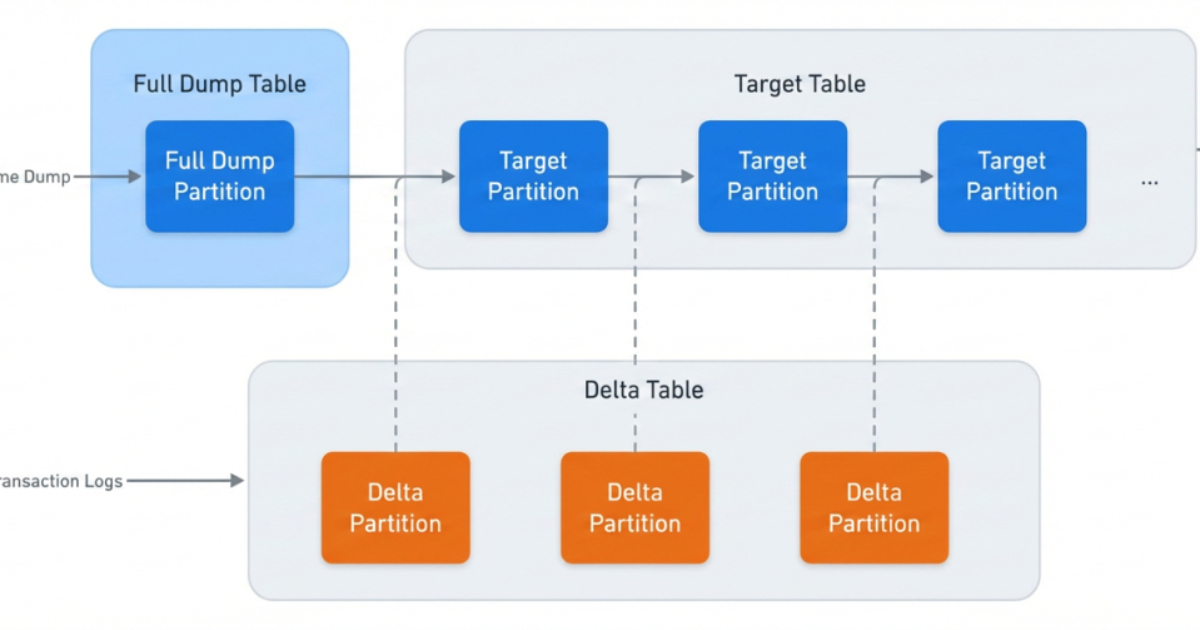
The engineering team at Meta recently outlined how the company migrated a data ingestion platform that transfers several petabytes of MySQL social graph data daily to improve reliability and operational efficiency. The team used techniques like reverse shadowing and continuous checksum monitoring to ensure zero downtime during the transition.
By Renato LosioPresentation: Building Evals for AI Adoption: From Principles to Practice

Mallika Rao discusses the hidden risk of evaluation debt in production AI systems, drawing on her experience at Twitter, Walmart, and Netflix. She explains why traditional metrics fail modern architectures, breaks down a five-layer evaluation stack spanning infrastructure and UX, and shares a diagnostic maturity model to help engineering leaders eliminate silent semantic failures.
By Mallika Rao
© 2026 Created by Michael Levin.
Powered by


RSVP for OSCON to add comments!
Join Codetown