Codetown
Codetown ::: a software developer's community
Orlandojug - JavaFX
Event Details
Time: April 23, 2009 from 6pm to 9pm
Location: DeVry Univ Room 114
Street: 4000 Millennia
City/Town: Orlando
Website or Map: http://www.orlandojug.org
Phone: 407-622-WEBS
Event Type: meeting
Organized By: Michael Levin
Latest Activity: Apr 23, 2009
Event Description
JavaFX is a new RIA platform built on Java. Jim Clarke, the primary author of
JavaFX - Developing Rich Internet Applications (June 2009), will demonstrate JavaFX development live,
including sample REST applications.
Speaker: Jim Clarke is a Principle Engineer with Sun Microsystems and has spent the
last 12 years developing with Java. For the past 2 years, Jim has been working directly with JavaFX
and participated on the JavaFX compiler team. Jim is a graduate of the University of Notre Dame
and has been in the Computer Science field for 30 years. See http://blogs.sun.com/clarkeman/ for more info
Comment Wall
Comment
-
Comment by Nathan Kopp on April 23, 2009 at 2:42pm
-
Ohh.... I'm looking forward to hearing about JavaFX.
Of course, there's also the 800 pound gorilla in the room...... Will we be allowed to ask questions about the Oracle+Sun merger? Will Jim Clarke be allowed to answer them? :-)
Happy 10th year, JCertif!
Notes
Welcome to Codetown!
 Codetown is a social network. It's got blogs, forums, groups, personal pages and more! You might think of Codetown as a funky camper van with lots of compartments for your stuff and a great multimedia system, too! Best of all, Codetown has room for all of your friends.
Created by Michael Levin Dec 18, 2008 at 6:56pm. Last updated by Michael Levin May 4, 2018.
Looking for Jobs or Staff?
Check out the Codetown Jobs group.
InfoQ Reading List
Google Cloud Introduces Cross-Engine Iceberg Support in BigQuery

At the Apache Iceberg Summit last month, Google announced new interoperability features for Apache Iceberg in BigQuery. The preview of the serverless Iceberg REST catalog lets teams create, update, and query the same Apache Iceberg tables in BigQuery and in engines like Spark, Flink, and Trino without duplicating data.
By Renato LosioUber Improves Restaurant Recommendations Using Real-Time Signals and Listwise Ranking
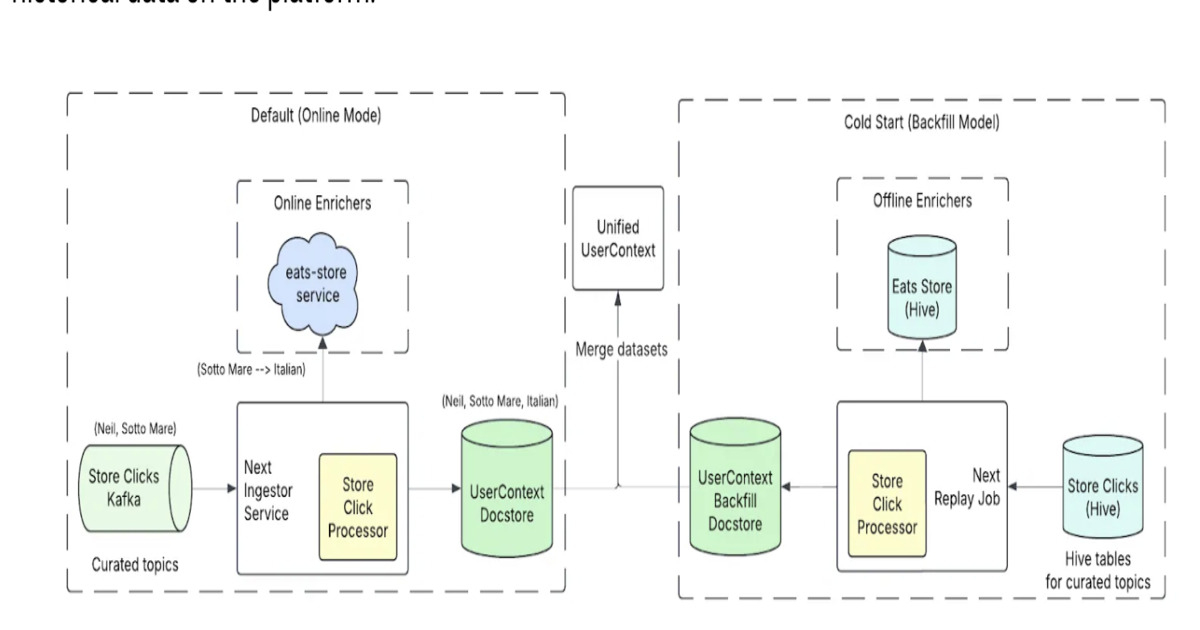
Uber updates its Uber Eats Home Feed recommendation system using near real-time user sequence features and a Generative Recommender model. The system evolves from hand-crafted features to transformer-based sequence modeling, reduces feature freshness from 24 hours to seconds, and shifts from pointwise scoring to listwise GenRec for improved contextual ranking and real-time personalization.
By Leela KumiliInfoQ Launches Online AI Engineering Cohort and Certification for Senior Software Practitioners

InfoQ has launched a five-week online AI Engineering certification for senior practitioners working on production AI systems, covering RAG, agents, AI platforms, evals, reliability, and operational trade-offs.
By Artenisa ChatziouDiscord Rebuilds Database Operations Around Automation to Manage ScyllaDB at Massive Scale

Discord has detailed how it rebuilt its database operations around a new internal orchestration framework called the Scylla Control Plane (SCP), enabling its small infrastructure team to automate large-scale ScyllaDB cluster management tasks that previously took days of manual work.
By Craig RisixAI Releases Grok Skills and Updates Tool Calling Responses API

xAI has released Grok Skills together with enhancements to the Responses API for Grok 4.3, enabling persistent custom expertise that the model retains across all conversations.
By Daniel Dominguez
© 2026 Created by Michael Levin.
Powered by


RSVP for Orlandojug - JavaFX to add comments!
Join Codetown