Codetown
Codetown ::: a software developer's community
OrlandoJUG - 6-9PM Feb 20 at DeVry with Howard Lewis Ship on Clojure
Event Details
Time: February 20, 2014 from 6pm to 9pm
Location: DeVry University
Street: 4000 Millennia Blvd, Room 119
City/Town: Orlando
Website or Map: http://www.codetown.us/group/…
Phone: 321-252-9322
Event Type: meeting
Organized By: Michael Levin
Latest Activity: Feb 20, 2014
Event Description
Join us for a Clojure talk by Tapestry author Howard Lewis Ship. Thanks to Consultis for Pizza and Cambridge Web Design for organization.
Here's a little about what Howard plans to cover:
"Clojure is a fascinating new(er) programming language, created by Rich Hickey, that combines the ubiquity and performance of Java with the power and expressiveness of Lisp. Clojure excels at interesting problems, especially those involving concurrency, but can also freely interoperate with standard Java. Clojure developers quickly become passionate about this odd little hybrid: it's easy to learn, yet deeply powerful, and is at the heart of a vibrant and exciting eco-system of tools and libraries."

Howard Lewis Ship, the creator and lead developer for the Apache Tapestry project, is respected in the Java community as an expert on web application development, dependency injection, Java meta-programming, and developer productivity. He has well over twenty years of full-time software development under his belt, with over fifteen years of Java. He cut his teeth writing customer support software for Stratus Computer, but eventually traded PL/1 for Objective-C and NeXTSTEP before settling into Java. For the last year, Howard has been working full time in Clojure as well.
Howard is a frequent speaker at JavaOne, NoFluffJustStuff, ApacheCon, and other conferences, and the author of "Tapestry in Action" for Manning (covering Tapestry 3.0).
Howard is an independent consultant, offering training, mentoring, and project work in Tapestry as well as other interesting technologies such as Clojure and AngularJS. He lives in Portland, Oregon with his wife Suzanne, and his children, Jacob and Olivia.
http://howardlewisship.com/
Comment Wall
Comment
-
Comment by Justin Griffin on February 20, 2014 at 1:46pm
-
Chris Wasser is bringing some adaptors, in case we need them.
-
Comment by Michael Levin on February 13, 2014 at 2:20pm
-
There may be a cable to fit your Mac but bringing an adaptor might be safest!
-
Comment by Howard M. Lewis Ship on February 13, 2014 at 11:28am
-
Had a good run through of this talk last night; I expect to make it even better for next Thursday.
One issue is that I left my mini-display port to VGA cable behind in Portland; we cobbled something together using screen sharing. What kind of projector and cable do you have at the Orlando JUG? If necessary, I can run out a purchase the right cable.
Happy 10th year, JCertif!
Notes
Welcome to Codetown!
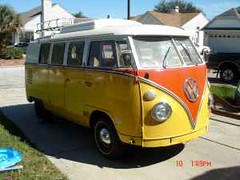 Codetown is a social network. It's got blogs, forums, groups, personal pages and more! You might think of Codetown as a funky camper van with lots of compartments for your stuff and a great multimedia system, too! Best of all, Codetown has room for all of your friends.
Created by Michael Levin Dec 18, 2008 at 6:56pm. Last updated by Michael Levin May 4, 2018.
Looking for Jobs or Staff?
Check out the Codetown Jobs group.
InfoQ Reading List
Cloudflare’s Post-Quantum GeoKey Manager Enters Closed Beta Without Attribute-Based Encryption

Cloudflare has moved a post-quantum rebuild of GeoKey Manager into closed beta, guarding geo-fenced keys with hybrid ML-KEM-768 and X25519 instead of the attribute-based encryption used since 2022. Keys live only in kernel memory on verified regional servers, and any failed check rejects the request, a fail-closed choice practitioners ask could cause a regional outage. GA is planned for Q1 2027.
By Steef-Jan WiggersOpenBSD 8.0 Brings Expanded Hardware Support, Security Enhancements, and Virtualization Improvements

OpenBSD 8.0 is a substantial upgrade bringing broader hardware compatibility, enhanced security, an expanded virtual address space, and support for modern architectures, including Intel Arc A-Series graphics support, ARM64 hibernation, RISC-V improvements, and enhanced virtual machine support.
By Sergio De SimoneSpring News Roundup: First Release Candidates of Boot, Framework, Data, Security, Modulith, AI

There was a flurry of activity during the week of October 19th, 2026, highlighting: first release candidates of: Spring Boot, Spring Framework, Spring Data, Spring Cloud, Spring Security, Spring for GraphQL, Spring Session, Spring Integration, Spring HATEOS, Spring Modulith, Spring REST Docs, Spring AI, Spring Batch, Spring AMQP, Spring for Apache Kafka, Spring LDAP and Spring Web Services.
By Michael RedlichKubernetes Confidential Containers Get Fortanix Attestation and Key Management

Fortanix's CoCo integration connects workload attestation to decryption-key release for Kubernetes AI workloads. GPU-verification settings affect protection, while upstream Trustee and Azure Secure Key Release offer alternative routes to attestation-based key release.
By Mark SilvesterLocalStack for Azure Enters Public Preview with Security Settings Stored but Not Enforced

LocalStack has opened its Azure emulator to a free public preview, running Azure services locally and accepting existing ARM, Bicep, and Terraform without rewrites. Its own documentation reports partial operation coverage per service and a consistent pattern: configuration is stored and returned, while enforcement of access restrictions, TLS, and network rules is not implemented.
By Steef-Jan Wiggers
© 2026 Created by Michael Levin.
Powered by


RSVP for OrlandoJUG - 6-9PM Feb 20 at DeVry with Howard Lewis Ship on Clojure to add comments!
Join Codetown