Codetown
Codetown ::: a software developer's community
Open Source Bridge
Event Details
Time: June 23, 2015 to June 26, 2015
Location: Portland
City/Town: Portland, OR
Website or Map: http://opensourcebridge.org
Event Type: conference
Organized By: Open Source Bridge
Latest Activity: Mar 10, 2015
Event Description
Open Source Bridge is a software conference in Portland that equips you for the whole year with news and information to help you be the best developer you can be...and collaborate. Here's some info, and we will raffle off a free ticket to the conference at GatorJUG and OrlandoJUG!
Open Source Bridge: http://opensourcebridge.org
Open Source Bridge is a conference for those working with open source technologies. It will take place June 23–26, 2015, in Portland, Oregon, with five tracks connecting people across projects, languages and experience to explore how we do our work and why we participate in open source. The conference structure is designed to provide developers with an opportunity to learn from people they might not connect with at other events. Attendees will learn and interact at three days of traditional conference presentations, a day of free-form unconference sessions, and our all-day Hacker Lounge.
We’re also seeking presentation proposals through March 14th. Read our Call for Proposals here:http://opensourcebridge.org/call-for-proposals
As a user group member, you can use the coupon code “osbugluv” to register for only $215 when you select Regular Registration. Learn more and register today at http://opensourcebridge.org/attend/
The conference is run entirely by volunteers who believe in the need for an open source event that focuses on the culture of being an open source citizen, regardless of where in the stack you choose to code. All proceeds from conference registration and sponsorship go directly to the costs of the conference.
Our event shares in-depth knowledge about using, creating, and contributing to open source as citizens of a greater community. You’ll find relevant information whether you write web apps for the cloud, tinker with operating system internals, create hardware, run a startup, or blog about technology.
The city of Portland is a great place to visit. It has a thriving tech community, a love of all things open source, and offers many attractions for visiting geeks, including Powell’s Technical Books, dozens of local brewpubs, and large greenspaces like Forest Park — all accessible by mass transit.
Visit http://opensourcebridge.org/ to learn more about the conference, see our session proposals, and register to attend.
Thanks!
Comment Wall
Comment
Happy 10th year, JCertif!
Notes
Welcome to Codetown!
 Codetown is a social network. It's got blogs, forums, groups, personal pages and more! You might think of Codetown as a funky camper van with lots of compartments for your stuff and a great multimedia system, too! Best of all, Codetown has room for all of your friends.
Created by Michael Levin Dec 18, 2008 at 6:56pm. Last updated by Michael Levin May 4, 2018.
Looking for Jobs or Staff?
Check out the Codetown Jobs group.
InfoQ Reading List
How OpenAI Built a Secure Windows Sandbox for Codex Agents
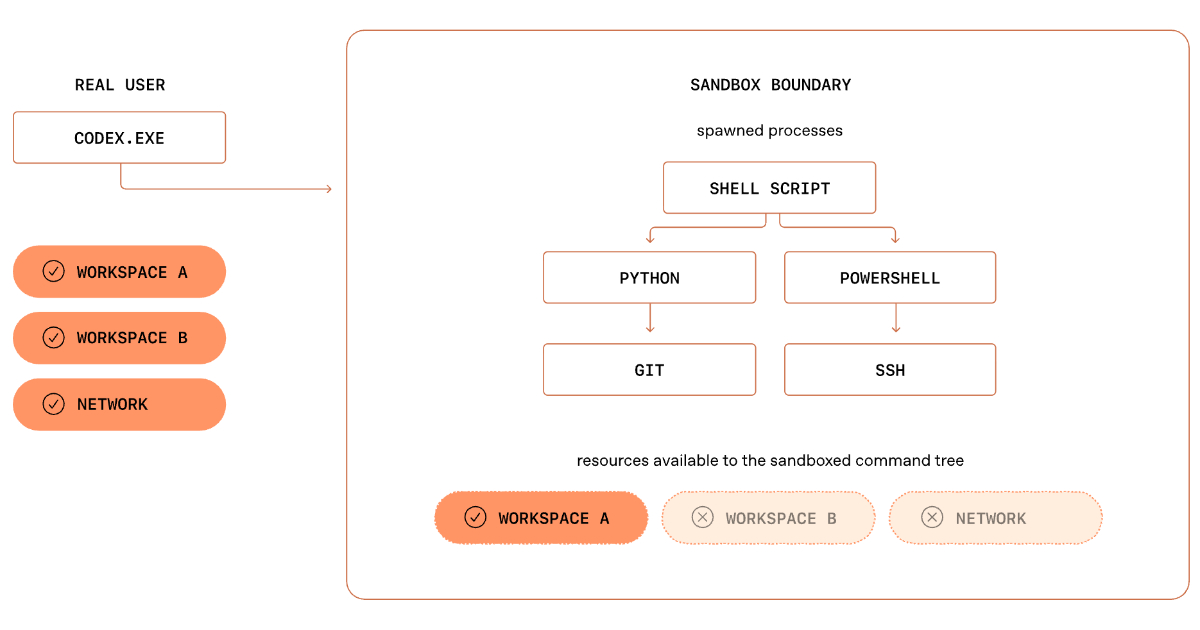
OpenAI details Codex Windows sandbox architecture, showing how SIDs, ACLs, restricted tokens, and dedicated sandbox accounts enable safe execution of autonomous coding tasks. The design balances isolation with real developer workflows and shows how OS security primitives must be composed for AI agents on local development environments.
By Leela KumiliPresentation: Platform Teams Enabling AI - MCP/Multi-Agentic Tools Across Linkedin

LinkedIn’s Karthik Ramgopal and Prince Valluri discuss leveraging AI as a new execution model for large-scale engineering. They explain how to move beyond fragmented implementations by building platform abstractions for orchestration, structured context, and safe tooling like MCP. They share architectural insights from real-world coding, observation, and UI testing agents built at LinkedIn.
By Karthik Ramgopal, Prince ValluriHow Netflix Maps Thousands of Microservices in Real-Time

Netflix has shared details about Service Topology. This internal system creates and updates a live dependency graph for thousands of microservices. It helps engineers see how services connect and resolve issues more quickly. The system merges three separate data sources into a single, queryable graph. It updates almost in real-time as traffic patterns shift.
By Claudio MasoloDropbox Introduces Nova, an Internal Platform for Running AI Coding Agents at Scale

Dropbox has unveiled Nova, an internal platform designed to orchestrate and operationalize AI coding agents across the company's engineering workflows.
By Craig RisiGoogle LiteRT-LM Speeds Up Local Inference Up to 2.2x With Gemma 4 Multi-Token Prediction
LiteRT-LM brings native support for Gemma 4 Multi-Token Prediction (MTP) drafters, enabling up to 2.2x faster inference. The framework is expanding beyond Kotlin and C++ adding support for new Swift and a JavaScript APIs.
By Sergio De Simone
© 2026 Created by Michael Levin.
Powered by


RSVP for Open Source Bridge to add comments!
Join Codetown