Codetown
Codetown ::: a software developer's community
Google Web Toolkit and App Engine
Event Details

Time: January 26, 2011 from 6pm to 9pm
Location: Community Foundation of Sarasota
Street: 2635 Fruitville Rd
City/Town: Sarasota
Website or Map: http://maps.google.com/maps?o…
Event Type: meeting
Organized By: David Moskowitz
Latest Activity: Jan 30, 2011
Event Description
This month at the Sunjug, David Chandler from Google with discuss two technologies for developing and deploying Rich Internet Applications.
What’s New in GWT 2.1
Google Web Toolkit (GWT) lets you build and optimize rich
browser-based apps without having to be an expert in browser quirks,XMLHttpRequest, or JavaScript. In this talk, we'll look at powerful new capabilities in GWT 2.1 including MVP architecture with Activities and Places, client-server communication with RequestFactory, visual layout with GWT Designer for Eclipse, and performance optimization
with SpeedTracer.
Launching scalable apps with Google App Engine
Google AppEngine lets you build and host scalable Web applications written in Python or Java on Google's infrastructure. We'll look at how to build and deploy a GWT+GAE application with Google Plugin for Eclipse and get an overview of building the App Engine way, including
working with the Datastore, task queues, and quotas.
Speaker bio
David Chandler works with the Google Web Toolkit Team in Atlanta. An electrical engineer by training, Chandler got hooked on developing database Web applications in the days of NCSA Mosaic and has since written Web applications professionally in a variety of languages,
including C, perl, ksh, ColdFusion, Java, JSF, and GWT. Prior to joining Google, Chandler worked on Internet banking applications with Intuit and launched a non-profit startup built with GWT and AppEngine. Chandler holds a patent on a method of organizing hierarchical data in a relational database and blogs about Java Web development at turbomanage.wordpress.com.
Food and refreshments will be provided.
The event will be hosted by Community Foundation of Sarasota, located at 2635 Fruitville Rd, Sarasota, FL 34237, which is west of exit 210 off I75.
Meeting Schedule:
* 6-6:45 PM: Networking
* 6:45 - 8:30 PM: Presentation
All Are welcome. Please RSVP.
Comment Wall
Comment
-
Comment by David Moskowitz on January 30, 2011 at 9:14pm
-
The presentation slides are now available at
Happy 10th year, JCertif!
Notes
Welcome to Codetown!
 Codetown is a social network. It's got blogs, forums, groups, personal pages and more! You might think of Codetown as a funky camper van with lots of compartments for your stuff and a great multimedia system, too! Best of all, Codetown has room for all of your friends.
Created by Michael Levin Dec 18, 2008 at 6:56pm. Last updated by Michael Levin May 4, 2018.
Looking for Jobs or Staff?
Check out the Codetown Jobs group.
InfoQ Reading List
OpenAI Releases GPT-6 Astra for Coding and Computer Use

OpenAI has released GPT-6 Astra, a new model focused on coding, computer use, long-running agentic tasks, and cybersecurity, with availability across ChatGPT, Codex, and the OpenAI API.
By Daniel DominguezBeyond Autonomous Teams in Software Product Development

Autonomous teams are an article of faith in modern software development. The shape of our value determines what we can do; it determines our trade-offs between agency and coherence. We all have a purpose, and we all have agency to do something, hence the suggestion is moving from product focus to value center thinking.
By Ben LindersPresentation: Accelerating Performance by Incrementally Integrating Rust Into Existing Codebase

Lily Mara explains how to avoid high-risk software rewrites through incremental FFI refactoring. She shares how engineering teams can replace Python bottlenecks with Rust via PyO3, demonstrating how to achieve dramatic function-level speedups, seamless integration testing, and meaningful infrastructure cost savings without microservice overhead.
By Lily MaraArticle: When Spec-Driven Development Pays Off
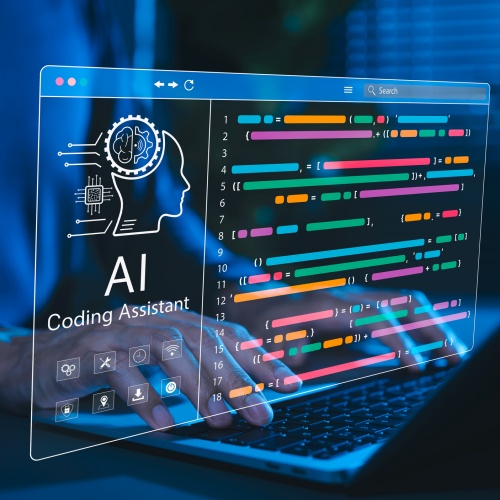
AI coding assistants have become a core part of software development. AI-generated code has shown productivity gains, but it's also contributing to security weaknesses and familiar bug patterns. In this article, author Nitin Garg highlights the bottleneck has moved from code generation to code verification, and how to detect & mitigate it when the AI-generated behavior diverges from the intent.
By Nitin GargIETF Publishes RFC 10008, Adding the QUERY Method for Safe Requests With a Body

In June 2026, the IETF published RFC 10008, introducing the QUERY method to HTTP, the first new standard HTTP verb since 2010. QUERY enables developers to send richer query filters in the request body while maintaining cacheable, safe, and idempotent semantics. This addition addresses long-standing limitations with GET and POST methods, facilitating improved API interactions.
By Daniel Curtis
© 2026 Created by Michael Levin.
Powered by


RSVP for Google Web Toolkit and App Engine to add comments!
Join Codetown