Codetown
Codetown ::: a software developer's community
GatorJUG ::: iPhone Development and more!
Event Details
Time: February 10, 2010 from 6pm to 9pm
Location: Santa Fe College Rm S326 - (that's building S)
Street: 3000 Northwest 83rd Street
City/Town: Gainesville, FL 32606-6200
Website or Map: http://maps.google.com/maps/p…
Phone: Skype me at mlevin77 ... @mikelevin or here on Codetown....
Event Type: meeting
Organized By: Michael Levin
Latest Activity: Feb 10, 2010
Event Description
OK, you software geeks...you coding fools, you hacking addicts, this is your meeting. We're going to talk about some cool stuff tonight. This is phase 2 of your favorite and mine: the GatorJUG Openspaces meeting. Bring your topic, let the audience judge and see what happens after your 5 minutes of fame. If we like what you have to say, well...then we'll ask for more! It's a fun way to share and everyone gets a chance. We'll begin with a topical presentation. Kevin Neelands will continue to describe what he's learned developing iPhone apps. He's deployed 5 to the App Store and sold "enough to buy pizza once per week!"...you'll see. Then, we'll transmute into the Spaces session. Open spaces, that is. Bring yourself, bring a friend. It's going to be a good time. And, you know there will be swag and pizza, as always. So, please RSVP so we'll know how much food to order. Use the invite feature to let your bro's know, too!
This meeting is sponsored by Grooveshark.
Comment Wall
Comment
Happy 10th year, JCertif!
Notes
Welcome to Codetown!
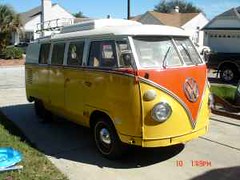 Codetown is a social network. It's got blogs, forums, groups, personal pages and more! You might think of Codetown as a funky camper van with lots of compartments for your stuff and a great multimedia system, too! Best of all, Codetown has room for all of your friends.
Created by Michael Levin Dec 18, 2008 at 6:56pm. Last updated by Michael Levin May 4, 2018.
Looking for Jobs or Staff?
Check out the Codetown Jobs group.
InfoQ Reading List
AWS Introduces Workload Credentials Provider for Automated Certificate and Secret Management

AWS has recently announced the AWS Workload Credentials Provider to automatically deliver and refresh certificates and secrets for applications. The open source tool reduces the need for custom automation, helps prevent outages caused by expired certificates, and works in both AWS and non-AWS environments. un
By Renato LosioVercel Introduces Eve, an Open-Source Framework for Building AI Agents
Vercel has released Eve, an open-source framework for building, deploying, and operating AI agents in production. The framework uses a filesystem-based project structure to organize agent instructions, tools, skills, subagents, communication channels, and scheduled tasks, enabling developers to define agent behavior while reducing the amount of supporting infrastructure they need to implement.
By Daniel DominguezPresentation: AI Works, Pull Requests Don’t: How AI Is Breaking the SDLC and What To Do About It

Michael Webster discusses the rise of headless AI agents and their impact on software delivery pipelines. He shares how massive, AI-generated pull requests create a severe bottleneck for human reviewers and introduce persistent technical debt. Learn how engineering leaders can leverage test impact analysis and automated validation pipelines to verify agentic output without sacrificing stability.
By Michael WebsterArgo CD 3.5 Tightens Supply Chain Security with Internal mTLS and Source Integrity

The Argo CD project released a v3.5 release candidate in June 2026. This version adds mutual TLS enforcement for internal components. It also includes Git commit signature verification for supply chain security and native ApplicationSet management in the UI. The release also graduates two significant features: impersonation and Source Hydrator, from alpha to beta.
By Claudio MasoloDapr 1.18 Introduces Verifiable Execution, Bringing Cryptographic Trust to AI Agents and Workflows

Diagrid has announced the release of Dapr 1.18, introducing what it calls Verifiable Execution, a new set of capabilities designed to bring cryptographic trust, provenance, and tamper-evident execution records to distributed applications and AI agents.
By Craig Risi
© 2026 Created by Michael Levin.
Powered by


RSVP for GatorJUG ::: iPhone Development and more! to add comments!
Join Codetown