Codetown
Codetown ::: a software developer's community
Emerging Technologies for the Enterprise
Event Details
Time: April 27, 2011 to April 28, 2011
Location: Philadelphia, PA
Event Type: conference
Organized By: Andrea O. K. Wright
Latest Activity: Feb 4, 2011
Event Description
This 2-day, 5-track event features close to 50 speakers and topics ranging from HTML5 to MongoDB to Ruby on Rails 3.1 to Spring Integration to mobile development (iphone and Android) to agile project management.
The Early Bird rate, available through February 15, is $295 per person.
If you can take advantage of the group discount (4 colleagues or friends, not necessarily from the same company, registering at the same time), the Early Bird price goes down to $221 per person.
The conference sold out last year.
To register: http://phillyemergingtech.com/2011/register
The keynote speakers are Molly Holzschlag (web standards evangelist) and Stormy Peters (head of developer engagement at Mozilla).
Session speakers include:
* Dan Allen (Seam, Weld & Arquillian project teams; author of Seam in Action)
* Ola Bini (JRuby Core team; author of Practical JRuby on Rails Web 2.0 Projects)
* David A. Black (author of Ruby for Rails and The Well-Grounded Rubyist)
* Ryan Dahl (creator of Node.js)
* Mark Fisher (Spring Integration project lead; Spring AMQP project co-lead)
* Debasish Ghosh (author of DSLs in Action; Akka contributor)
* Ron Jeffries (co-author of The Agile Manifesto)
* David Kaneda (creator of jQtouch)
* Yehuda Katz (SproutCore project team; Rails Core team)
* Ted Neward (author of Effective Enterprise Java; co-author of Professional F#)
* Chris Richardson (Head of Cloud Development, SpringSource)
* Johanna Rothman (author of Manage It! Your Guide to Modern, Pragmatic Project Management)
* Stuart Sierra (Clojure/core team; author of Practial Clojure)
* Jonathan Stark (author of Building iPhone Apps with HTML, CSS, and JavaScript)
* Bruce Tate (author of Seven Languages in Seven Weeks)
* Jim Weirich (creator of the Ruby tool, Rake) The list of confirmed speakers to date is here: http://phillyemergingtech.com/2011/speakers
More speakers and session abstracts will be added over the next few weeks.
Comment Wall
Comment
Happy 10th year, JCertif!
Notes
Welcome to Codetown!
 Codetown is a social network. It's got blogs, forums, groups, personal pages and more! You might think of Codetown as a funky camper van with lots of compartments for your stuff and a great multimedia system, too! Best of all, Codetown has room for all of your friends.
Created by Michael Levin Dec 18, 2008 at 6:56pm. Last updated by Michael Levin May 4, 2018.
Looking for Jobs or Staff?
Check out the Codetown Jobs group.
InfoQ Reading List
Qualcomm Unveils Linux Preview on Snapdragon X2 to Accelerate Upstream ARM Laptops

Qualcomm has released an early dev preview of Linux for its upcoming Snapdragon X2 Series laptop processors. The initiative focuses on integrating with the mainline Linux kernel ahead of commercial release to reduce software issues historically faced by ARM laptops. The preview includes a functional Debian 13 environment and aims to standardize system initialization and hardware task management.
By Olimpiu PopPresentation: Beyond Observability: Evolving Production Operations in the Age of AI

The panelists discuss how production operations are evolving with AI, turning operational data into actionable insights for incident response. They explain how automation and new architectural practices help engineering teams build more understandable systems, while exploring how AI reshapes software delivery and changes the historically deterministic nature of production applications.
By Michael Hausenblas, Sujana Sooreddy, Noam Levi, Renato LosioHow to Develop Software Engineering Skills in the Age of AI

Software engineering skill development requires slowing down. Generative AI has changed the landscape of skill development for software engineering. Tools and AI can accelerate outcomes, but they may not support skill development. Engineers must understand how systems work to learn things. Senior developers can coach juniors by using learning techniques.
By Ben LindersPresentation: Keeping the Mainline Green Across Diverse Language Monorepos
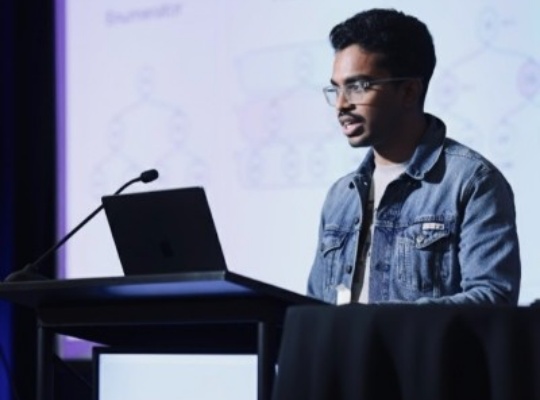
Dhruva Juloori discusses how Uber maintains green mainlines across massive monorepos handling 65,000+ monthly changes. He explains how SubmitQueue uses binary speculation trees, conflict analysis, and machine learning models to predict build success and execution times. Dhruva shares how bypassing large diffs slashed CI resource usage by 53% while accelerating PR landing times by 37%.
By Dhruva JulooriArticle: High Availability Is Not Resilience: Why Cloud Systems Fail When It Matters Most

A routine TLS 1.3 upgrade silently broke Route 53 health checks, causing a CDN to stop routing traffic to a healthy region while internal dashboards showed nothing wrong. This article examines why HA and resilience are different problems, how control-plane dependencies create invisible failure modes, and why recovery capability erodes without explicit ownership.
By Alexey Golev
© 2026 Created by Michael Levin.
Powered by


RSVP for Emerging Technologies for the Enterprise to add comments!
Join Codetown