Codetown
Codetown ::: a software developer's community
It's YOUR Java Community Process
JCP Program Manager Heather VanCura and Tori Wieldt discuss the improvements to the Java Community Process, all designed to get YOU involved.
Comment
Happy 10th year, JCertif!
Notes
Welcome to Codetown!
 Codetown is a social network. It's got blogs, forums, groups, personal pages and more! You might think of Codetown as a funky camper van with lots of compartments for your stuff and a great multimedia system, too! Best of all, Codetown has room for all of your friends.
Created by Michael Levin Dec 18, 2008 at 6:56pm. Last updated by Michael Levin May 4, 2018.
Looking for Jobs or Staff?
Check out the Codetown Jobs group.
InfoQ Reading List
Effect 4.0 Ships: Dependency-Free Rewrite with 5x Smaller Bundles and Long-Term Support

Effect 4.0, a TypeScript framework for typed errors and structured concurrency, was released on 30 September 2026 with a rewritten fiber runtime. The team reports a bundle size drop from 35.6 kB to 7.1 kB and about 6.4x higher throughput, though these figures are not independently verified. It also adds long-term support through September 2029.
By Daniel CurtisJava News Roundup: TornadoVM, A2A Java, Open Liberty, Open J Proxy, Gradle, EclipseStore
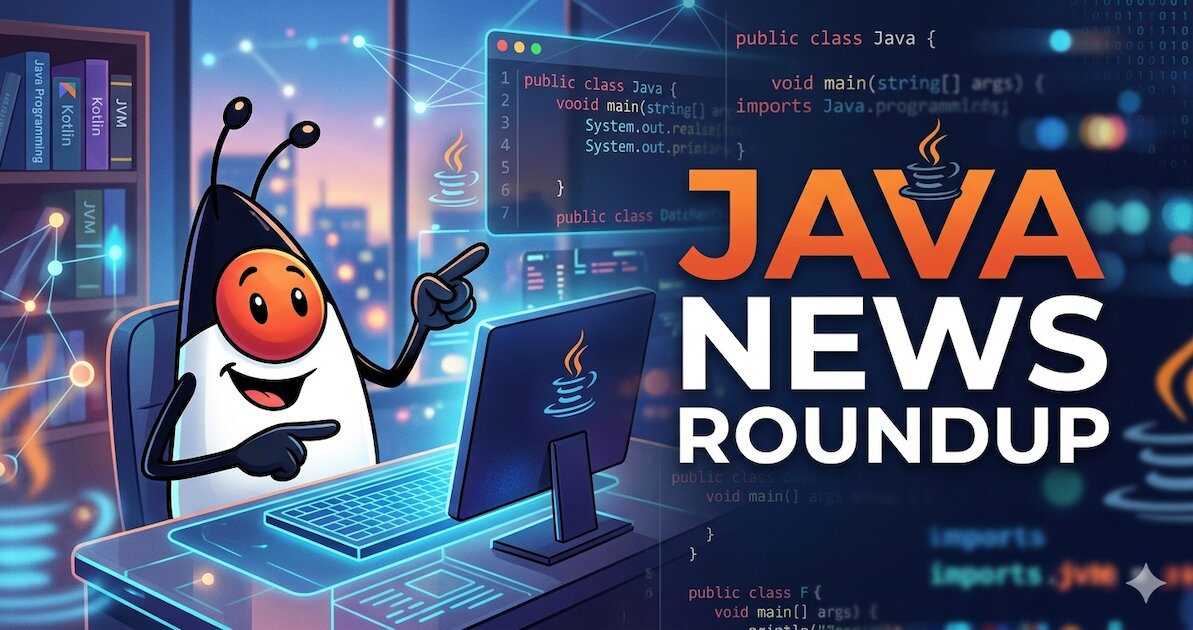
This week's Java roundup for November 2nd, 2026, features news highlighting: point releases of TornadoVM, TornadoInsight, A2A for Java, Gradle and EclipseStore; the November 2026 edition of Open Liberty; the third release candidate of Open J Proxy; the second release candidates of Micrometer Metrics and Micrometer Tracing; and the third beta release of Quarkus 4.0.
By Michael RedlichGoogle Releases Gemini 4 Argon for Robotics Control, Simulation, and Policy Improvement

Google has released Gemini 4 Argon framing it as a general-purpose physical-reasoning model for robot control, Real2Sim scene construction, multimodal labeling of robot video, and iterative policy improvement, rather than as a single end-effector policy.
By Daniel DominguezCloudflare Develops Public Certificate Authority for Post-Quantum Web Security

Cloudflare is developing a public certificate authority for Merkle Tree Certificates (MTCs) to reduce the bandwidth overhead of post-quantum cryptography. A Chrome experiment served billions of MTCs to 50% of Chrome Beta 146 for selected domains, reporting 9% faster median performance. Wider deployment depends on browser support, transparency, and production-scale validation.
By Leela KumiliPodcast: Distributed LLM Inference on Kubernetes with llm-d, Wasm, & TornadoVM
In this episode, Edoardo Vacchi discusses the evolving landscape of WebAssembly on the backend, running Java workloads on GPUs using TornadoVM, and optimizing distributed AI inference using llm-d and vLLM on Kubernetes. Edoardo explains how llm-d manages cache locality (KV and prefix caches), request routing, and batch inference across Kubernetes clusters to maximize expensive GPU utilization.
By Edoardo Vacchi
© 2026 Created by Michael Levin.
Powered by


You need to be a member of Codetown to add comments!
Join Codetown