Codetown
Codetown ::: a software developer's community
S X Tong's Likes
Happy 10th year, JCertif!
Notes
Welcome to Codetown!
 Codetown is a social network. It's got blogs, forums, groups, personal pages and more! You might think of Codetown as a funky camper van with lots of compartments for your stuff and a great multimedia system, too! Best of all, Codetown has room for all of your friends.
Created by Michael Levin Dec 18, 2008 at 6:56pm. Last updated by Michael Levin May 4, 2018.
Looking for Jobs or Staff?
Check out the Codetown Jobs group.
InfoQ Reading List
CNCF Research Shows Virtual Machines Remain Central as AI Workloads Evolve

New research from the Cloud Native Computing Foundation (CNCF) and Linux Foundation Research finds that VMs host an average of 53% of production applications, while emerging AI and agentic workloads are creating additional demand for virtualisation, particularly where stronger execution isolation is required.
By Craig RisiOpenAI Scales Git for Coding Agents with Pando
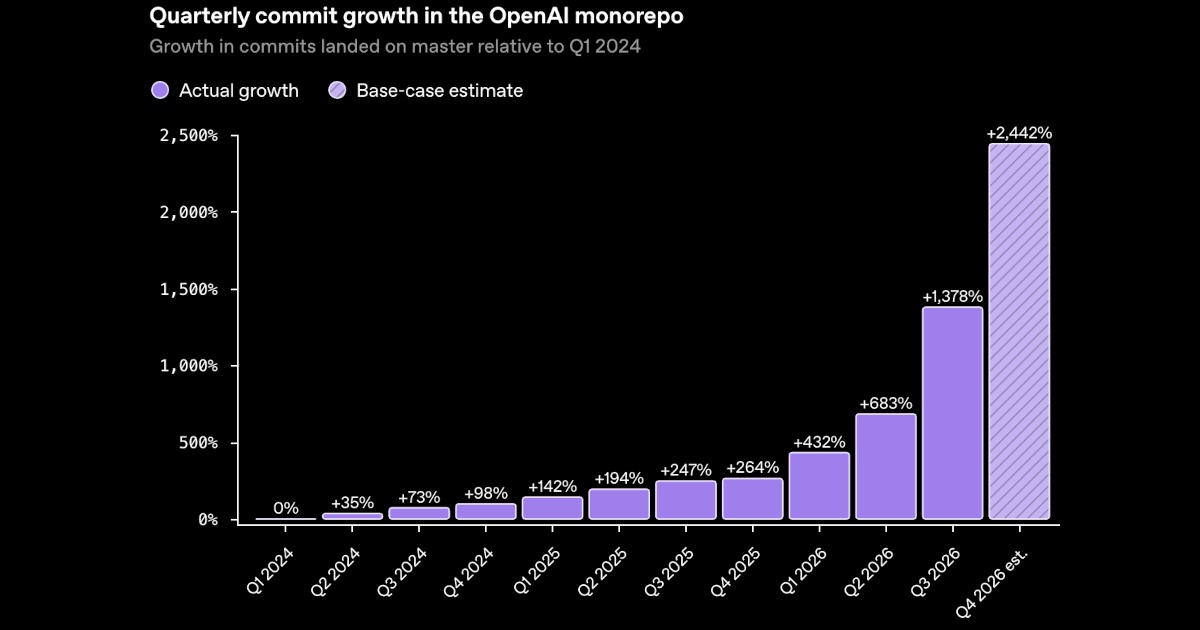
OpenAI has detailed Pando, a new backend that scales Git for concurrent coding-agent workloads without replacing familiar Git workflows. The company reports nearly 80% lower median push latency by coordinating branch updates independently and reusing stored packfiles across fetches.
By Eran StillerPresentation: Inferencing for Enterprises

Dio Rettori discusses the operational realities of enterprise AI inference. Moving beyond fast token generation, he explores why inference requires dedicated systems engineering, tackles GPU utilization pitfalls, compares on-prem versus cloud TCO, and analyzes multi-agent latency determinism. He shares why teams must embed domain ontology directly into models rather than relying solely on RAG.
By Dio RettoriArticle: Engineering Around Non-Determinism: Evals, Grounding, and Release Gates for AI-Drafted Suspicious Reports

Moving GenAI into high-stakes production requires treating non-determinism as an engineering problem. This architectural blueprint shows engineering leaders and architects how to build trustworthy agentic workflows using knowledge graphs, dual-layer eval judges, CI/CD release gates, and regression testing against golden datasets to automate drafting while maintaining zero-hallucination compliance.
By Ritesh Modi, Sasidhar GudalaQCon San Francisco 2026: Lessons from Building a $100M Product in Six Weeks at OpenAI

At QCon San Francisco 2026, OpenAI's Brian Yang described building the ChatGPT ads product with Codex agents and no human-written code. He outlined layered testing, sandboxes, and batched pull request reviews, and noted failure modes such as code "slop" and unsafe agent actions. He advised gradual adoption and framed engineers as managers of agents.
By Daniel Curtis
© 2026 Created by Michael Levin.
Powered by

