Codetown
Codetown ::: a software developer's community
Some thoughts on licensing from Google's Chris DiBona
Chris DiBona is the director of open source at Google, and he's been taking a big part in the open source and Free software ecosystem for a very long time--not least in his role with Google's Summer of Code. He recently posted on Twitter what he calls "a little rant" about software licensing -- well worth reading the whole (short!) thing.
Upshot: Be cautious and humble in selecting a software license; ones that have been around and used happily by others have advantages, including familiarity to users. This applies to open source licenses, but maybe not so surprisingly at least as much to licenses that offer some of the qualities of open source (availability of code) without all the freedoms that FOSS developers have come to expect.
New licenses, especially ones with complex restrictions on use, can make users shy away from them.
Comment
Happy 10th year, JCertif!
Notes
Welcome to Codetown!
 Codetown is a social network. It's got blogs, forums, groups, personal pages and more! You might think of Codetown as a funky camper van with lots of compartments for your stuff and a great multimedia system, too! Best of all, Codetown has room for all of your friends.
Created by Michael Levin Dec 18, 2008 at 6:56pm. Last updated by Michael Levin May 4, 2018.
Looking for Jobs or Staff?
Check out the Codetown Jobs group.
InfoQ Reading List
TornadoVM 7 Enables GPU-Native Workloads From Java Applications

TornadoVM, an open-source heterogeneous programming framework for Java has reached version 7.0. It automatically accelerates Java programs on multi-core CPUs and GPUs and provides a rich GPU programming ecosystem in Java that can be used with any mainstream JDK distribution e.g. Temurin, Red Hat OpenJDK, Coretto, Oracle, GraalVM or Zulu.
By Ben EvansGitHub Actions Runner Controller 0.15.0 Targets Reliability at Scale

GitHub has released Actions Runner Controller (ARC) 0.15.0, introducing reliability, scalability, and observability improvements for organisations running self-hosted GitHub Actions runners on Kubernetes.
By Craig RisiPresentation: Beyond the Prototype: Scaling Framework Agnostic AI Agent Infrastructure with Ray
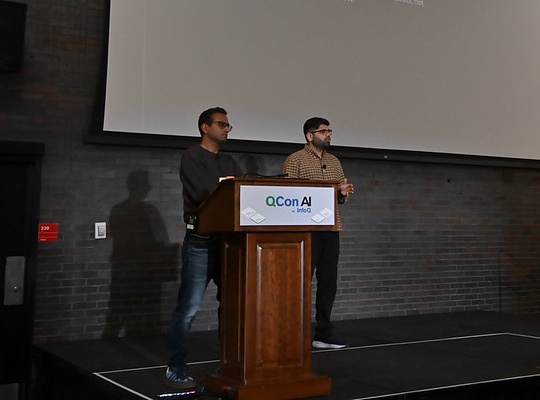
The speakers discuss transitioning AI agents from local FastAPI prototypes to resilient production systems on Kubernetes using Ray. They share operational insights on RayCluster topology, stateful memory handling, auto-scaling on dynamic traffic, and robust control plane designs, while highlighting critical guardrails, multi-region setups, and LLM-as-a-judge evaluation pipelines.
By Deepak Mohanakumar Chandramouli, Bhumik Vinodkumar ThakkarJava News Roundup: JEPs for JDK 28, Azul Payara, Gatherers4j, Google ADK, Yupiik, Apache Camel CVEs
This week's Java roundup for October 12th, 2026, features news highlighting: three OpenJDK JEPs targeted for JDK 28; the October 2026 edition of Azul Payara; point releases of Gatherers4j, Yupiik Fusion, Google ADK for Java and Google ADK for Kotlin; and 38 CVEs resolved in Apache Camel.
By Michael RedlichPinterest Uses Event Time Watermarks to Finalize Petabyte Scale Data Partitions
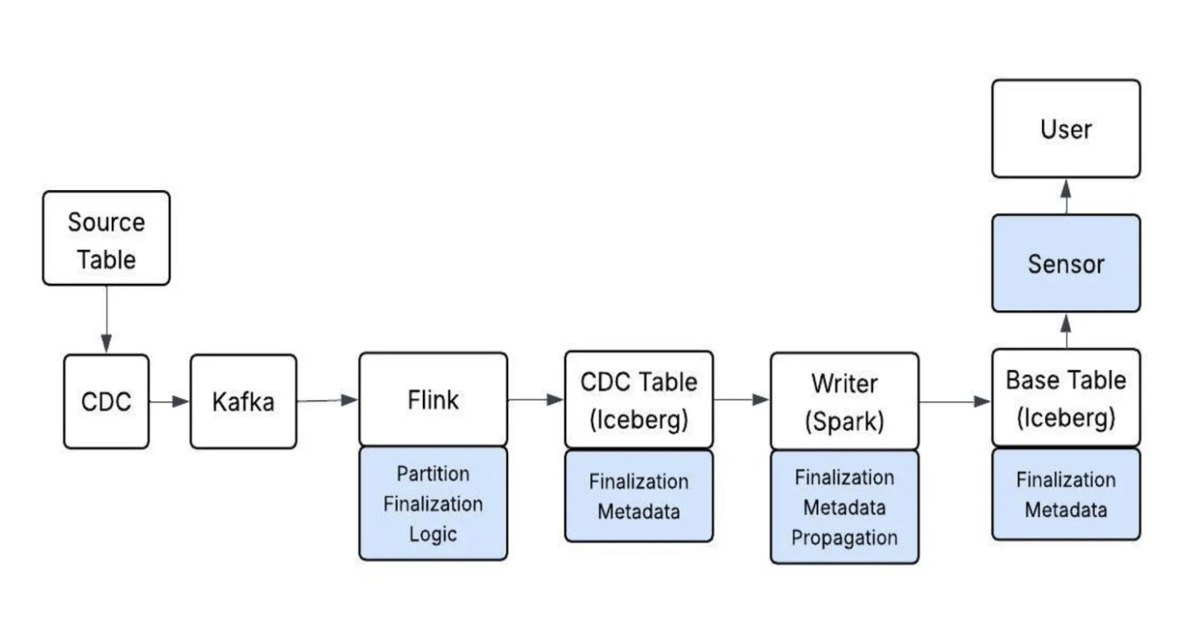
Pinterest has introduced event time-based partition finalization for its database ingestion framework. The mechanism uses Apache Flink to track event time and Apache Iceberg metadata to publish a non-regressing watermark, helping downstream jobs determine when continuously ingested CDC data is sufficiently complete for processing.
By Leela Kumili
© 2026 Created by Michael Levin.
Powered by


You need to be a member of Codetown to add comments!
Join Codetown