Codetown
Codetown ::: a software developer's community
Global Android Dev Camp + Africa Android Training (Programme complet)
Bonjour à tous,
Africa Android Training sera de la partie pour Global Android Dev Camp !
Mais nous allons proposer quelque chose de plus original qu'un simple Hackathon “classic” !
Africa Android Training propose 2 jours de formation Android en ligne non-stop!
Vous pouvez ainsi participer peut importe où vous êtes !
Sujet :
Jour 1 : Services, Location and Maps
Jour 2 : Web Services, XML and Cloud-Computing
Avant l'événement :
Nous allons présenter les photos ou vidéo des participants ou des communautés. Si vous n'avez pas de photos ou vidéos, il est toujours possible de souhaiter bon courage à tous dans la langue de votre pays au début de l'événement.
Il s'agit ici de montrer toute la diversité et les traditions de la grande communauté Android d'Afrique et aussi qu'on peut développer des applications Android tout en s'amusant.
- - Envoyer nous une photo/vidéo de vous ou de votre groupe ou de votre communauté ou de votre pays etc...Mettez-y de l'humour
- - Les photos ou vidéos doivent être une bonne représentation de votre pays ou communauté (Ex : Vous ou votre communauté se préparant pour l'événement et/ou en tenue traditionnelle et/ou entouré d'une décoration propre à votre région ou pays et/ou avec le drapeau de votre pays etc.).
Après l'événement :
- - Nous allons créer une seule et grande mosaïque avec l'ensemble des photos et vidéo qui sera présenté à Google et aux organisateurs de Global Android Bar Camp.
- - La mosaïque et les vidéos seront en suite publiées sur la page Google+ Page de Africa Android Training.
Le programme :
Jour 1 Samedi 18 fév. 2012 à partie de 10h00 AM GMT (12:00 au Cairo, 11:00 à Alger, 10 :00 àLomé, 11 :00 à Kinshasa et Brazzaville....).
10:00 - 10:45 : Max – ”Présentation des photos et vidéos des participants.
10:45 - 11:00 : Enregistrer les participants qui saluent tous le monde dans la langue de leurs pays.
11:00 - 11:30 : Présentation : Android Services (Max)
11:30 - 13:30 : Démo et Création d'une application Android
13:30 - 14:00 : Quéstion & Réponses
14:00 - 14:30 : Pause
14:30 - 14:00 : Présentation : Android Géolocalisation and Map (Max)
14:00 - 16:00 : Démo et création d'une application Android
16:00 - 16:30 : Quéstion & Réponses
Jour 2 : Dimanche 19 fév. 2012 à partir de 10h00 AM GMT (12:00 au Cairo, 11:00 à Alger, 10 :00 à Lomé, 11 :00 à Kinshasa et Brazzaville....).
10:00 - 10:45 : Max – ”Présentation des photos et vidéos des participants.
10:45 - 11:00 : Enregistrer les participants qui saluent tous le monde dans la langue de leurs pays.
11:00 - 11:30 : Présentation : Android Web Services and XML (Max)
11:30 - 13:30 : Démo et création d'une application Android
13:30 - 14:00 : Quéstion & Réponses
14:00 - 14:30 : Pause
14:30 - 14:00 : Présentation : Android Cloud-Computing (Max)
14:00 - 16:00 : Démo et création d'une application Android
16:00 - 16:30 : Quéstion & Réponses
Vérifier ici, quelle heure il sera dans votre ville : http://www.timeanddate.com/worldclock/converter.html
Comment ça marche ?
- 1 - S'inscrire ici (si ce n'est pas déjà fait) : http://androidchallenge.org/index.php?option=com_forme&fid=4
- 2 - Rejoindre le groupe Africa Android Training group : http://groups.google.com/group/africa-android-training
- 3 - Réserver rapidement votre place: https://student.gototraining.com/rt/530814866642544128 (Si vous avez de la difficulté, envoyez moi un message sur Skype: bonbhel)
- 4 -Assurez-vous que votre équipement fonctionne bien (micro, connexion Internet, projecteur (si vous êtes en groupe) etc..).
N'hésitez pas si vous avez d'autres idées.
À bientôt,
============================================
Max Bonbhel - http://www.bonbhel.com/
Congo JUG Leader - http://www.congojug.com/
JCertif Founder and Manager - http://www.jcertif.com
JUG-AFRICA President - http://java.net/projects/jug-africa/pages/Home
Java.net Blogger : http://weblogs.java.net/blog/bonbhel/
LinkedIn : http://ca.linkedin.com/in/bonbhel
Twitter : http://twitter.com/bonbhel
Google+ : gplus.to/maxbonbhel
Comment
Happy 10th year, JCertif!
Notes
Welcome to Codetown!
 Codetown is a social network. It's got blogs, forums, groups, personal pages and more! You might think of Codetown as a funky camper van with lots of compartments for your stuff and a great multimedia system, too! Best of all, Codetown has room for all of your friends.
Created by Michael Levin Dec 18, 2008 at 6:56pm. Last updated by Michael Levin May 4, 2018.
Looking for Jobs or Staff?
Check out the Codetown Jobs group.
InfoQ Reading List
Cycle Introduces EU Control Plane as Sovereignty Debate Continues

Cycle recently introduced a separate EU-based control plane, allowing European customers to keep platform management data and telemetry within Europe. The new offering is designed to improve compliance, operational isolation, and responsiveness for European organizations.
By Renato LosioCloudflare Details Unified Data Platform Where Billing Workloads Account for 53% of Queries
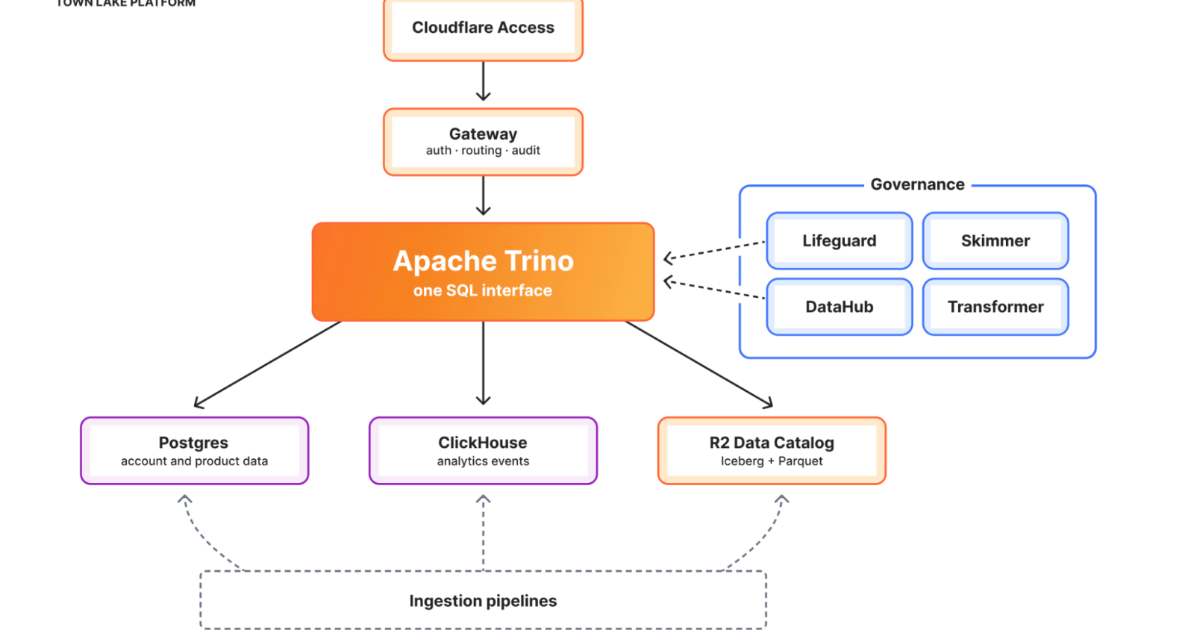
Cloudflare details Town Lake, an internal unified data platform, and Skipper, an AI analytics agent unifying access to operational, billing, security, and business data. The platform processed ~91K billing queries, with billing forming majority usage. Built on a lakehouse architecture using Trino, Iceberg, R2, and DataHub, it enables governed cross-system analytics and natural language access.
By Leela KumiliHardwood Promises High-Speed JVM Apache Parquet Processing with Zero Mandatory Dependencies

Hardwood, the project Gunnar Morling kick-started to improve the handling of Parquet files in Java, reached version 1. Its multi-threaded approach and zero mandatory external dependencies promise a simpler, optimal alternative to the Apache Parquet Java implementation. For now, the library provides a reading via API and a CLI for visualisation; writing support is expected in the upcoming versions.
By Olimpiu PopOpenTelemetry Graduates to CNCF's Highest Maturity Level

The Cloud Native Computing Foundation (CNCF) has announced the graduation of OpenTelemetry, elevating the project to the foundation's highest level of maturity and formally recognizing it as production-ready for enterprise use.
By Craig RisiMini book: Agentic AI Architecture

In this eMag, we try to establish agentic AI architecture as a new type of software architecture that will likely dominate the industry for years to come. The articles, written by industry experts, cover various elements and aspects of agentic AI architecture. We aim to present the latest trends and developments shaping the new type of architecture as it enters the mainstream.
By InfoQ
© 2026 Created by Michael Levin.
Powered by


You need to be a member of Codetown to add comments!
Join Codetown