Codetown
Codetown ::: a software developer's community
Class Family Accord
Class Family Accord - Abstract
An Accord class family is a hierarchy of classes for which another class hierarchy has been designated as corresponding. Class A0 is the top of the class family, class A1 extends A0, class An extends An-1.
The partner of this class family is B0 at the top, Bn extends Bn-1. Class family A and B are have an Accord relationship if, by design intention, An corresponds to Bn. In each level, there is at least one method that overrides or defines a variant with a behavior representative of the progression of requirements.
The intention of this design concept is to maintain this correspondence when, as requirements evolve, the design calls for extending An and Bn into An+1 and Bn+1. The reason for maintaining this relationship would be that A has new or refined behaviors that only make sense with reference to the state or behaviors of B at the same level.
To realize this relationship in the Java programming language, a designer could simply document the intention. However, coding would inevitably require explicit down cast to force references to the intended levels. This white paper suggests a set of Java annotations to make the Accord relationship between class families explicit and generate the necessary dispatch code and casts. The resulting generated code would in effect provide a parametric override capability.
At a minimum an annotation @Accord designates a class as the head or subclass in a class family. Its attribute has an attribute, partner, to identify the other class family. Methods that are intended to follow the progression are annotated as @Covariant. The effect is to make the method be a covariant override. Its parameter referring to a class at the same inheritance level in the partner family is treated a covariant. A prototype precompiler is (to be) provided for research purposes.
Comment
Happy 10th year, JCertif!
Notes
Welcome to Codetown!
 Codetown is a social network. It's got blogs, forums, groups, personal pages and more! You might think of Codetown as a funky camper van with lots of compartments for your stuff and a great multimedia system, too! Best of all, Codetown has room for all of your friends.
Created by Michael Levin Dec 18, 2008 at 6:56pm. Last updated by Michael Levin May 4, 2018.
Looking for Jobs or Staff?
Check out the Codetown Jobs group.
InfoQ Reading List
Airbnb Implements Context-Aware Identity Model to Support Privacy-First Social Features
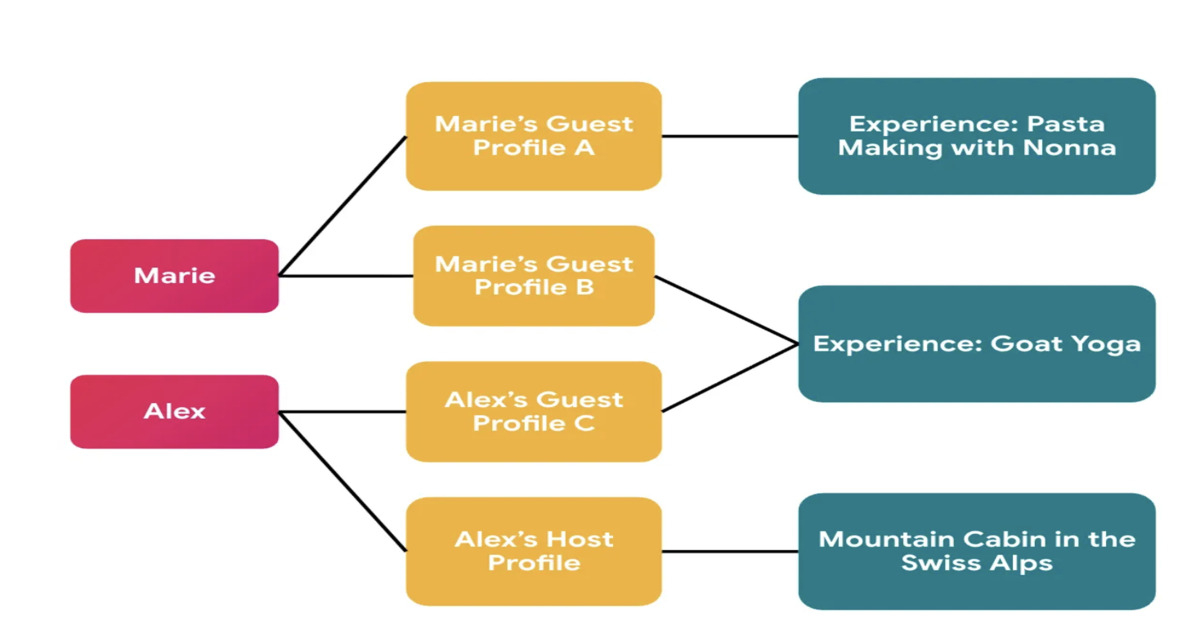
Airbnb has redesigned its identity system to support privacy-first social features in Experiences. The platform introduces context-specific profiles that separate global user identity from externally visible profiles, preventing cross-context linkage. The migration leveraged automated auditing, manual validation, and AI-assisted refactoring to enforce correct identity usage across services.
By Leela KumiliJEP 533 Tightens Exception Handling in Java's Structured Concurrency for JDK 27

JEP 533, Structured Concurrency, has reached integrated status for JDK 27. It refines exception handling and type safety in its API, particularly focusing on exception flow with a new ExecutionException type. Changes include an updated Joiner interface and a new open overload for easier configuration. The steady evolution signals ongoing development as feedback shapes the API.
By A N M Bazlur RahmanPresentation: What I Learned Building Multi-Agent Systems From Scratch

Paulo Arruda discusses Shopify’s evolution in AI adoption, moving from simple chat tools to a sophisticated swarm of specialized agents. He explains the transition from massive "all-in-one" prompts to lean, narrow-focused agent microservices that slash task times from hours to minutes. He also shares a future-looking hypothesis on using filesystem-based adapters to solve context bloat.
By Paulo ArrudaArticle: The Mathematics of Backlogs: Capacity Planning for Queue Recovery

Backlogs in distributed systems are arithmetic problems, not mysteries. This article provides practical formulas for calculating backlog drain time, sizing consumer headroom, and setting auto-scaling triggers. It covers key failure modes — retry amplification, metastable states, and cascading pipeline bottlenecks — plus when to shed load instead of draining.
By Rajesh Kumar PandeyGrafana's Pyroscope 2.0 Makes Continuous Profiling Practical at Scale

Grafana Labs has launched Pyroscope 2.0, a rearchitected open-source continuous profiling database. This version improves storage costs, query performance, and operational complexity. Key changes include single write paths for profiles, stateless query processing, and enhanced capabilities for profiling data. It supports the OpenTelemetry Protocol, aligning with current trends in observability.
By Matt Saunders
© 2026 Created by Michael Levin.
Powered by


You need to be a member of Codetown to add comments!
Join Codetown