Codetown
Codetown ::: a software developer's community
We have some exciting news to share with you. Otavio will be joining us to discuss the latest version of Camel in an exclusive presentation. Presentation Details: Speaker: Otavio Rodolfo Piske Topic:…
We have some exciting news to share with you. Otavio will be joining us to discuss the latest version of Camel in an exclusive presentation.
Presentation Details:
Speaker: Otavio Rodolfo Piske
Topic: Camel 4:What to Expect
Date: 07 September 2023
Time: 19:00 Ist Time
Duration: Approximately 1 hour
Register URL : https://www.eventbrite.com/e/700456483197
Presentation Highlights:
Motivations for a New Major Release: Discover the driving forces behind the creation of this new version of Camel.
What's Changed: Explore the significant updates, enhancements, and improvements that have been implemented.
Expectations for the Upgrade: Gain insights into what users can anticipate when upgrading to this new version.
This is a fantastic opportunity to stay ahead of the curve and ensure that your knowledge of Camel is up to date. Whether you're a long-time user or just getting started with Camel, Otavio's insights will prove invaluable.
To reserve your spot for this presentation, please [registration link].
If you have any questions or specific topics you'd like Otavio to address during the presentation, please feel free to reply to this email, and we'll do our best to incorporate them.
We look forward to your participation and hope you'll join us for this informative session on the future of Camel.
Best Regards,
JUG Istanbul.
_._,_._,_
Comment
Happy 10th year, JCertif!
Notes
Welcome to Codetown!
 Codetown is a social network. It's got blogs, forums, groups, personal pages and more! You might think of Codetown as a funky camper van with lots of compartments for your stuff and a great multimedia system, too! Best of all, Codetown has room for all of your friends.
Created by Michael Levin Dec 18, 2008 at 6:56pm. Last updated by Michael Levin May 4, 2018.
Looking for Jobs or Staff?
Check out the Codetown Jobs group.
InfoQ Reading List
Anthropic Launches Claude Platform on AWS

Anthropic has announced the general availability of Claude Platform on AWS, a new deployment option that gives AWS customers direct access to Anthropic’s native Claude platform using AWS authentication, billing, and monitoring services.
By Daniel DominguezAirbnb Implements Context-Aware Identity Model to Support Privacy-First Social Features
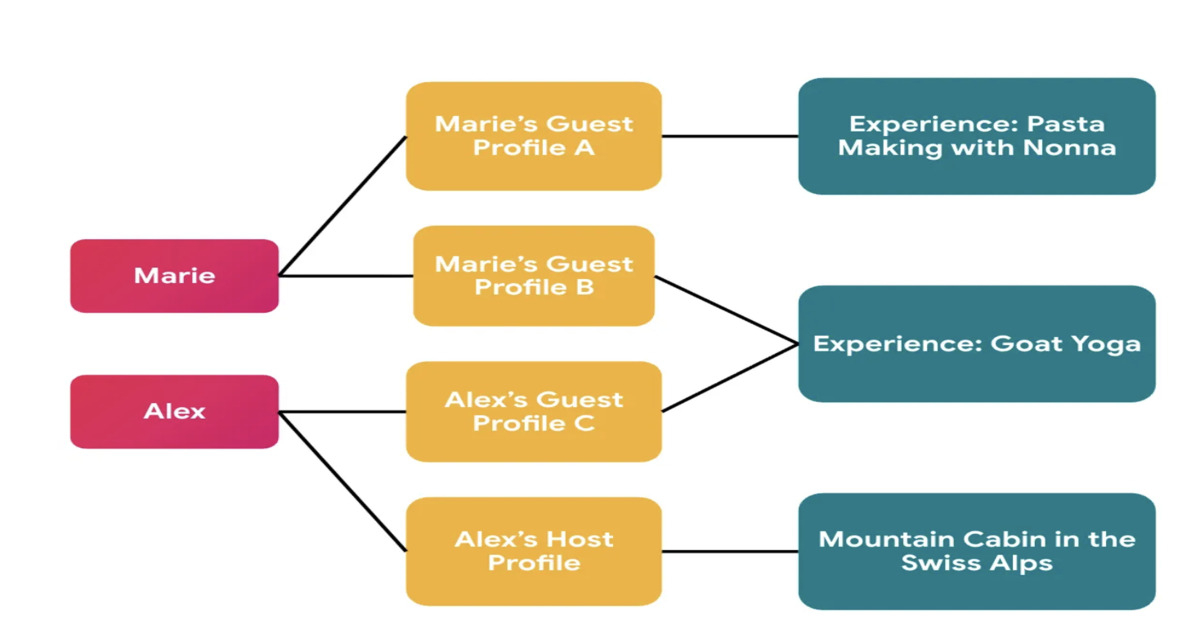
Airbnb has redesigned its identity system to support privacy-first social features in Experiences. The platform introduces context-specific profiles that separate global user identity from externally visible profiles, preventing cross-context linkage. The migration leveraged automated auditing, manual validation, and AI-assisted refactoring to enforce correct identity usage across services.
By Leela KumiliJEP 533 Tightens Exception Handling in Java's Structured Concurrency for JDK 27

JEP 533, Structured Concurrency, has reached integrated status for JDK 27. It refines exception handling and type safety in its API, particularly focusing on exception flow with a new ExecutionException type. Changes include an updated Joiner interface and a new open overload for easier configuration. The steady evolution signals ongoing development as feedback shapes the API.
By A N M Bazlur RahmanPresentation: What I Learned Building Multi-Agent Systems From Scratch

Paulo Arruda discusses Shopify’s evolution in AI adoption, moving from simple chat tools to a sophisticated swarm of specialized agents. He explains the transition from massive "all-in-one" prompts to lean, narrow-focused agent microservices that slash task times from hours to minutes. He also shares a future-looking hypothesis on using filesystem-based adapters to solve context bloat.
By Paulo ArrudaArticle: The Mathematics of Backlogs: Capacity Planning for Queue Recovery

Backlogs in distributed systems are arithmetic problems, not mysteries. This article provides practical formulas for calculating backlog drain time, sizing consumer headroom, and setting auto-scaling triggers. It covers key failure modes — retry amplification, metastable states, and cascading pipeline bottlenecks — plus when to shed load instead of draining.
By Rajesh Kumar Pandey
© 2026 Created by Michael Levin.
Powered by


You need to be a member of Codetown to add comments!
Join Codetown