Codetown
Codetown ::: a software developer's community
Zemian Deng's Blog (3)
New Quartz-2.1.0 and MySchedule-2.1.2 release is out
Hi there,
I have couple announcements.
First: Do you need Java scheduling? How about try out an easy web based UI with Quartz!
Both myschedule-2.1.2 (for Quartz-2.1.0) and myschedule-1.5.2(for Quartz-1.8.5) releases are available for download here: http://code.google.com/p/myschedule/downloads/list
I have fixed few bugs and improved the UI slightly. Both of these releases should…
Added by Zemian Deng on September 25, 2011 at 10:24am — No Comments
MySchedule - A Quartz Dashboard WebApp
Hi folks,
I've mentioned MySchedule before during the Quartz presentation at OJUG. I have released myschedule-1.1.2.war now. It's not that pretty, but it's fully functional. It deploy a fully working version of a In-Memory Quartz scheduler with web UI that can easily manage it.
If you are interested in Quartz, give it a try here http://code.google.com/p/myschedule. I wrote a mini UserGuide with here…
ContinueAdded by Zemian Deng on June 13, 2011 at 8:18am — No Comments
My latest personal project
Hi folks,
It's been a while since last time I post here. I just want to share a project that I have started recently and hopefully it will benefit some of you.
In many places where I worked, they often needed a light, fast and standalone server like process that run easily without much hassle, compare to use a full blown JEE server. I often ended up writing the same bootstrapper service that does many of the basic things. We need logging, we need easy…
ContinueAdded by Zemian Deng on April 8, 2011 at 1:11pm — 2 Comments
Latest Blog Posts
Most Popular Blog Posts
Happy 10th year, JCertif!
Notes
Welcome to Codetown!
 Codetown is a social network. It's got blogs, forums, groups, personal pages and more! You might think of Codetown as a funky camper van with lots of compartments for your stuff and a great multimedia system, too! Best of all, Codetown has room for all of your friends.
Created by Michael Levin Dec 18, 2008 at 6:56pm. Last updated by Michael Levin May 4, 2018.
Looking for Jobs or Staff?
Check out the Codetown Jobs group.
InfoQ Reading List
DigitalOcean Launches Learning and Data Services to Enable Self-Improving AI Agents

DigitalOcean has announced the public preview of Learning Services and Agent Data Services, enabling developers to build, evaluate, and continuously improve AI agents within a unified, AI-native, cloud platform.
By Sergio De SimoneProduction AI and Engineering Team Design: InfoQ’s November Certification Cohorts
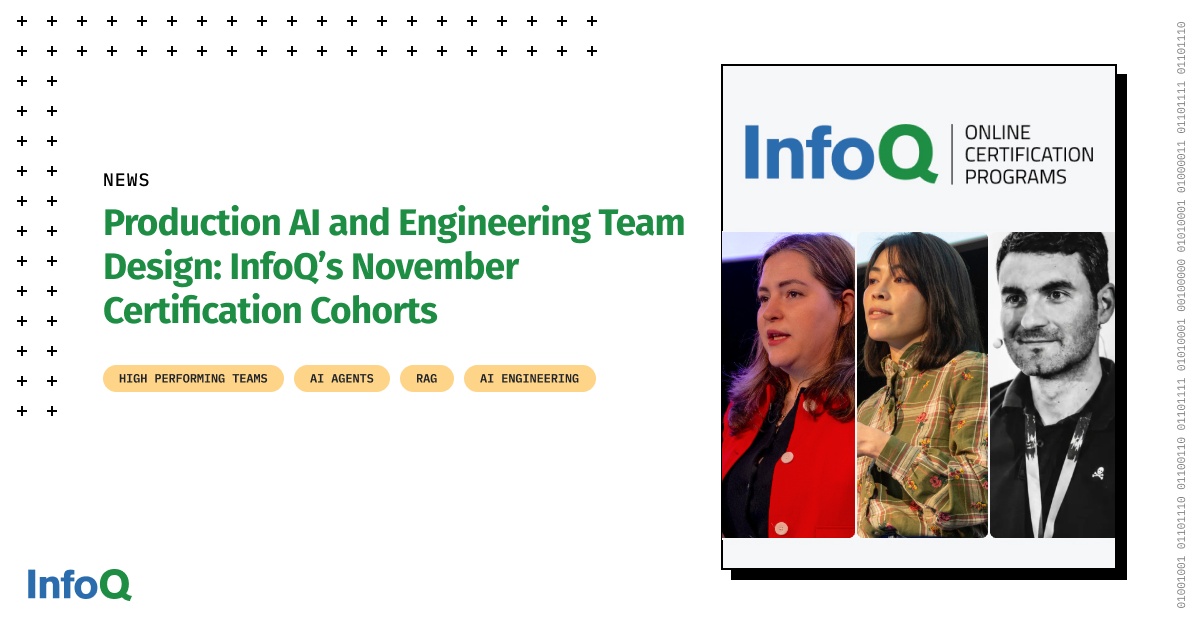
A preview of three November InfoQ online certification cohorts covering production AI systems, retrieval and agent design, engineering team flow, AI roles, and measurement, facilitated by Adi Polak, Lan Chu, and Olimpiu Pop.
By Artenisa ChatziouJava News Roundup: JDK 28 Schedule, Oracle CPUs, eMudhra Certs, Apache POI, WildFly, Azul, BellSoft
This week's Java roundup for October 19th, 2026, features news highlighting: the proposed release schedule for JDK 28; the eMudhra Intermediate CA certificates breach; the October 2026 Critical Patch Update; Azul and BellSoft CPUs; GA releases of WildFly 42 and Apache POI 6.0; the beta release of Open Liberty 26.0.0.11; and maintenance releases of Micronaut and JobRunr.
By Michael RedlichReadyon Builds Four Layer Tenant Isolation for Multi Tenant Amazon EKS

ReadyOn has detailed a four-layer tenant isolation architecture for its Harmony platform on Amazon EKS. The design combines Kubernetes namespaces, dedicated Karpenter node pools, VPC security groups, and per-tenant Aurora databases, with controls evaluated against a 10-stage multi-tenant threat model focused on cross-tenant access and lateral movement.
By Leela KumiliArticle: The Evolution of Agentic Harnesses: From Chains to Graph to Code
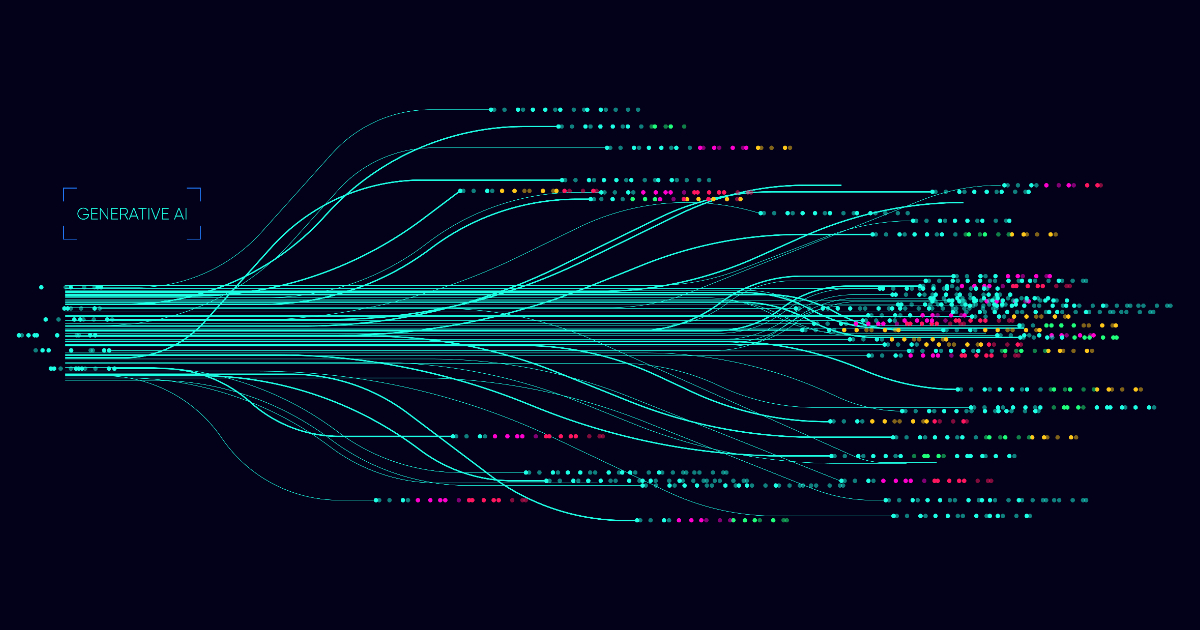
Agentic LLM systems have moved from linear prompt chains to graph-based workflows and, more recently, code-executing harnesses. Chains are simple but fragile, graphs add branching, retries, and validation, and code harnesses verify outputs through execution. The article advises validating model outputs and choosing the least complex design that meets reliability, speed, and cost needs.
By Karthik Ramgopal
© 2026 Created by Michael Levin.
Powered by

