Codetown
Codetown ::: a software developer's community
-
Nick Donald
- Male
- Gainesville, FL
- United States
Gifts Received

Nick Donald has not received any gifts yet
Nick Donald's Page
Profile Information
- How did you hear about Codetown?
- co-worker
- What are your main interests in software development?
- I'm pretty much open to anything at this point: web development, mobile apps, Java, .Net, etc.
- Anything else you'd like to add? Where do you live? (optional!)
- I'm currently a distance-learning student at USF studying my Bachelors in Information Technology. I live in Gainesville and work for Santa Fe College, but I'll most likely be moving to Orlando before summer's end. I graduated from Santa Fe College with an AA degree in 2009 with an engineering emphasis (Differential Equations, Electromagnetism, etc.). I then graduated in 2011 with 2 AS degrees and 2 vocational certificates in Networking Services Technologies, Internet Services Technologies, Information Technology Management, and the Cisco Networking Academy, respectively. I also have m A+ certification from CompTIA, which is better than nothing.
This is pretty much a run-down of everything I've taken at least 1 course in or have been exposed to with at least an introductory knowledge of:
C, C++, C#, Java, JavaScript, XHTML/CSS/HTML5, Bash/Csh, Windows Server 2003 administration, Windows XP administration, Linux workstation administration, SUSE9 Linux Server admin, SQL.
I also know most of the Adobe CS4/5 products (e.g. Dreamweaver), and have experience with some IDEs such as MS Visual Studio, NetBeans, and CodeBlocks. I also have some experience working with virtual machines, having used both VMware Server and VirtualBox.
While at USF, I'll be adding security/cryptography, e-commerce, and business management into the mix, as well as further developing some of the skills above.
I'm just trying to be marketable and versatile, so if anyone thinks they can utilize my skill set, let me know! :P I learn really fast.
Nick Donald's Photos

Happy 10th year, JCertif!
Notes
Welcome to Codetown!
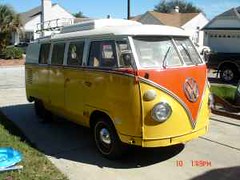 Codetown is a social network. It's got blogs, forums, groups, personal pages and more! You might think of Codetown as a funky camper van with lots of compartments for your stuff and a great multimedia system, too! Best of all, Codetown has room for all of your friends.
Created by Michael Levin Dec 18, 2008 at 6:56pm. Last updated by Michael Levin May 4, 2018.
Looking for Jobs or Staff?
Check out the Codetown Jobs group.
InfoQ Reading List
Cloudflare’s Auto Router Rates Each Request for Stakes, from the Most Recent Turns

Cloudflare has released Auto Router in public beta through AI Gateway, picking a model per request from a classifier that scores complexity, ambiguity, stakes and context dependence. Cloudflare’s own benchmark puts it ten points below Claude Opus 5.5 on success rate at a third of the cost, and practitioners have questioned how stakes survive a long agent session.
By Steef-Jan WiggersMCP C# SDK 2.0 Makes HTTP Stateless by Default and Adds Multi Round-Trip Requests

Microsoft announced version 2.0 of the official MCP C# SDK, which implements the 2026-07-28 revision of the Model Context Protocol with stateless HTTP servers by default, standardised routing headers and Multi Round-Trip Requests. Releases 2.1 to 2.3 have since added hybrid session serving, a subscriptions/listen handler and a series of discovery, OAuth and shutdown fixes.
By Edin KapićPHP Patches Two Critical RCE Flaws That Were Already Under Attack

PHP released 8.5.12, 8.4.27, 8.3.36, and 8.2.35 to fix two critical vulnerabilities allowing unauthenticated remote code execution. Amazon recorded an exploitation attempt four days before the patches shipped, and operators spent the day working out whether they ran PHP, where to get the package, and how to tell it had landed.
By Steef-Jan WiggersPyTorch Conference 2026: Google and Meta Open-Source TorchTPU for Native PyTorch on TPUs
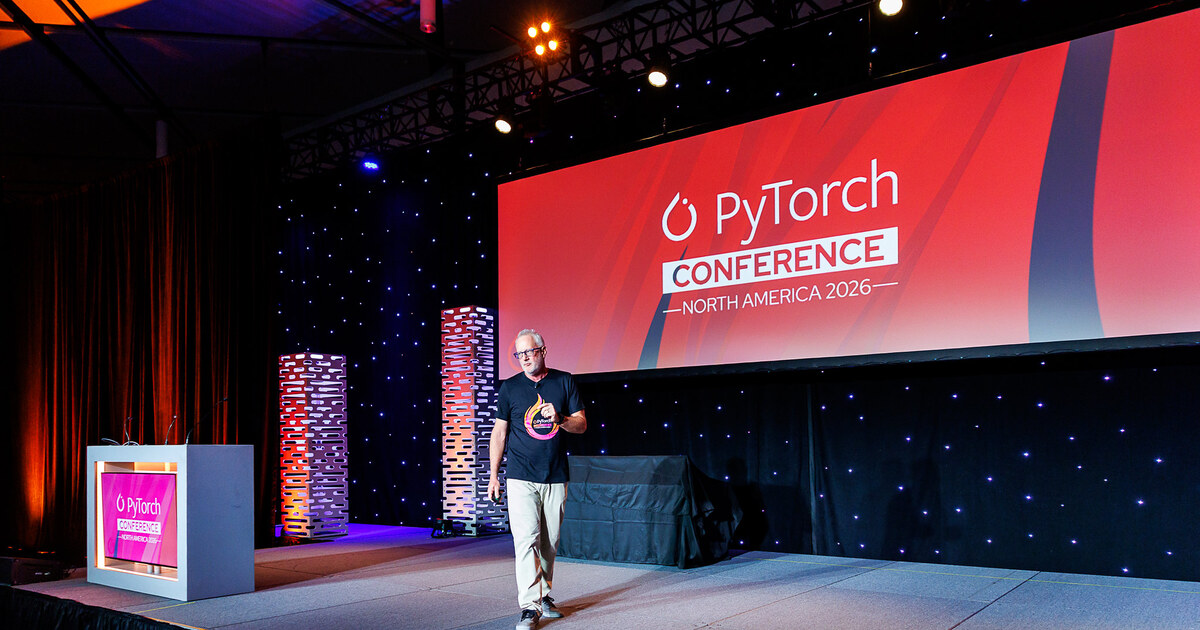
Google and Meta open-sourced TorchTPU, a native PyTorch backend for Google's TPUs, at PyTorch Conference North America 2026, and Meta said it plans to move larger LLM workloads onto TPUs with it. AWS released TorchNeuron for Trainium the same week, while developers questioned TPU availability and where vendor lock-in now sits.
By Andrew HoblitzellGoogle ML Drift Accelerates On-Device AI Inference Across Diverse GPUs

Google has released ML Drift, an open-source, cross-platform GPU compute engine designed for on-device AI and machine learning inference. Licensed under Apache 2.0, it abstracts the complexities of different GPU hardware and low-level APIs, supporting OpenGL ES, OpenCL, Metal, and WebGPU.
By Sergio De Simone
© 2026 Created by Michael Levin.
Powered by


Comment Wall (3 comments)
You need to be a member of Codetown to add comments!
Join Codetown
Good luck in Orlando!
Nick, Congrats on putting up the most readable, down to earth, factual profile I've come across to date. "Semi professional", regarding the profile photo, is a nicely humble remark you threw out about yourself and I must say, we're not in a glamour contest here (on earth ;-), at least most of us. You've got some very admirable skills under your belt and I suspect you've had some fun in the process.
I'm sure you don't know how superior James Ward's presentation will be at the upcoming GatorJUG. You'll be pleasantly surprised. It's going to be a world class talk, and I know because I have known and respected James for many years. To be honest, I think it's a pity more people don't come out to these presentations because I bring in some sharp speakers. I benefit personally, and it's nice that I get some tech savvy "for free" out of this. But, you might let people know that this is an opportunity to learn from true professionals, and it's a shame for anyone interested in software dev to miss it. Like, what I mean is tell your friends!
Looking forward to meeting you. The food's going to be good, too. Hand crafted stuff....stay tuned - you'll see! All the best, Mike