Codetown
Codetown ::: a software developer's community
Chris Haddad's Albums (1)
cobiacomm
Added October 23, 2011 at 6:29pm
Happy 10th year, JCertif!
Notes
Welcome to Codetown!
 Codetown is a social network. It's got blogs, forums, groups, personal pages and more! You might think of Codetown as a funky camper van with lots of compartments for your stuff and a great multimedia system, too! Best of all, Codetown has room for all of your friends.
Created by Michael Levin Dec 18, 2008 at 6:56pm. Last updated by Michael Levin May 4, 2018.
Looking for Jobs or Staff?
Check out the Codetown Jobs group.
InfoQ Reading List
Agoda Replaces 72-Shard SQL Server Price Cache with DragonflyDB
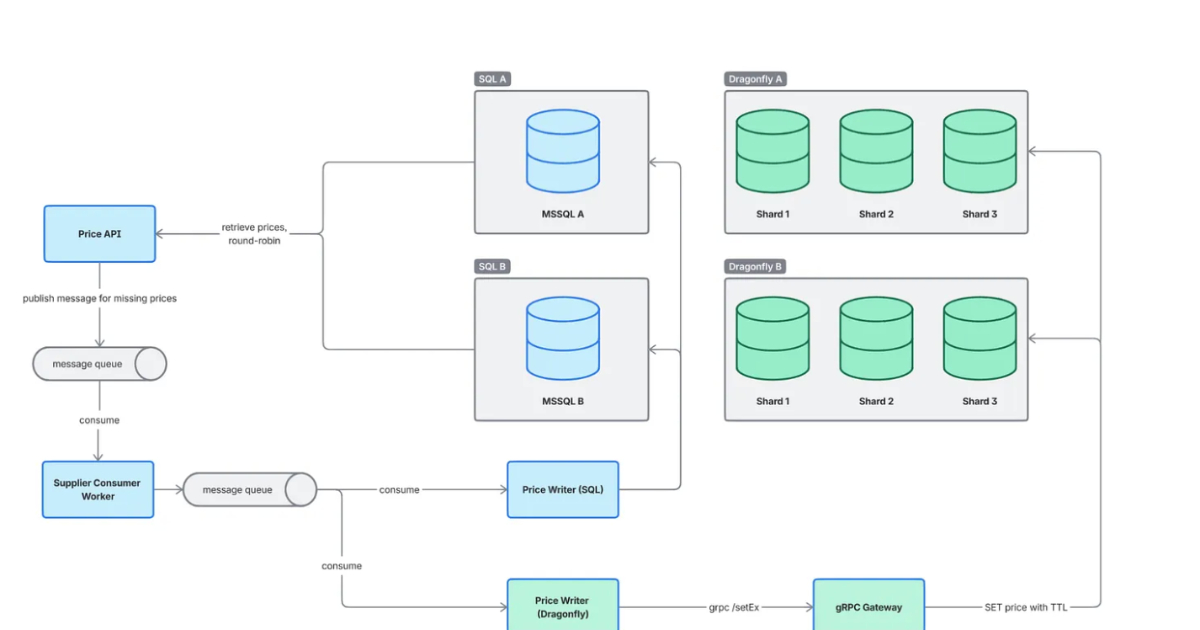
Agoda migrated its 1.5 TB hotel Price Cache from 72 SQL Server shards to DragonflyDB to handle growing read and write volumes. The migration used staged dual reads, parity validation, gradual traffic shifting, and decentralized failover detection. Agoda reports an approximately eightfold reduction in P99 read latency, with two DragonflyDB clusters providing high availability.
By Leela KumiliPresentation: Decision Models in Agentic Architectures: From Production to Agent Skills

Alex Porcelli discusses the critical gap in enterprise AI: non-deterministic output and lack of accountability in high-stakes decisions. He shares how integrating DMN decision models with LLMs, agent skills, and NeMo guardrails creates auditable, deterministic agentic architectures - allowing business leaders to own decision logic while engineers maintain robust architectural governance.
By Alex PorcelliPodcast: How Will We Train Developers If AI Does the Routine Work: A Conversation with Scott Hanselman

In this podcast, Michael Stiefel spoke to Scott Hanselman about developing new software engineers when artificial intelligence agents are doing most of the work on which junior developers were trained. Hanselman suggests the software industry should adopt a preceptorship model similar to the nursing profession.
By Scott HanselmanArticle: Implementing Durable Workflows on Postgres Without an External Orchestrator

Postgres can serve as the durable state store and coordination layer for workflows, eliminating the need for an external orchestrator. SKIP LOCKED enables concurrent work processing, primary-key checkpoints enforce idempotency, and leases support crash recovery. Workflow sleeps and human approvals can also be persisted as database state and survive restarts.
By Raman VarmaIndependent Investigation of Hugging Face Incident Reveals How Agents Collaborated and Behaved

After six days of on-site investigation at OpenAI, a small team of METR and Redwood Research researchers provided an account of how OpenAI agents behaved during their hack of Hugging Face earlier this year. Roughly 700 agents that were meant to be isolated from one another found a way to communicate and coordinate to pursue goals they could have not achieved working individually.
By Sergio De Simone
© 2026 Created by Michael Levin.
Powered by

