Codetown
Codetown ::: a software developer's community
Kotlin Thursdays - Introduction to Kotlin Generics, Part 2
Hi folks! Welcome to Kotlin Thursdays. Last week, we examined classes, types, generic functions & parameters as well as covariance & contravariance in Kotlin. Folks told me there weren’t enough sloth facts, and as such, I will do my best to rectify this!
Let’s continue with our sloth and panda crews and write more functions with Kotlin Generics.
Resources
- Kotlin Generics: https://kotlinlang.org/docs/reference/generics.html
- Kotlin Reflection: https://kotlinlang.org/docs/reference/reflection.html
- Higher-Order Functions:https://kotlinlang.org/docs/reference/lambdas.html#higher-order-fun...
- Project Source code: https://github.com/Kotlin-Thursdays/Generics-in-Kotlin
Higher-Order Functions
Because Kotlin happens to be a functional language, Kotlin has a lot of really powerful characteristics functional purists might consider as pillars for functional programming.
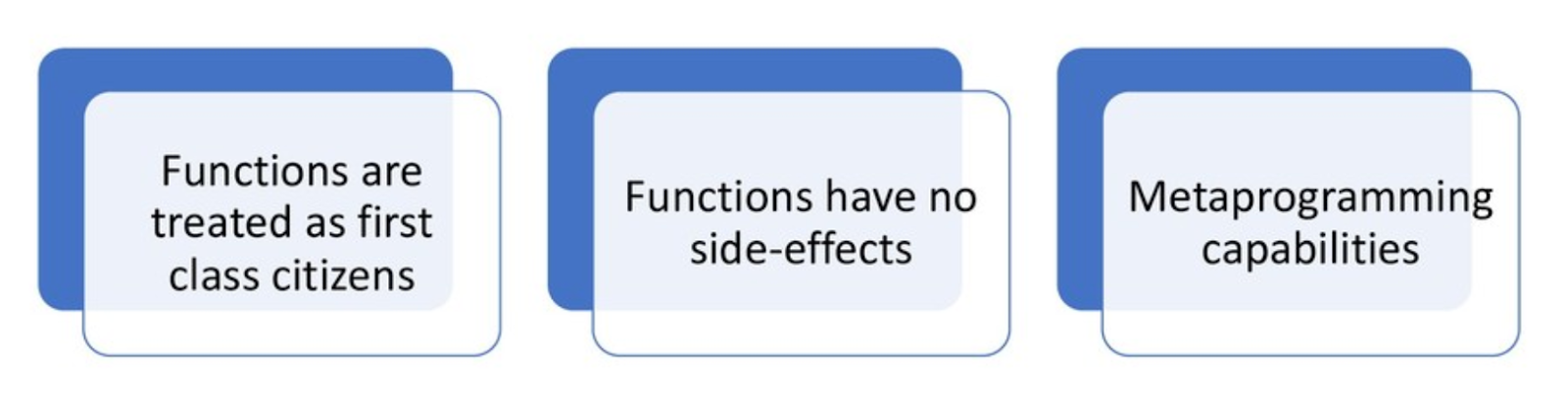
One of these pillars, we’re only going to concern ourselves with the first Kotlin has first class citizens, which means that Kotlin may take functions as parameters. These are known as higher-order functions. What does it mean for a function to be a first-class citizen? All this means is that you are able to pass in a function argument as a parameter in a function. How meta!

This is a feature that is also comparable to Ruby, which facilitates higher order functions. The most common usage of higher order functions involves passing a block to a method, which is an extremely popular Ruby method.

Ruby allows you to inject different blocks into functions using yield, which involves passing a block to a method. With yield, the block is no longer a parameter to the method. The block is implicitly passed to the method. Yield makes executing the block feel like a method invocation within the method invocation rather than using an explicit call.

Kotlin shares a similar idea here, where you can inject different blocks, or functions, into a function. Like Ruby, Kotlin treats functions as first-class citizens. In Kotlin, the equivalent of block code is known as lambda functions, indicated by the pattern:
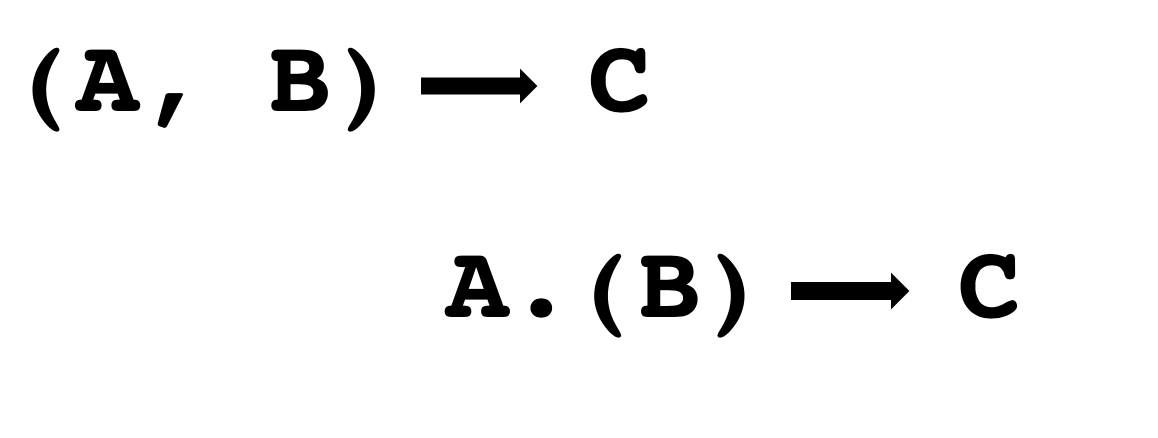
In (A, B) → C, this pattern indicates that a function expects a function parameter that takes 2 parameters type A and type B, and returns an output of type C.
In A.(B) → C, this pattern indicates that a function expects a function parameter that is an extension function of type A and that extension function takes a single parameter B that returns an output of type C.
In the scientific community, 6 species of sloths recognized.
In Costa Rica, there are only 2 types of sloths; the brown-throated three-toed sloth and Hoffmann’s two-toed sloth. Black eye patches and “smiling” mouths distinguish Costa Rica’s docile three-toed sloths, while the larger two-toed variety have white-ringed faces, brown snouts and shaggy coat1.

Hoffman’s two-toed sloth by minkewink from Pixabay
They actually have quite a bit in common with each other with subtle differences: for example, they both relieve themselves once a week and ARE ABLE TO EXPEL AS MUCH AS 1/3 OF THEIR BODY WEIGHT AT A TIME.
Despite their slow nature and digestive system, they can also swim in a manner that is very similar to the breaststroke.
It turns out, Pandas can also swim! As such, let’s write functions for these particular things that sloths can do:
If we test this out, we’re given:
JERRY CAN SWIM
JERRY FINALLY WENT THIS WEEK
Old weight: 15 | New weight: 13
BAE CAN SWIM
BAE FINALLY WENT THIS WEEK
Old weight: 12 | New weight: 10
ALEX CAN SWIM
ALEX FINALLY WENT THIS WEEK
Old weight: 20 | New weight: 16
We’ve written a higher order function that takes an action function which takes no parameters and gives no outputs, which is of the type Unit.
Let’s look at another example: All mammals (including giraffes) have 7 cervical vertebrae except for manatees who have 6 and sloths, who have 10. They put yogis to shame with their incredible flexibility!

Image from Michael Mosimann from Pixabay
Let’s write some functions comparing these animals by adding a manatee class and switching our Mammal class from open to sealed. Sealed classes are pretty cool, and you can learn more about it from Patrick Cousins’ KotlinConf talk from last year.
This way, we can write when statements in Kotlin, which will only consider these classes under the sealed class as all the exhaustive existing types.
KFunction1 happens to be a covariant/contravariance generic that represents a function with introspection capabilities! You can reference these functions with a ::, which in Kotlin is about meta-programming, including method references, property references and class literals. Sometimes you will see :: without a class in the front, indicating that a method is being call from within the class you’re in, but otherwise, the class you’re referencing a method from sits on the left. Kotlin is smart enough to detect parameters as needed — but you might want to read into it a little more and experiment yourself!
Class KFunction1 has generic parameters defined as <in P1, out R>, P1with in modifier and R with out modifier. This means that there will be:
- Contravariance on
P1introduced byinmodifier — AnyKFunction1<PSuper, R>will be a subtype ofKFunction1<P, R>ifPSuperis a supertype ofP. - Covariance on
Rintroduced byoutmodifier — AnyKFunction1<P, RSub>will be a subtype ofKFunction1<P, R>ifRSubis a subtype ofR.
Therefore you will be able to assign KFunction1<PSuper, RSub> to a variable of type KFunction1<P, R>.
You’ll notice that we can feed in vertebraeCount() and knownSpeciesCount(), but what if we tried to feed in an endangered function named isEndangered()?
fun Mammal.isEndangered(): Boolean {
return when (this) {
is Pandas -> true

is Manatee -> false // upgraded to "threatened"

is Sloths -> true

}

}
If we tried to feed this function in to our checkMammalFacts function, the compiler would complain, because it expected the type KFunction1<Mammal, Int> and we’re feeding in KFunction1<Mammal, Boolean>.
Well, I hope you enjoyed these sloth facts and learned a little bit about higher-order functions in Kotlin!

Next week, FOR SURE, we’ll go over reified generics in Kotlin. Till next time!
Sources Cited
“Sloths.” Costa Rica, www.costarica.com/wildlife/sloths.
Views: 218
Happy 10th year, JCertif!
Notes
Welcome to Codetown!
 Codetown is a social network. It's got blogs, forums, groups, personal pages and more! You might think of Codetown as a funky camper van with lots of compartments for your stuff and a great multimedia system, too! Best of all, Codetown has room for all of your friends.
Created by Michael Levin Dec 18, 2008 at 6:56pm. Last updated by Michael Levin May 4, 2018.
Looking for Jobs or Staff?
Check out the Codetown Jobs group.
InfoQ Reading List
AWS Launches Managed Openclaw on Lightsail Amid Critical Security Vulnerabilities

AWS launched managed OpenClaw on Lightsail for AI agent deployment while security concerns mount. The 250k-star GitHub project is affected by CVE-2026-25253, which enables one-click RCE, with 17,500+ vulnerable instances exposed. Bitdefender found 20% of ClawHub skills malicious. AWS blueprint provides automated hardening, but doesn't address architectural security limits.
By Steef-Jan WiggersElastic Releases Version 9.3.0 With Enhanced AI Tools and OTel Support

Elastic 9.3.0 is now available, featuring enhanced vector search indexing for RAG applications and significant upgrades to the ES|QL query language. The release deepens OpenTelemetry integration for vendor-neutral observability and updates the AI Assistant with better contextual analysis. Security visibility is also expanded across Kubernetes and serverless architectures.
By Mark SilvesterHow Grab Optimizes Image Caching on Android with Time-Aware LRU

To improve image cache management in their Android app, Grab engineers transitioned from a Least Recently Used (LRU) cache to a Time-Aware Least Recently Used (TLRU) cache, enabling them to reclaim storage more effectively without degrading user experience or increasing server costs.
By Sergio De SimoneGoogle Researchers Propose Bayesian Teaching Method for Large Language Models
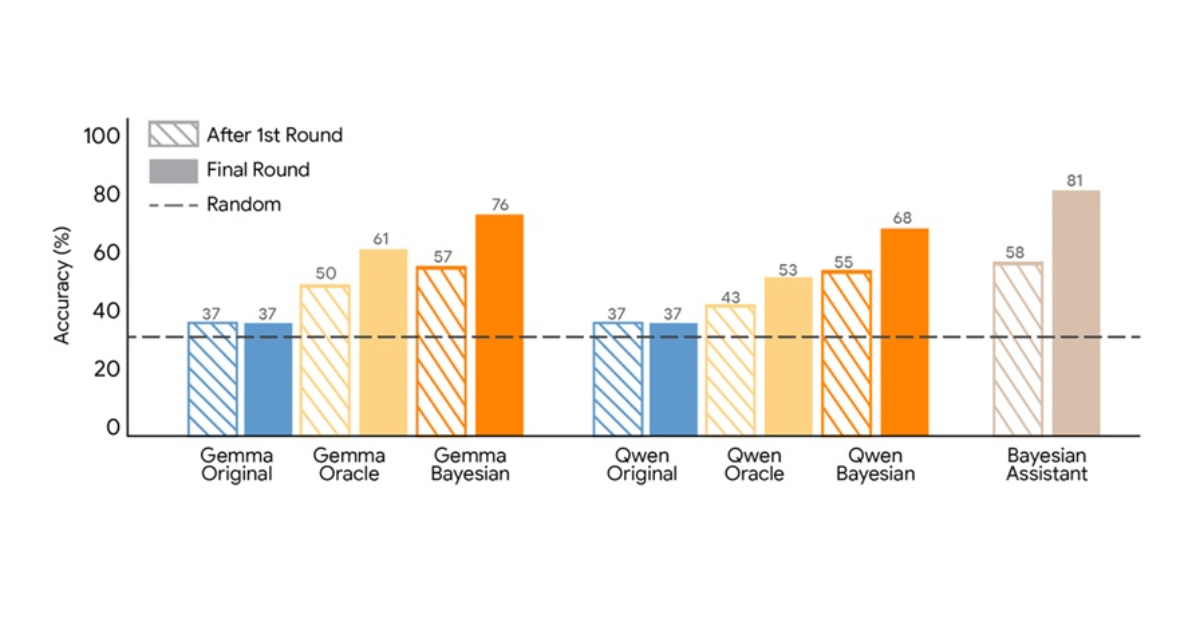
Google Research has proposed a training method that teaches large language models to approximate Bayesian reasoning by learning from the predictions of an optimal Bayesian system. The approach focuses on improving how models update beliefs as they receive new information during multi-step interactions.
By Daniel DominguezCloudflare Introduces Support for ASPA, an Emerging Internet Routing Security Standard

Cloudflare recently announced support for ASPA (Autonomous System Provider Authorization). The new cryptographic standard helps make Internet routing safer by verifying the path data takes across networks to reach its destination and preventing traffic from traversing unreliable or untrusted networks.
By Renato LosioSwitch to the Mobile Optimized View
© 2026 Created by Michael Levin.
Powered by

