Codetown
Codetown ::: a software developer's community
Shubham Aggarwal's Groups (3)
Cloud Computing Village
16 members Latest Activity: Aug 21, 2015 Cloud Computing is "the next big thing". The recent JavaOne featured Cloud Computing more than any other technology. Come join us and explore /…
Web2.0 Town
19 members Latest Activity: Dec 22, 2013 Web2.0 is the dynamic web. It's social networking, tag clouds, metadata, geodata, and more. We love Web2.0. There's more out there than you can…
Coding Dojo
6 members Latest Activity: Jun 26, 2019 A Coding Dojo is a meeting where a bunch of coders get together to work on a programming challenge. They are there to have fun and to engage in…
Happy 10th year, JCertif!
Notes
Welcome to Codetown!
 Codetown is a social network. It's got blogs, forums, groups, personal pages and more! You might think of Codetown as a funky camper van with lots of compartments for your stuff and a great multimedia system, too! Best of all, Codetown has room for all of your friends.
Created by Michael Levin Dec 18, 2008 at 6:56pm. Last updated by Michael Levin May 4, 2018.
Looking for Jobs or Staff?
Check out the Codetown Jobs group.
InfoQ Reading List
Article: The Evolution of Agentic Harnesses: From Chains to Graph to Code
Agentic LLM systems have moved from linear prompt chains to graph-based workflows and, more recently, code-executing harnesses. Chains are simple but fragile, graphs add branching, retries, and validation, and code harnesses verify outputs through execution. The article advises validating model outputs and choosing the least complex design that meets reliability, speed, and cost needs.
By Karthik RamgopalCloudflare’s Auto Router Rates Each Request for Stakes, from the Most Recent Turns

Cloudflare has released Auto Router in public beta through AI Gateway, picking a model per request from a classifier that scores complexity, ambiguity, stakes and context dependence. Cloudflare’s own benchmark puts it ten points below Claude Opus 5.5 on success rate at a third of the cost, and practitioners have questioned how stakes survive a long agent session.
By Steef-Jan WiggersMCP C# SDK 2.0 Makes HTTP Stateless by Default and Adds Multi Round-Trip Requests

Microsoft announced version 2.0 of the official MCP C# SDK, which implements the 2026-07-28 revision of the Model Context Protocol with stateless HTTP servers by default, standardised routing headers and Multi Round-Trip Requests. Releases 2.1 to 2.3 have since added hybrid session serving, a subscriptions/listen handler and a series of discovery, OAuth and shutdown fixes.
By Edin KapićPHP Patches Two Critical RCE Flaws That Were Already Under Attack

PHP released 8.5.12, 8.4.27, 8.3.36, and 8.2.35 to fix two critical vulnerabilities allowing unauthenticated remote code execution. Amazon recorded an exploitation attempt four days before the patches shipped, and operators spent the day working out whether they ran PHP, where to get the package, and how to tell it had landed.
By Steef-Jan WiggersPyTorch Conference 2026: Google and Meta Open-Source TorchTPU for Native PyTorch on TPUs
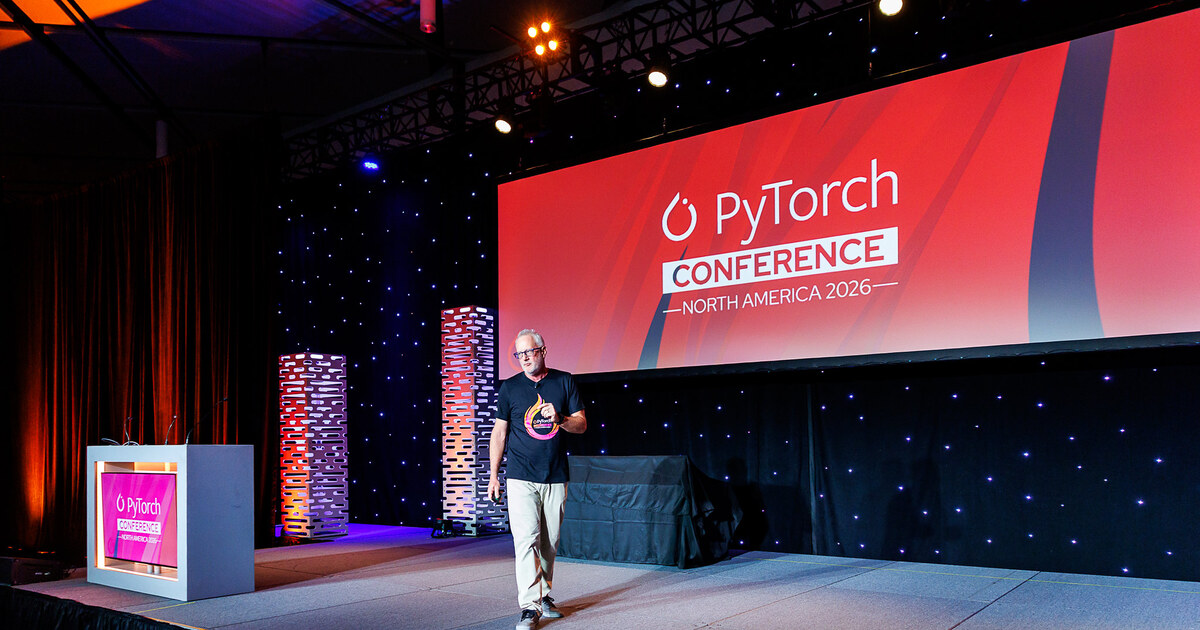
Google and Meta open-sourced TorchTPU, a native PyTorch backend for Google's TPUs, at PyTorch Conference North America 2026, and Meta said it plans to move larger LLM workloads onto TPUs with it. AWS released TorchNeuron for Trainium the same week, while developers questioned TPU availability and where vendor lock-in now sits.
By Andrew Hoblitzell
© 2026 Created by Michael Levin.
Powered by

