Codetown
Codetown ::: a software developer's community
Kiosk Mall Push - An idea from Bradlee Sargent
Brad wrote: I noticed that in the Florida Mall, there are a lot of kiosks and the sellers there want to sell their stuff. I also see a ton of people walking by with cell phones. Would there be any way to help the owners of the kiosks to engage the cell phones passing by pushing an advertisement to those cell phone so that the owner of the cell phone would be aware of the kiosk and we could sell this product to the owner of the kiosks?
Brad, this is best as a discussion, so I added it. Let's talk first about the idea itself (then about the "art of the start")
It's a fact that people don't like unsolicited email, etc...but your idea could enable people to turn on and off push messages. That would let them receive push messages when they wanted, like when they are in a mall, and not at other times that may be irrelevant.
Let's discuss!
Views: 167
Replies to This Discussion
-
Permalink Reply by Bradlee Sargent on
-
What if someone were to talk to all of the mall businesses and see if they might try to make a contest using an app.
One of the restaurants could offer a free entree to the winner for example.
The participant would have to go to each kiosk to find the missing something or other.
The winner would then get the prize.
That way the participants would have to visit all of the kiosks in order to win.
A url in the form of a QR-Code might be used to make the whole thing work.
It could be printed by each kiosk.
-
-
Permalink Reply by Michael Levin on
-
Brad, If you like, try taking your favorite idea and use an outline of a business plan as a feasibility study to see how viable it is and what it would take for that one idea to go. Post it here in it's simplest form...an outline with the least info as possible covering the basic business plan req'ts.
Bradlee Sargent said:
What if someone were to talk to all of the mall businesses and see if they might try to make a contest using an app.
One of the restaurants could offer a free entree to the winner for example.
The participant would have to go to each kiosk to find the missing something or other.
The winner would then get the prize.
That way the participants would have to visit all of the kiosks in order to win.
A url in the form of a QR-Code might be used to make the whole thing work.
It could be printed by each kiosk.
-
Happy 10th year, JCertif!
Notes
Welcome to Codetown!
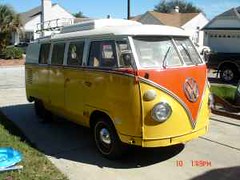 Codetown is a social network. It's got blogs, forums, groups, personal pages and more! You might think of Codetown as a funky camper van with lots of compartments for your stuff and a great multimedia system, too! Best of all, Codetown has room for all of your friends.
Created by Michael Levin Dec 18, 2008 at 6:56pm. Last updated by Michael Levin May 4, 2018.
Looking for Jobs or Staff?
Check out the Codetown Jobs group.
InfoQ Reading List
Presentation: Multi-Agent Patterns from Spotify’s AI Powered Advertising Platform

Pratik Rasam discusses how Spotify Ads Manager runs production-grade multi-agent systems at scale using Google ADK Java. He shares key architectural patterns, domain ownership models, deterministic guardrails, and tracing-based evaluation strategies, detailing hard-learned lessons on drawing agent boundaries, optimizing tool schemas, and managing costs while avoiding monolithic agent pitfalls.
By Pratik RasamTechnological Sovereignty Requires Choice, Skills, and Support, Panelists Say During OSS EU

European organisations can enhance their technological sovereignty by developing credible alternatives and acquiring necessary skills, rather than completely avoiding global providers. A panel discussion at the OSS EU highlighted the importance of understanding dependencies in cloud and hardware, and emphasized the need for practical choices in software for effective operational sovereignty.
By Olimpiu PopCloudflare Open Sources Decision Models for AI Agents

During its recent “Birthday Week”, Cloudflare announced Clef, a set of open-weight AI models designed to choose between predefined options rather than generate text. Cloudflare released 9B- and 27B-parameter models, along with a platform for adapting them to specific decision-making tasks.
By Renato LosioSurvey Finds AI-Generated Code Increases Debugging and Failure Rates and Creates a Comprehension Gap

A survey conducted by independent research firm Coleman Parkes on behalf of Undo, a company focused on scaling AI-powered root-cause analysis, found that while AI coding agents have accelerated code generation, they have shifted the primary bottleneck to debugging, code comprehension, and maintenance.
By Sergio De SimoneThe Async Multiprocessing Has Sound Foundations in Linux, But Further Testing Is Needed
At Embedded Linux Conference Europe 2026, Wolfram Sang discussed the Linux building blocks for asymmetric multiprocessing (AMP). He highlighted the solid foundation but noted challenges like limited contributor coverage and fragmented testing. Sang's work on a hardware-spinlock driver revealed maintenance complexities and the need for more reviewers and testers to support evolving AMP systems.
By Olimpiu Pop
© 2026 Created by Michael Levin.
Powered by

