Codetown
Codetown ::: a software developer's community
Africa Android Challenge - Submissions are in!
Check out these cool submissions to the Africa Android Challenge:
http://www.androidchallenge.org/index.php?option=com_content&vi...
The Africa Android Challenge is an opportunity to discover the best developers and Android experts on the African continent. The contestants have an opportunity to create innovative applications and produce local "African" content. In addition, they can submit lectures related to Android on the Android Platform via the Google University Consortium Program.
This whole effort is community driven and is a way to assure the long-term success of African developers invested in the Android application environment. We also expect that such initiative will lead to the discovery of unexpected, rich, and valuable local content and applications.
Thanks to Lamine Ba for the heads up. Here's Lamine's Codetown profile: http://www.codetown.us/profile/LamineBa
Views: 78
Happy 10th year, JCertif!
Notes
Welcome to Codetown!
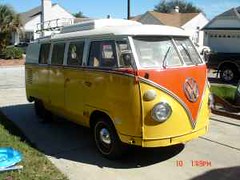 Codetown is a social network. It's got blogs, forums, groups, personal pages and more! You might think of Codetown as a funky camper van with lots of compartments for your stuff and a great multimedia system, too! Best of all, Codetown has room for all of your friends.
Created by Michael Levin Dec 18, 2008 at 6:56pm. Last updated by Michael Levin May 4, 2018.
Looking for Jobs or Staff?
Check out the Codetown Jobs group.
InfoQ Reading List
Presentation: From Retrieval to Reasoning: Building Production-Ready Agentic AI Systems with Knowledge Graphs

Cassie Shum discusses why knowledge graphs serve as a critical foundation for agentic systems. Moving beyond basic RAG, she explains 4 practical architectural patterns: context bundling, decision provenance, code as truth, and agent visibility. She demonstrates an engineering harness built on a knowledge graph to streamline feedback loops, optimize token usage, and maintain system reliability.
By Cassie ShumLambda SnapStart Comes to Container Images, Ending a Packaging Tradeoff

AWS has extended Lambda SnapStart to container image functions, which hold up to 10 GB against 250 MB for zip archives. Teams previously chose between dependency headroom and sub-second startup. A Reddit thread from a month earlier shows what that cost: stripping whitespace and docstrings from installed packages to stay under the limit.
By Steef-Jan WiggersOne Decade of Rustls: Evolution, Benchmarks, and Future Roadmap

Rustls, a Rust TLS library, marks its decade-long progression from a grassroots project to a funded open-source initiative. Key contributions from organisations boosted development, resulting in features like post-quantum cryptography and robust performance. The upcoming 0.24 release aims to enhance architecture and flexibility, including new input buffering and improved session handling
By Olimpiu PopNVIDIA Personal AI Router Distributes AI Tasks across Local Compute

NVIDIA Personal AI Router (PAIR), now available in beta, lets you combine the inference capacity of multiple computers on your local network and automatically distribute AI requests among them. It is primarily designed for local multi-agent AI workloads, where multiple independent model calls can otherwise overwhelm one GPU.
By Sergio De SimoneNetflix Reworks Conductor for 420 Million Monthly Workflow Executions and 10X Larger Workflows

Netflix has reworked its Conductor workflow orchestration engine to handle larger workloads, increasing supported workflow size from about 2,500 to 30,000 tasks and reducing p99 workflow evaluation latency by about 40%. Conductor 4.0 separates workflow metadata from task data, moves evaluation to asynchronous processing, and introduces dynamic worker allocation and concurrency controls.
By Leela Kumili
© 2026 Created by Michael Levin.
Powered by

