Codetown
Codetown ::: a software developer's community
All Discussions Tagged 'codetown' (2)
| Discussions | Replies | Latest Activity |
|---|---|---|
Uber Case Study - Using Node.jsI was looking around for case studies about companies using Node and ran across this one. Uber's architecture involves Node. This discussio… Started by Michael Levin |
0 | Jun 22, 2017 |
Welcome to JavaScript Village!You're going to love it here! Like minded people and a mind boggling assortment of architectures to choose from and learn to master. Someon… Started by Michael Levin |
0 | Feb 18, 2016 |
Happy 10th year, JCertif!
Notes
Welcome to Codetown!
 Codetown is a social network. It's got blogs, forums, groups, personal pages and more! You might think of Codetown as a funky camper van with lots of compartments for your stuff and a great multimedia system, too! Best of all, Codetown has room for all of your friends.
Created by Michael Levin Dec 18, 2008 at 6:56pm. Last updated by Michael Levin May 4, 2018.
Looking for Jobs or Staff?
Check out the Codetown Jobs group.
InfoQ Reading List
Cloudflare Processes 10M+ Daily Insights with New Security Overview Dashboard
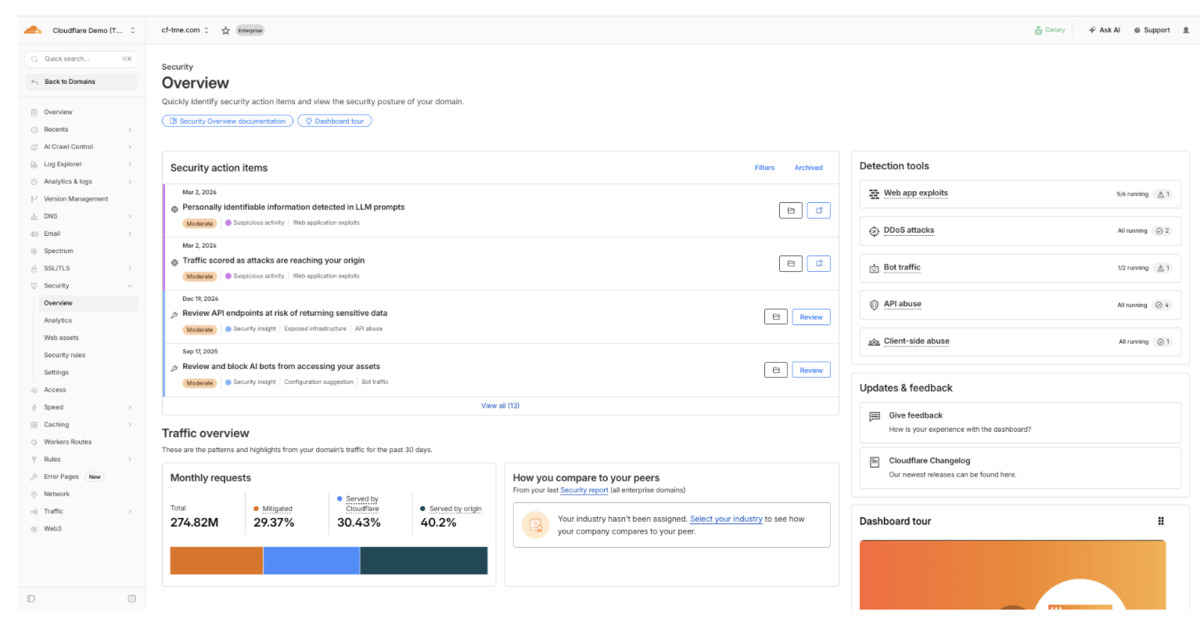
Cloudflare has launched a Security Overview dashboard that consolidates security signals into prioritized action items. It surfaces millions of daily insights, helping teams identify and remediate critical risks faster. Built on distributed checkers and real-time event processing, it integrates analytics workflows to reduce investigation overhead and improve response efficiency.
By Leela KumiliPresentation: The Human Scalability Problem: Why Your Teams Don’t Scale Like Your Code

Charlotte de Jong Schouwenburg discusses the "human bottlenecks" of hyper-growth. While systems scale, human cooperation often breaks down due to communication overload and lost context. She shares proven tools for behavioral scalability - including communication architecture and "engineering trust" - to help leaders maintain high-performing, autonomous teams without sacrificing speed or culture.
By Charlotte de Jong SchouwenburgArticle: From Batch to Micro-Batch Streaming: Lessons Learned the Hard Way in a Delta Index Pipeline

This article describes how a production delta-index pipeline migrated from scheduled batch to micro-batch Spark Structured Streaming. It covers why record-level streaming was rejected, how partition-based watermarks replaced fragile S3 completion markers, overlap-window correctness, and restart-as-design strategies for better predictability in object-store–based ingestion systems.
By Parveen SainiPodcast: Roq: Leveraging Quarkus to Build Static Sites at the Speed of Go

Andy Damevin, a developer who worked on Quarkus for almost a decade, talks about Roq. A project that started as an experiment to try to see if it’s possible to build a static web site generator on top of quarkus. He touches on the rationale for choosing Java and Quarkus, how to migrate to Roq, and the platform's future.
By Andy DamevinDoorDash Used Copilot to Convert Its XCTest-Based iOS Test Suite to Swift Testing

Using Copilot along with strong reliability safeguards, DoorDash migrated their iOS XCTest-based test suite to Swift Testing, thus modernizing a large test suite quickly, safely, and with measurable performance gains, says DoorDash engineer Matheus Gois.
By Sergio De Simone
© 2026 Created by Michael Levin.
Powered by

