Codetown
Codetown ::: a software developer's community
One idea to create jobs
We're all sick of talking to tech support on the otherside of the earth. I think Americans can do these jobs just as well as anybody else, but we've priced ourselves out of this market - companies save money because other countries don't have to pay our minimum wage. To make matters worse, a lot of unemployed people would jump at the chance to work inside in a comfortable chair for less than minimum wage, especially if their unemployment benefits have been exhausted. I think there is a way to get around the minimum wage law- people become not employees but partners in the company. So my bright idea? Find a warehouse, buy some equipment, and some people disparate for work. Spend some time upgrading the basic english and enunciation skills of these employees, make them partners, and then convince some companies to 'buy American' instead of oursourcing their phone tech support.
I know the first objection to this plan - it could exploit people desparate for work. Every attempt would be made to ensure the 'dividends' workers get in leu or actual pay is competitive, and management gets paid in a similar manner.
Views: 40
Happy 10th year, JCertif!
Notes
Welcome to Codetown!
 Codetown is a social network. It's got blogs, forums, groups, personal pages and more! You might think of Codetown as a funky camper van with lots of compartments for your stuff and a great multimedia system, too! Best of all, Codetown has room for all of your friends.
Created by Michael Levin Dec 18, 2008 at 6:56pm. Last updated by Michael Levin May 4, 2018.
Looking for Jobs or Staff?
Check out the Codetown Jobs group.
InfoQ Reading List
AI Agent Identity and Permission Challenges: How Uber and Auth0 Are Rethinking Access Control

Uber recently described an internal architecture for propagating identity across multi-agent AI workflows. The design aims to perserve user context, agent provenance, and scoped access as agents delegate work and call internal tools. The case study aligns with Auth0’s view that AI agents need permissions based on delegated authority, scoped credentials, and explicit human approval boundaries.
By Eran StillerPresentation: From Hype to Strong Foundations: What the Rise, Fall and Resurgence of Agents Can Teach Us About Outlasting the Cycle

Aditya Kumarakrishnan explains how to move past the "amnesia phase" of AI. He shares a blueprint for engineering leaders to build modular agent frameworks using CoALA, leverage decades of process science for scalable workflows, and "terraform" legacy environments into robust, event-sourced artifacts capable of handling unpredictable, cross-functional agent demands.
By Aditya KumarakrishnanGitHub Copilot Desktop App Targets Parallel Agentic Workflows
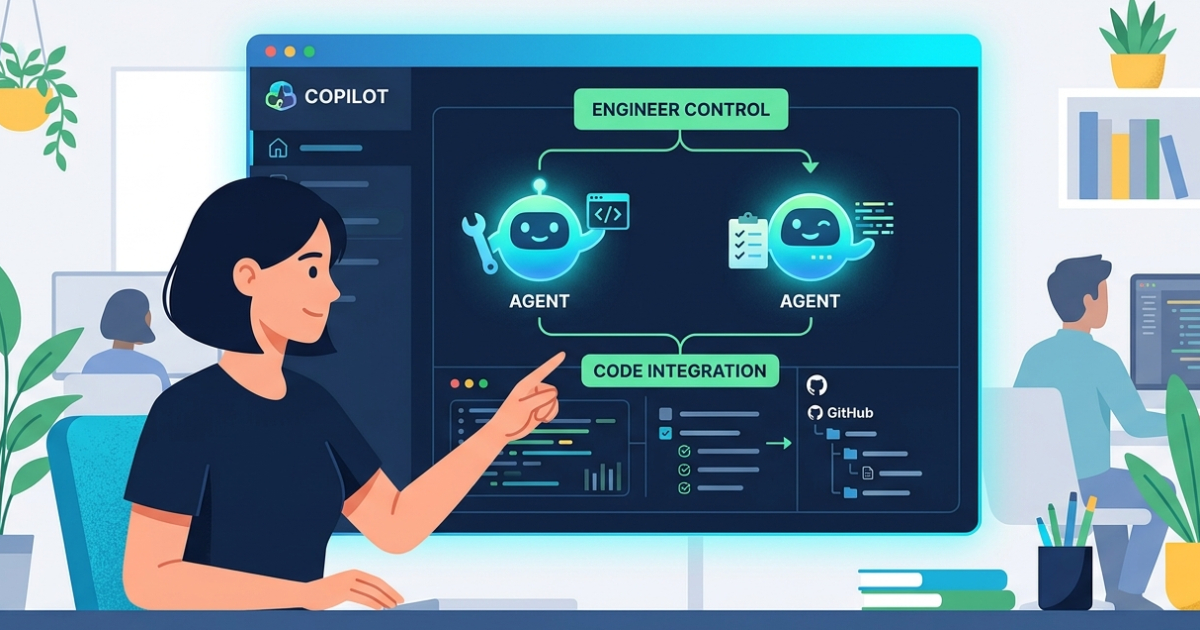
GitHub has introduced the GitHub Copilot app, a desktop control centre for agent-native development that aims to keep engineers in charge while AI agents handle more coding work. Mario Rodriguez writes on the GitHub blog that the recent wave of coding agents has brought faster delivery but also "disjointed workflows, more context switching, and too much time spent reviewing agent-generated code".
By Matt SaundersPresentation: Automating the Web With MCP: Infra That Doesn’t Break

Paul Klein discusses the distributed systems challenges of scaling cloud-hosted browser infra for AI agents. He explains how to manage bursty, stateful multi-tenancy and secure Chromium environments against remote code execution using Firecracker. He also shares how to leverage the Model Context Protocol (MCP) to turn complex websites into accessible agentic tools.
By Paul KleinCoinbase Postmortem Reveals How a Localized AWS Failure Triggered a Multi-Hour Trading Outage

Coinbase has published a detailed postmortem of its May 7, 2026, outage, revealing how a localized cooling failure inside an AWS data center escalated into a multi-hour disruption that halted nearly all trading activity across the cryptocurrency exchange
By Craig Risi
© 2026 Created by Michael Levin.
Powered by

