Codetown
Codetown ::: a software developer's community
How to Get Business using Social Media
You can use the social API's to get new customers. One way is with Twitter's API. You can filter tweets for keywords and then friend the tweeters. That's what's happening when you tweet something and then you get followed by someone of that special interest.
I tweeted something yesterday about birds. Today, I found I was followed by @artmagenta, an artist who draws birds. You can bet he's got a filter set up to find tweeters who are interested in birds.
OSCON 2012 featured a talk on extracting data from Twitter using Python. The speaker said he'd post the dozen or so Python scripts on the OSCON site soon after the conference. Those scripts would be a healthy jump start to anyone who's interested in finding new customers on Twitter, or generalize them to do all sorts of stuff.
If you look him up, please post a link to what you find here as a comment!
Views: 67
Happy 10th year, JCertif!
Notes
Welcome to Codetown!
 Codetown is a social network. It's got blogs, forums, groups, personal pages and more! You might think of Codetown as a funky camper van with lots of compartments for your stuff and a great multimedia system, too! Best of all, Codetown has room for all of your friends.
Created by Michael Levin Dec 18, 2008 at 6:56pm. Last updated by Michael Levin May 4, 2018.
Looking for Jobs or Staff?
Check out the Codetown Jobs group.
InfoQ Reading List
From Camera to Cloud: Netflix’s Scalable Media Processing Pipeline
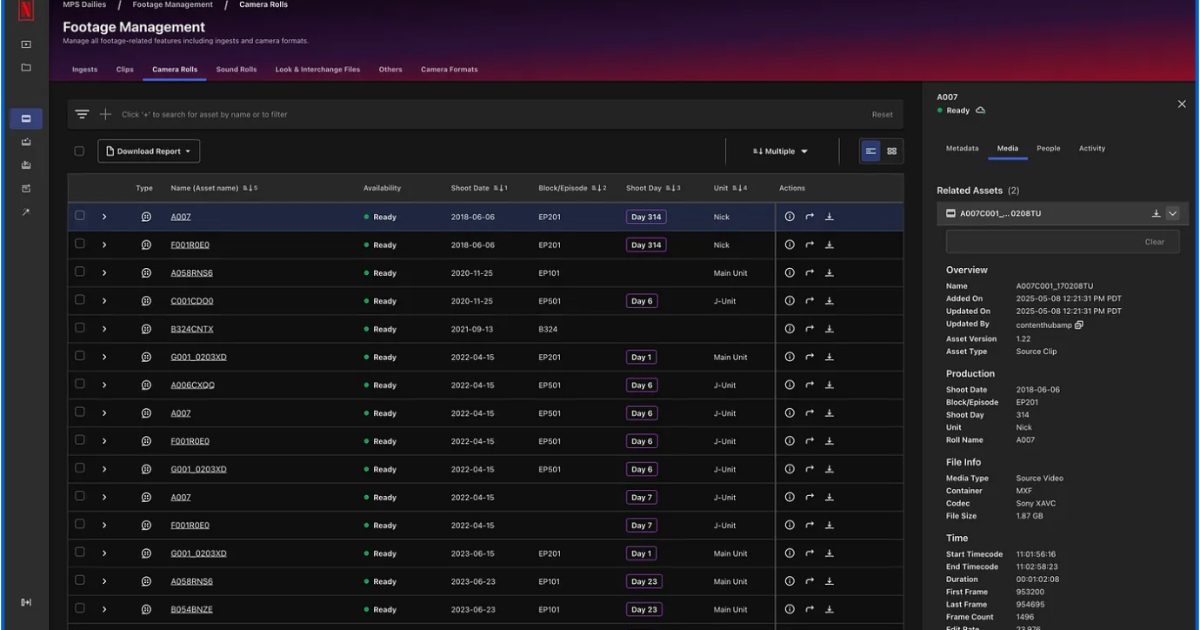
Netflix has detailed a cloud-based system for scaling camera file processing across global film and TV workflows. The pipeline handles ingest, validation, metadata extraction, and media transformation at scale using FilmLight API and distributed compute. It standardizes workflows across editorial, VFX, and color pipelines, improving consistency and reducing manual handling across productions.
By Leela KumiliPresentation: Write-Ahead Intent Log: A Foundation for Efficient CDC at Scale
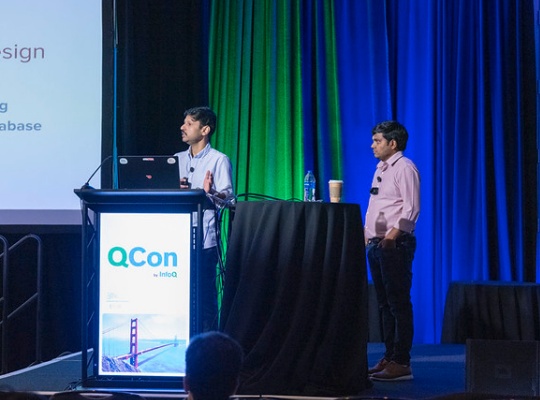
Vinay Chella and Akshat Goel discuss the challenges of running traditional CDC across heterogeneous databases during peak order traffic. They explain how Debezium hit limits under high load and share how they built Write-Ahead Intent Log (WAIL) - a custom architecture that utilizes a dumb producer proxy and a smart consumer pattern to cleanly separate the intent from the state payload.
By Vinay Chella, Akshat GoelHow Lightweight ADRs and Architectural Advice Forums Can Support Architectural Decisions

How we decide is at the core of architecture, and the architecture advice process is a way to decentralize architectural decisions. It needs to be supported by Architecture Decision Records because of the speed at which technology and systems move, and can be complemented by a weekly architecture advice forum.
By Ben LindersKy 2.0 Fetch API Wrapper with Revamped Hooks, Smarter Timeouts, and Built-In Schema Validation

Ky 2.0 is an open-source JavaScript HTTP client built on the Fetch API, featuring significant updates such as consolidated hook handling, enhanced timeout management, and improved URL processing. The release includes response validation through schema validation libraries and addresses migration from earlier versions. It aims to provide a lightweight alternative to axios.
By Daniel CurtisVS Code 1.123 Adds Two-Hour Extension Update Delay to Limit Supply Chain Attacks
VS Code 1.123 adds a two-hour delay before auto-updating extensions to newly published versions, creating a revocation window against supply chain attacks. The delay does not apply to trusted publishers like Microsoft, GitHub, and OpenAI. Similar cooldown mechanisms have now spread across pip, RubyGems, npm, pnpm, Yarn, and Bun.
By Steef-Jan Wiggers
© 2026 Created by Michael Levin.
Powered by

