Codetown
Codetown ::: a software developer's community
Apps for Healthy Kids
On President Obama’s first full day in office, he called for recommendations to make the Federal Government more transparent, participatory, and collaborative. Through the Open Government Initiative, the U.S. Government recently made available a rich variety of Federal datasets via Data.gov with the specified purpose of increasing public access to high value, machine readable datasets
generated by the Federal Government.
 As part of First Lady Michelle Obama's Let's Move initiative, the USDA's Food, Nutrition, and Consumer Services recently launched a
multi-phased challenge called the Innovations for Health. The first part of this, the Apps for Healthy Kids competition, is a call to American entrepreneurs, software developers, and students to use the recently released USDA Nutrition Dataset
to create innovative, fun, and engaging applications and games that
encourage children directly or through their parents to make more
nutritious food choices and to be more physically active.
Subsequent parts of Innovations for Health will include producing motivating public service announcements (PSAs) (Video Challenge) and creating healthful recipes to be used in schools (Recipe Challenge). Details of these will be announced at a later date.
For more on the Apps for Healthy Kids challenge, click here.
Views: 70
Happy 10th year, JCertif!
Notes
Welcome to Codetown!
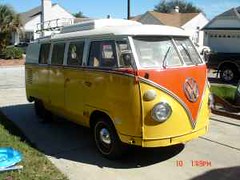 Codetown is a social network. It's got blogs, forums, groups, personal pages and more! You might think of Codetown as a funky camper van with lots of compartments for your stuff and a great multimedia system, too! Best of all, Codetown has room for all of your friends.
Created by Michael Levin Dec 18, 2008 at 6:56pm. Last updated by Michael Levin May 4, 2018.
Looking for Jobs or Staff?
Check out the Codetown Jobs group.
InfoQ Reading List
Cloudflare’s OHTTP Gateway Refuses to Decrypt Requests That Arrive Through Cloudflare

Cloudflare has opened a closed beta of its OHTTP Gateway, a managed endpoint that decrypts Oblivious HTTP requests for an origin. The design choice drawing attention is a refusal: the Gateway will not decrypt requests arriving from Cloudflare Workers or from hosts proxied through Cloudflare, because that would put client identifiers and request contents in the same hands.
By Steef-Jan WiggersSpotify More Than Doubled Monthly Code Changes as AI Accelerated Development

Spotify reports that AI-assisted development more than doubled monthly merged changes, prompting a review of quality and reliability controls across its engineering organization. The company describes changes to testing, observability, rollback capacity, workload prioritization, and automated maintenance as it adapts to higher software change volume.
By Leela KumiliPresentation: You Can't Trust Your AI Bill. And Neither Can I

Erik Peterson discusses why AI spend is eclipsing cloud bills, triggering a major software engineering cost crisis. He explains tokenmaxxing, unit economics, forced developer promotions, and why fully autonomous AI will write, deploy, and govern code by 2028.
By Erik PetersonPodcast: What Does It Really Mean To Program With AI: A Conversation with Joy Ebertz

In this podcast, Michael Stiefel spoke to Joy Ebertz about how the use of artificial intelligence is changing the way architects and developers do their jobs. Focusing on the long term success of the business is one of the most neglected tasks of an architect. This task becomes particularly important as the nature of artificial intelligence changes the landscape of software development.
By Joy EbertzArticle: When Should You Use Liquid Clustering? Benchmarking Lakehouse Layout Strategies
Physical data layout is one of the most consequential decisions in lakehouse engineering. The author compares Liquid Clustering, ZOrdering, and partitioning across four workload types on Delta Lake, uncovering two undocumented failure modes that likely affect production systems today and offering a decision framework for choosing the right layout strategy.
By Kushal Kumar Vishwakarma
© 2026 Created by Michael Levin.
Powered by

