Codetown
Codetown ::: a software developer's community
A First Web Project with Clojure
Views: 264
Replies to This Discussion
-
Permalink Reply by Eric Lavigne on
-
If I offered to finish the site in a week, would my client need further justification :-)
A timeshare reservation site would be fairly trivial from a technology perspective. For the web front-end, I would use Compojure, just as I did with the Wari contest. For database access, I would use clojure.contrib.sql, which has the same capabilities as java.sql but without being so incredibly verbose.
Architecture is important for big projects. This isn't a big project. -
-
Permalink Reply by Michael Levin on
-
So, Eric - can you say a few words about Compojure? Just enough to get us started. And, please point us to a reference. Is clojure.contrib.sql fairly full featured? Can it to stored procs and transactions? What are some of its strengths and limitations? Just a taste...
Eric Lavigne said:If I offered to finish the site in a week, would my client need further justification :-)
A timeshare reservation site would be fairly trivial from a technology perspective. For the web front-end, I would use Compojure, just as I did with the Wari contest. For database access, I would use clojure.contrib.sql, which has the same capabilities as java.sql but without being so incredibly verbose.
Architecture is important for big projects. This isn't a big project. -
-
-
Compojure is a web development library with a focus on simple, RESTful applications. This example should give you a feeling for Compojure:
http://en.wikibooks.org/wiki/Compojure/Getting_Started#A_bit_more_v...
And here are some references:
http://en.wikibooks.org/wiki/Compojure/Core_Libraries
http://en.wikibooks.org/wiki/Compojure/Tutorials_and_Tips
http://github.com/weavejester/compojure
You can find some examples of clojure.contrib.sql here:
http://github.com/richhickey/clojure-contrib/blob/master/src/clojur...
And here's a reference:
http://richhickey.github.com/clojure-contrib/sql-api.html
clojure.contrib.sql has transactions and prepared statements. I don't know about stored procedures, since I have never used them in Clojure or Java. -
Happy 10th year, JCertif!
Notes
Welcome to Codetown!
 Codetown is a social network. It's got blogs, forums, groups, personal pages and more! You might think of Codetown as a funky camper van with lots of compartments for your stuff and a great multimedia system, too! Best of all, Codetown has room for all of your friends.
Created by Michael Levin Dec 18, 2008 at 6:56pm. Last updated by Michael Levin May 4, 2018.
Looking for Jobs or Staff?
Check out the Codetown Jobs group.
InfoQ Reading List
Reverse Engineer Anything Project Brings AI Agents to Binary Analysis

Reverse Engineer Anything (REA) is an open-source project with over 200K GitHub stars that connects coding agents such as Claude Code and Codex to reverse-engineering tools like Ghidra, Hopper, and IDA. The project lets developers inspect compiled binaries, trace function calls, and investigate how applications implement specific features.
By Renato LosioAmazon Acquires DuckLabs and Integrates DuckDB in Amazon Aurora PostgreSQL

Amazon has acquired DuckLabs, the company behind the analytical database DuckDB. Co-founders Hannes Mühleisen and Mark Raasveldt will continue to lead the team under AWS. The acquisition aims to enhance the development and reach of DuckDB while maintaining its open-source status. Amazon Aurora PostgreSQL gets its first DuckDB-powered feature following the acquisition.
By Gianmarco NalinGoogle EnvHarness Enables Self-Evolving Agents to Learn in Dynamics Environments

Google researchers open sourced EnvHarness, a framework that dynamically adapts agent-training environments to an agent's weaknesses without modifying the agent, environment, or evaluation system. According to the researchers, this approach can improve both learning effectiveness and efficiency while helping agents overcome their weaknesses.
By Sergio De SimoneZod Brings In-Process Schema Compilation and a 9x Cut in Memory Footprint

Zod is a TypeScript-focused schema validation library that recently released versions 4.5 and 4.6. Key updates include schema compilation for faster data parsing, significant memory usage reductions, and new validation features. The library supports efficient validation processes and remains popular in the JavaScript ecosystem, achieving millions of downloads weekly.
By Daniel CurtisUber Automates Dependency Analysis Across Its Service Mesh
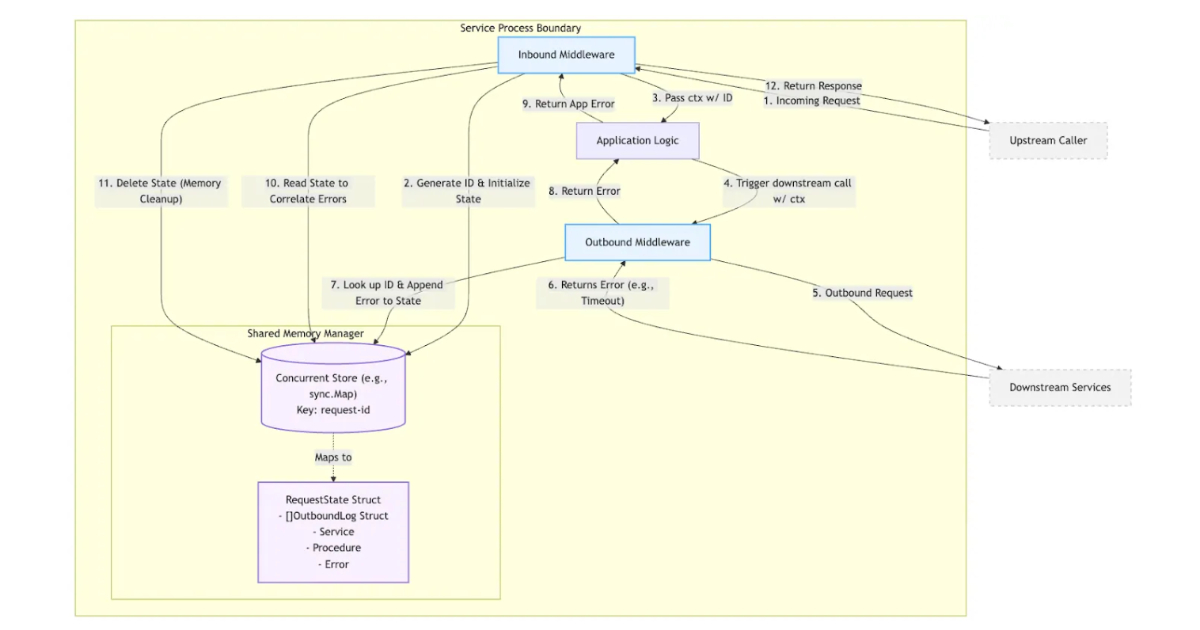
Uber has developed an automated dependency analysis system that uses RPC middleware and production metrics to correlate caller and downstream failures. The approach classifies dependencies as fail-close, fail-open, or unknown and addresses limitations of sampled distributed tracing for rare failures across Uber’s large service mesh.
By Leela Kumili
© 2026 Created by Michael Levin.
Powered by

