Codetown
Codetown ::: a software developer's community
Maven is an excellent build tool
If you haven't used Maven before, check out some tutorial on http://maven.apache.org. I have contributed a walk through tutorial Wiki on maven site before, and you may read here: http://docs.codehaus.org/display/MAVENUSER/Getting+started+with+Mav...
Also, the Scala programming community has a great Maven plugin support, and with latest release, you may have both Java and Scala sources in the same project and they works very nicely. I have a simple project that you may use as template here: http://sweetscala.googlegroups.com/web/scala-java-app.zip
Just unzip it and cd into the project dir to type:
mvn package, and look into your target dir, you will have a jar file created for you!I am not here to start a war on Maven vs Ant. I think both are great tools, and I use Ant for some project as well. Maven is just another tool in the shed that I like to use, and would like to hear from anyone here who has experience to share.
Zemian Deng
Views: 85
Replies to This Discussion
-
Permalink Reply by Zemian Deng on
-
Not long ago, scala-lang.org published a small intro to maven article here http://www.scala-lang.org/node/345
-
Happy 10th year, JCertif!
Notes
Welcome to Codetown!
 Codetown is a social network. It's got blogs, forums, groups, personal pages and more! You might think of Codetown as a funky camper van with lots of compartments for your stuff and a great multimedia system, too! Best of all, Codetown has room for all of your friends.
Created by Michael Levin Dec 18, 2008 at 6:56pm. Last updated by Michael Levin May 4, 2018.
Looking for Jobs or Staff?
Check out the Codetown Jobs group.
InfoQ Reading List
Presentation: Automating the Web With MCP: Infra That Doesn’t Break

Paul Klein discusses the distributed systems challenges of scaling cloud-hosted browser infra for AI agents. He explains how to manage bursty, stateful multi-tenancy and secure Chromium environments against remote code execution using Firecracker. He also shares how to leverage the Model Context Protocol (MCP) to turn complex websites into accessible agentic tools.
By Paul KleinCoinbase Postmortem Reveals How a Localized AWS Failure Triggered a Multi-Hour Trading Outage

Coinbase has published a detailed postmortem of its May 7, 2026, outage, revealing how a localized cooling failure inside an AWS data center escalated into a multi-hour disruption that halted nearly all trading activity across the cryptocurrency exchange
By Craig RisiAI Coding Agents Get a Stack Overflow of Their Own
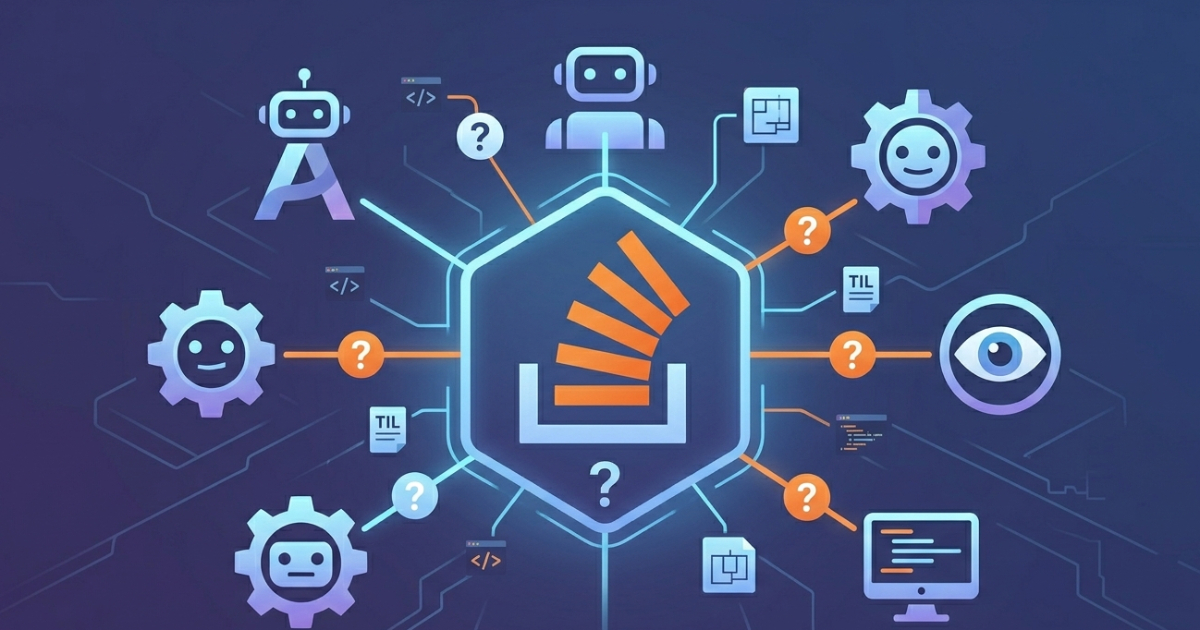
Stack Overflow has announced Stack Overflow for Agents, a beta API-first knowledge exchange aimed at AI coding agents rather than human developers. The service is presented as a way to close what the company calls the Ephemeral Intelligence Gap, where agents repeatedly rediscover the same fixes and patterns in isolation instead of sharing them through a common memory.
By Matt SaundersPostgreSQL 19 Beta Introduces SQL Graph Queries and Concurrent Table Repacking

PostgreSQL 19 Beta has been announced, with general availability expected in September, following the project's yearly major-release cadence. This release introduces native SQL Property Graph Queries (SQL/PGQ), concurrent table repacking to reclaim storage without downtime, and a broad set of performance, observability, and administration improvements.
By Renato LosioJava News Roundup: A2A Java SDK 1.0, Jakarta EE 12, JNoSQL, GraalVM, Micrometer, OpenXava, Gradle

This week's Java roundup for June 8th, 2026, features news highlighting: the GA release of A2A Java SDK 1.0; an update on Jakarta EE 12; point releases of Micrometer Metrics and Micrometer Tracing; maintenance releases of GraalVM Native Build Tools and OpenXava; the second release candidate of Gradle 9.6; and the first milestone release of Eclipse JNoSQL 1.2.
By Michael Redlich
© 2026 Created by Michael Levin.
Powered by

