Codetown
Codetown ::: a software developer's community
Instant Runoff Voting - Contest #2

Ready for the challenge? Code up a solution in your favorite language by midnight Sunday, February 14th, Eastern Standard Time. [ed. looks like we have a deadline error, so hold on to your hats, let us remedy this] Submit it to contest at codetown dot us. Also, post the link or code on this Discussion so the group can see it. We're allowing a little more time for this contest, so the results will be judged by...you! A poll will be posted in Contest Town so you can vote for your favorite app. Maybe we can use IRV to decide?
The winner will receive ... bear with us, as we're waiting to hear back from our sponsor, but this contest is going up now to give you the maximum possible amount of time to code. Good luck!
Views: 1255
Replies to This Discussion
-
Permalink Reply by Michael Newman on
-
-
Permalink Reply by Kevin Neelands on
-
Am I too late? I think Eric and Dan may already be tied to win this contest. Regardless, I'm uploading my entry. One interesting thing- with my dataset, some ballots actually lost all their selections after the second run-off ( I had seven candidates, people selected the top four) so the total votes decreased. At first I thought this was a bug, but this might be one of the complaints people have with the system of instant runoffs. (?)
- Attachments:
-
-
 Main.java, 8 KB
-
-
-
Permalink Reply by Michael Levin on
-
All - thanks for your submissions. We are still searching for a prize sponsor, so until we get one, the door is open at least until 2/14 for submissions. Stay tuned!
-
-
Permalink Reply by Eric Lavigne on
-
The code that I wrote at last night's meeting is posted at http://github.com/ericlavigne/instant-runoff
I have not yet figured out how to post the video online, as it weighs in at 3.5GB.
It's good to see that some others have submitted solutions. Looks like Michael's solution is a bit ahead of mine as it can read votes in from a file. And of course Dan's is way ahead since it has been used for real elections. -
-
-
wait, really? where can I find Dan's entry?
Eric Lavigne said:The code that I wrote at last night's meeting is posted at http://github.com/ericlavigne/instant-runoff
I have not yet figured out how to post the video online, as it weighs in at 3.5GB.
It's good to see that some others have submitted solutions. Looks like Michael's solution is a bit ahead of mine as it can read votes in from a file. And of course Dan's is way ahead since it has been used for real elections. -
-
-
wait, really? where can I find Dan's entry?
He talked about it at both the January and February GatorJUG meetings, but I haven't seen either the code or the running program. I think it was a project for Santa Fe Community College. -
-
Permalink Reply by Dan Lackey on
-
it is a large project that is not portable. This is why i was not trying to enter it. I could take snippets of code or screenshots and post it for people to look at. time permitting at our next meeting i will demo it. There is a staff side that allows us to enter in who is running for what position. It allows creation of parties. It allows the user to enter a date and time range, this range controls when the ballot appears to students on our student website. The students must log in to see it. If they do not meet certain parameters they are not allowed to vote. Must be enrolled in classes currently for instance.
The staff side includes allowing staff to see a sample ballot, and a results page. -
-
-
it is a large project that is not portable. This is why i was not trying to enter it. I could take snippets of code or screenshots and post it for people to look at. time permitting at our next meeting i will demo it.
This sounds interesting, and I would certainly be interested in seeing code, screenshots, and/or a demo. -
-
-
All my data is in tables. I used the power of sql to do part of my counting.
vote_cnt is the order that this candidate was put in by the voters.
ex
SELECT
COUNT(*)
INTO
:SR1037W1.COUNT
FROM
OWNERSQL.SRT_GOVT_VOTES T1
WHERE T1.ACAD_BEG_YR = :ACAD_BEG_YR AND
T1.ID_NUM = :SEARCH_ID1 AND
T1.VOTE_CNT = :SEARCH_CNT1
AND EXISTS(SELECT * FROM OWNERSQL.SRT_GOVT_VOTES T2
WHERE T2.ACAD_BEG_YR = :ACAD_BEG_YR AND
T1.SSN = T2.SSN AND
T2.ID_NUM = :SEARCH_ID2 AND
T2.VOTE_CNT = :SEARCH_CNT2
)
The results of multiple sql queries is combined and then compared.
if one candidate has > half votes then we are done and present the results.
else
determine who is in last place.
then do sql queries to give his votes to the others.
i'll print some code out and show everyone the system next month.
next student goverment voting is:
The next Student Government Election will begin on 03/31/2010 at 08:00 AM. Voting will end 04/01/2010 at 03:00 PM.
you can come by and question the voters/students and see what they think. -
-
-
During your presentation I wasn't fully following your logic as I don't deal with Clojure, Lisp or functional programming much. But now after looking at your code I see pretty much followed your line of attack, when I wrote it I thought I was taking a different approach.
-
-
-
During your presentation I wasn't fully following your logic as I don't deal with Clojure, Lisp or functional programming much. But now after looking at your code I see pretty much followed your line of attack, when I wrote it I thought I was taking a different approach.
Any suggestions for how I could have explained it better? What did you understand later that you didn't understand during the presentation? -
-
-
Update on contest winning entry: Michael, Kevin and Eric, we have not gotten a sponsor for Contest 2 yet, though since we haven't chosen a winner yet, the door is still open. Here's the plan. If we don't get a sponsor by the next GatorJUG meeting, I will choose a prize for the winning entry. I'll continue to search for a sponsor. And, stay tuned for Contest #3! Since all the entries are from GatorJUG members, we'll discuss the conclusion of this contest at the next GatorJUG meeting in March. Sound fair? Let me ask of you that you post the features each of your entries implements here as a comment.
-
Happy 10th year, JCertif!
Notes
Welcome to Codetown!
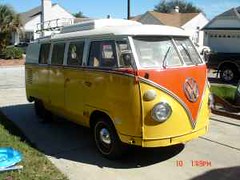 Codetown is a social network. It's got blogs, forums, groups, personal pages and more! You might think of Codetown as a funky camper van with lots of compartments for your stuff and a great multimedia system, too! Best of all, Codetown has room for all of your friends.
Created by Michael Levin Dec 18, 2008 at 6:56pm. Last updated by Michael Levin May 4, 2018.
Looking for Jobs or Staff?
Check out the Codetown Jobs group.
InfoQ Reading List
Pinterest Uses Event Time Watermarks to Finalize Petabyte Scale Data Partitions
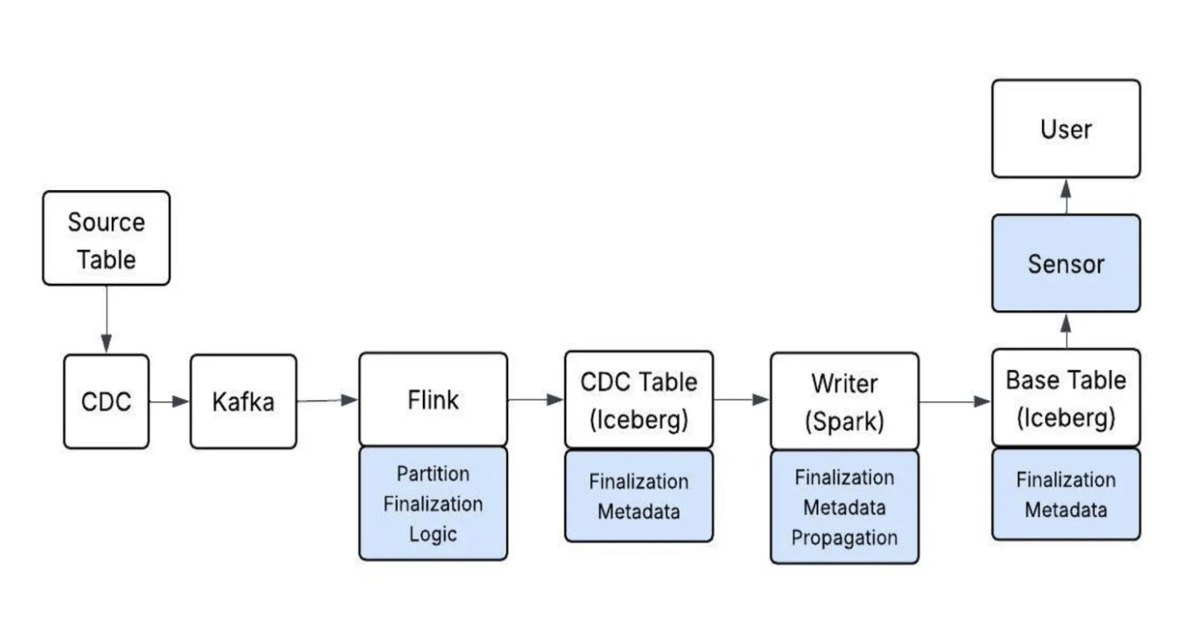
Pinterest has introduced event time-based partition finalization for its database ingestion framework. The mechanism uses Apache Flink to track event time and Apache Iceberg metadata to publish a non-regressing watermark, helping downstream jobs determine when continuously ingested CDC data is sufficiently complete for processing.
By Leela KumiliJEP 543 Finalizes Structured Concurrency in JDK 28, Ending Seven Preview Rounds

JDK 28 finalizes structured concurrency through JEP 543, with no API changes from JDK 27. Teams on JDK 27 only need to drop --enable-preview and recompile. Code written for JDK 25 or 26 must adapt to the R_X exception type parameter, ExecutionException wrapping, and the abstract timeout() joiner callback.
By A N M Bazlur RahmanPodcast: The Future of Web Apps: Will AI Agents Generate UIs on the Fly?

Rachel Lee Nabors, former React core team member, dives into the architecture and philosophy behind local-first applications, exploring how small language models (SLMs) running directly on-device can deliver privacy-focused, low-latency, and cost-effective alternatives to cloud-hosted LLM wrappers.
By Rachel Lee NaborsArticle: From Microservices to Agents: The Next Evolution of Distributed Systems

The article examines the transition from microservices to agentic AI architecture in distributed systems. Microservices allow for functional decomposition, while agentic systems focus on decision decomposition. This shift introduces new complexities in observability, reliability, and system design, highlighting the need for updated architectural patterns and practices.
By Mallika RaoEmbeddingGemma 2 Expands Beyond Text to Support Code, Images, Video, and Audio
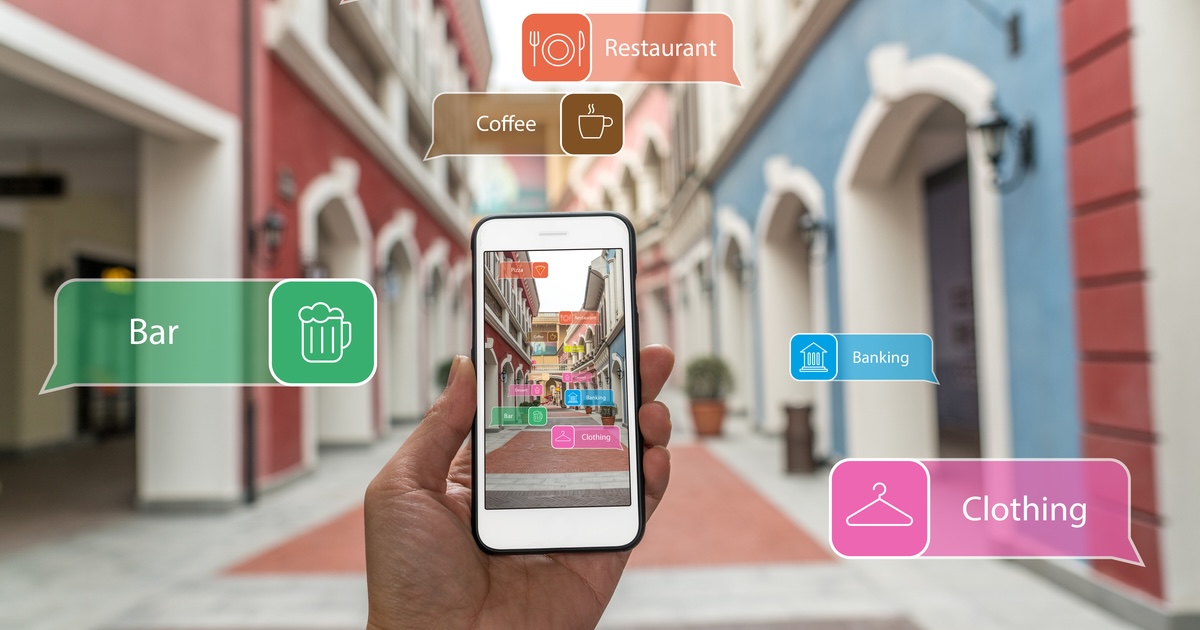
Based on Gemma 4 and released under the Apache 2.0 license, Google's EmbeddingGemma 2 is a compact, open-weight, multimodal embedding model designed to make semantic search and retrieval-augmented generation (RAG) more efficient while optimizing performance for on-device deployment.
By Sergio De Simone
© 2026 Created by Michael Levin.
Powered by

