Codetown
Codetown ::: a software developer's community
OSCON
Event Details
Time: May 16, 2016 to May 19, 2016
Location: Austin
City/Town: Austin
Website or Map: http://conferences.oreilly.co…
Event Type: conference
Organized By: Oreilly Media
Latest Activity: Dec 8, 2015
Event Description
Once considered a radical upstart, open source has moved from disruption to default. Its methods and culture commoditized the technologies that drove the Internet revolution and transformed the practice of software development. Collaborative and transparent, open source has become modus operandi, powering the next wave of innovation in cloud, data, and mobile technologies.
OSCON is where all of the pieces come together: developers, innovators, businesspeople, and investors. In the early days, this trailblazing O'Reilly event was focused on changing mainstream business thinking and practices; today OSCON is about real-world practices and how to successfully implement open source in your workflow or projects. While the open source community has always been viewed as building the future—that future is here, and it's everywhere you look. Since 1999, OSCON has been the best place on the planet to experience the open source ecosystem. At OSCON, you'll find everything open source: languages, communities, best practices, products and services. Rather than focus on a single language or aspect, such as cloud computing, OSCON allows you to learn about and practice the entire range of open source technologies.
In keeping with its O'Reilly heritage, OSCON is a unique gathering where participants find inspiration, confront new challenges, share their expertise, renew bonds to community, make significant connections, and find ways to give back to the open source movement. The event has also become one of the most important venues to announce groundbreaking open source projects and products.
"For those who have not been to OSCON, it's a great technical conference covering the whole spectrum of open source, including Linux, MySQL, the LAMP stack, Perl, Python, Ruby on Rails, middleware, applications, cloud computing, and more. OSCON always has great keynotes, tutorials, and evening Birds-of-a-Feather sessions. As with many conferences, a lot of the meat takes place in hallway conversations and impromptu sessions." —Zack Urlocker, InfoWorld
Experience OSCON
OSCON 2016 will educate, provoke, and inspire, with:
- Hundreds of sessions covering the full range of open source languages and platforms
- Practical tutorials that go deep into technical skills, new features and applications, and best practices
- Inspirational (and relevant) keynote presentations
- Over 4,000 open source developers, hackers, experts, vendors, and users of all levels—many of whom share your interests
- An Expo Hall packed with an impressive array of open source projects and products
- A vibrant "hallway track" where attendees, speakers, journalists, and vendors debate and discuss important issues
- Fun evening events and receptions, Birds of a Feather sessions, awards ceremonies, late night parties, OSCON activities around town, and plenty of networking opportunities for everyone
Comment Wall
Comment
Happy 10th year, JCertif!
Notes
Welcome to Codetown!
 Codetown is a social network. It's got blogs, forums, groups, personal pages and more! You might think of Codetown as a funky camper van with lots of compartments for your stuff and a great multimedia system, too! Best of all, Codetown has room for all of your friends.
Created by Michael Levin Dec 18, 2008 at 6:56pm. Last updated by Michael Levin May 4, 2018.
Looking for Jobs or Staff?
Check out the Codetown Jobs group.
InfoQ Reading List
OpenAI Releases GPT-6 Astra for Coding and Computer Use

OpenAI has released GPT-6 Astra, a new model focused on coding, computer use, long-running agentic tasks, and cybersecurity, with availability across ChatGPT, Codex, and the OpenAI API.
By Daniel DominguezBeyond Autonomous Teams in Software Product Development

Autonomous teams are an article of faith in modern software development. The shape of our value determines what we can do; it determines our trade-offs between agency and coherence. We all have a purpose, and we all have agency to do something, hence the suggestion is moving from product focus to value center thinking.
By Ben LindersPresentation: Accelerating Performance by Incrementally Integrating Rust Into Existing Codebase

Lily Mara explains how to avoid high-risk software rewrites through incremental FFI refactoring. She shares how engineering teams can replace Python bottlenecks with Rust via PyO3, demonstrating how to achieve dramatic function-level speedups, seamless integration testing, and meaningful infrastructure cost savings without microservice overhead.
By Lily MaraArticle: When Spec-Driven Development Pays Off
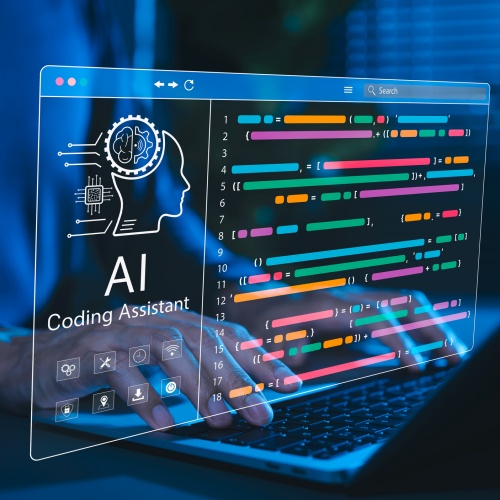
AI coding assistants have become a core part of software development. AI-generated code has shown productivity gains, but it's also contributing to security weaknesses and familiar bug patterns. In this article, author Nitin Garg highlights the bottleneck has moved from code generation to code verification, and how to detect & mitigate it when the AI-generated behavior diverges from the intent.
By Nitin GargIETF Publishes RFC 10008, Adding the QUERY Method for Safe Requests With a Body

In June 2026, the IETF published RFC 10008, introducing the QUERY method to HTTP, the first new standard HTTP verb since 2010. QUERY enables developers to send richer query filters in the request body while maintaining cacheable, safe, and idempotent semantics. This addition addresses long-standing limitations with GET and POST methods, facilitating improved API interactions.
By Daniel Curtis
© 2026 Created by Michael Levin.
Powered by


RSVP for OSCON to add comments!
Join Codetown