Codetown
Codetown ::: a software developer's community
GatorJUG
Event Details
Time: February 11, 2009 from 6pm to 9pm
Location: Santa Fe Community College, room S318
City/Town: Gainesville
Website or Map: http://www.gatorjug.org
Phone: 407-622-WEBS
Event Type: meeting and presentation
Organized By: Michael Levin
Latest Activity: Feb 11, 2009
Event Description
Eric Lavigne will give a presentation on Clojure. Clojure abstract
Clojure is a dynamic programming language that targets the Java Virtual Machine. It is designed to be a general-purpose language, combining the approachability and interactive development of a scripting language with an efficient and robust infrastructure for multithreaded programming. Clojure is a compiled language - it compiles directly to JVM bytecode, yet remains completely dynamic. Every feature supported by Clojure is supported at runtime. Clojure provides easy access to the Java frameworks, with optional type hints and type inference, to ensure that calls to Java can avoid reflection.
Clojure is a dialect of Lisp, and shares with Lisp the code-as-data philosophy and a powerful macro system. Clojure is predominantly a functional programming language, and features a rich set of immutable, persistent data structures. When mutable state is needed, Clojure offers a software transactional memory system and reactive Agent system that ensure clean, correct, multithreaded designs.
This presentation will introduce the Clojure programming language. You will learn how to write simple Clojure programs, how to use Java code from Clojure, and how to use Clojure code from Java. You'll learn how to use agents and software transactional memory to make multithreaded programming easier. You'll also see a few examples of how Clojure can save you from re-implementing the same patterns over and over again.
Bio
Eric Lavigne is a Java programmer for UF's Bureau of Economic and Business Research. He has written several Clojure web development tutorials on his blog at http://ericlavigne.wordpress.com
We will have several interesting things to raffle off, including a ticket to the upcoming Miami Flex event! See the event here in Codetown events for details.
Comment Wall
Comment
Happy 10th year, JCertif!
Notes
Welcome to Codetown!
 Codetown is a social network. It's got blogs, forums, groups, personal pages and more! You might think of Codetown as a funky camper van with lots of compartments for your stuff and a great multimedia system, too! Best of all, Codetown has room for all of your friends.
Created by Michael Levin Dec 18, 2008 at 6:56pm. Last updated by Michael Levin May 4, 2018.
Looking for Jobs or Staff?
Check out the Codetown Jobs group.
InfoQ Reading List
AI Agent Identity and Permission Challenges: How Uber and Auth0 Are Rethinking Access Control

Uber recently described an internal architecture for propagating identity across multi-agent AI workflows. The design aims to perserve user context, agent provenance, and scoped access as agents delegate work and call internal tools. The case study aligns with Auth0’s view that AI agents need permissions based on delegated authority, scoped credentials, and explicit human approval boundaries.
By Eran StillerPresentation: From Hype to Strong Foundations: What the Rise, Fall and Resurgence of Agents Can Teach Us About Outlasting the Cycle

Aditya Kumarakrishnan explains how to move past the "amnesia phase" of AI. He shares a blueprint for engineering leaders to build modular agent frameworks using CoALA, leverage decades of process science for scalable workflows, and "terraform" legacy environments into robust, event-sourced artifacts capable of handling unpredictable, cross-functional agent demands.
By Aditya KumarakrishnanGitHub Copilot Desktop App Targets Parallel Agentic Workflows
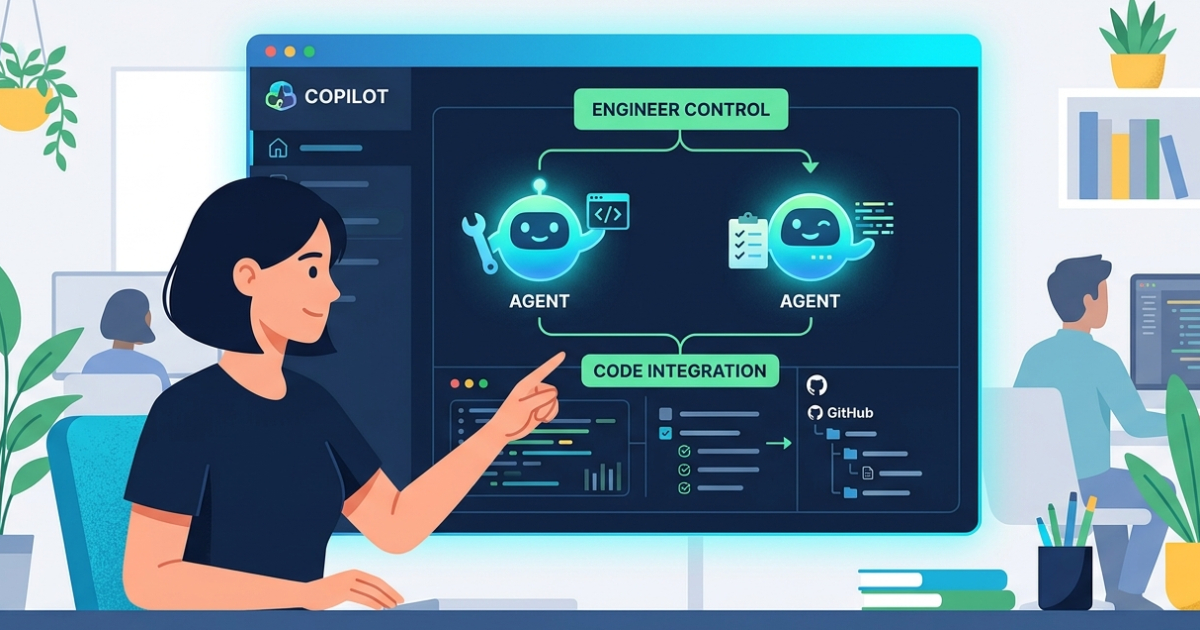
GitHub has introduced the GitHub Copilot app, a desktop control centre for agent-native development that aims to keep engineers in charge while AI agents handle more coding work. Mario Rodriguez writes on the GitHub blog that the recent wave of coding agents has brought faster delivery but also "disjointed workflows, more context switching, and too much time spent reviewing agent-generated code".
By Matt SaundersPresentation: Automating the Web With MCP: Infra That Doesn’t Break

Paul Klein discusses the distributed systems challenges of scaling cloud-hosted browser infra for AI agents. He explains how to manage bursty, stateful multi-tenancy and secure Chromium environments against remote code execution using Firecracker. He also shares how to leverage the Model Context Protocol (MCP) to turn complex websites into accessible agentic tools.
By Paul KleinCoinbase Postmortem Reveals How a Localized AWS Failure Triggered a Multi-Hour Trading Outage

Coinbase has published a detailed postmortem of its May 7, 2026, outage, revealing how a localized cooling failure inside an AWS data center escalated into a multi-hour disruption that halted nearly all trading activity across the cryptocurrency exchange
By Craig Risi
© 2026 Created by Michael Levin.
Powered by


RSVP for GatorJUG to add comments!
Join Codetown