Codetown
Codetown ::: a software developer's community
Best Ruby I.D.E?
Just started with Ruby on Rails ( Rails 3) and I'm trying to figure out the best I.D.E. Here's what I've found so far:
Eclipse / DLTK - while researching this on the web I came across a number of broken links which was a bad sign and when I did get it installed I wasn't able to debug using it. Ater some more web searches I came across a few posts that said basically the Ruby plug-in had run out of steam and was not being pursued.
JetBrains/RubyMine - this installed and works, so far the *looks* like the best bet. The instant database diagramming looks really cool, do other I.D.E.s support this?
Ecliplse/Aptana - just got this installed, Will try debugging with it soon.
Does anyone have recommendations for their favorite I.D.E.? I don't need anythgin too fancy, as long as I can set a breakpoint and view variables and the call stack I'm happy. And it helps if its a free product.'
Views: 651
Replies to This Discussion
-
Permalink Reply by Michael Levin on
-
Kevin, What have you found out so far with Eclipse/Aptana and JetBrains/RubyMine? Have you experimented with any other IDE's?
-
-
Permalink Reply by Kevin Neelands on
-
With Eclipse/Aptana I *think* I got installed, but the online references that showed how to start a debugging session accessed menu options that were not present so I was unable to use it. So far RubyMine looks the best, it also checks the syntax of of .html.erb ( Embedded RuBy ) files and generates a diagram of your DB tables, highlighting any relationships that look hinky. Worth noting RubyMine costs money, while the others I've looked at are open source and frankly I think the developers for the free plugins ran out of steam. The profit motive at work.
-
Happy 10th year, JCertif!
Notes
Welcome to Codetown!
 Codetown is a social network. It's got blogs, forums, groups, personal pages and more! You might think of Codetown as a funky camper van with lots of compartments for your stuff and a great multimedia system, too! Best of all, Codetown has room for all of your friends.
Created by Michael Levin Dec 18, 2008 at 6:56pm. Last updated by Michael Levin May 4, 2018.
Looking for Jobs or Staff?
Check out the Codetown Jobs group.
InfoQ Reading List
Ubuntu Embraces Local AI Instead of Cloud-First OS Integration

Ubuntu has outlined its AI strategy, describing it as a deliberate departure from industry trends towards cloud-centric, AI-first operating systems. Instead, the company says, Ubuntu will focus future releases on local intelligence, modular design, and strict user control.
By Sergio De SimoneGoogle Introduces Cloud Fraud Defense as Successor to reCAPTCHA

At the recent Next ‘26 conference, Google introduced Google Cloud Fraud Defense, the successor to reCAPTCHA. The platform goes beyond basic bot detection to address broader online fraud across login, account creation, and payment flows, helping organizations detect suspicious behavior and block abuse, including fake accounts, automated attacks, and transaction fraud.
By Renato LosioMicrosoft Releases Aspire 13.3 with Major Deployment and Frontend Updates

Microsoft has released Aspire 13.3, introducing a new aspire destroy command for tearing down deployments across Azure, Kubernetes, and Compose. The release adds native Kubernetes deployment in preview, first-class JavaScript publishing for Next.js and Vite, browser log capture, and a default-enabled container tunnel, alongside several breaking changes developers should review.
By Almir VukAnthropic Introduces Routines for Claude Code Automation

Anthropic has introduced a new feature called Routines for Claude Code, allowing developers to configure automated coding workflows that run on schedules, through API calls, or in response to external events.
By Daniel DominguezCloudflare Introduces Workflows V2 with Deterministic Execution and 50K Concurrent Workflows
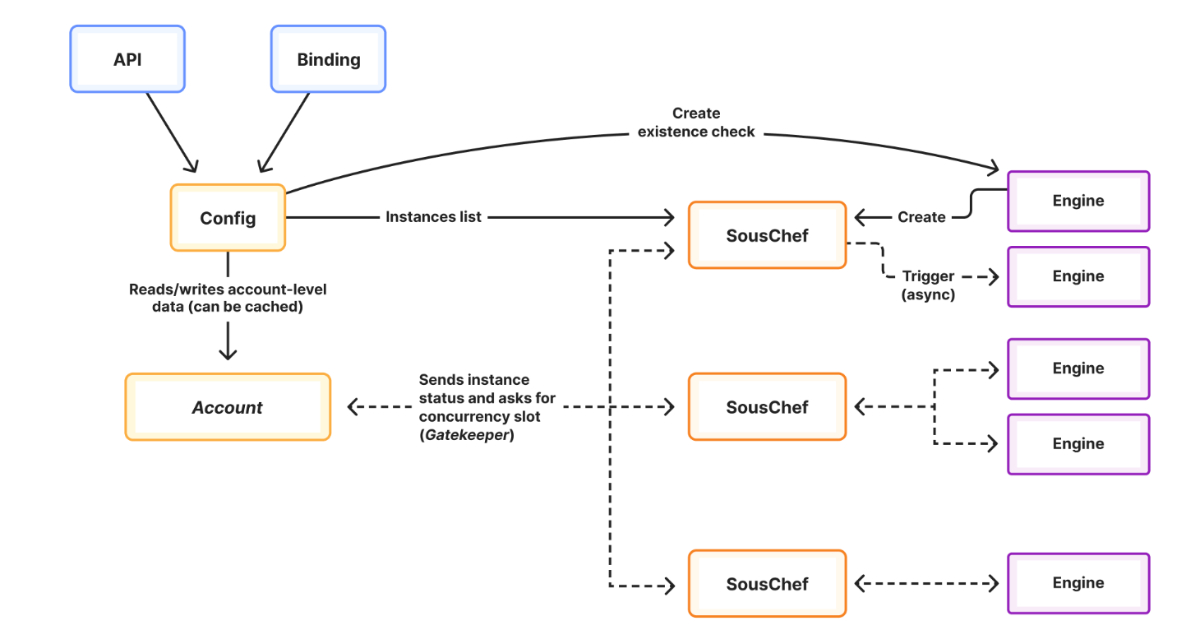
Cloudflare introduces Workflows V2, a redesigned distributed workflow orchestration system with deterministic replayable execution, improved observability, and major scaling upgrades, including 50,000 concurrent instances and 2M queued workflows. It supports AI agents, data pipelines, and background processing with improved reliability across distributed systems.
By Leela Kumili
© 2026 Created by Michael Levin.
Powered by

