Codetown
Codetown ::: a software developer's community
Sending strings between two computers via ethernet
A while ago I asked a question about using RS-232 communication with Java. It seems as though I need to abandon that route because it no longer fits the desired system requirements. Thanks to Nem for his advice on that one.
Now what I need to be able to do is send and receive strings between two computers connected via a network hub. The computers in use would not be connected to the outside world and would only be communicating with each other at this point.
I need to be able to send a string like "auto" terminated with a carriage return when a button on a GUI is pressed by the user. The GUI would then need to get back a string like "ok" or "err" also followed by a carriage return.
I am sure that I am making this much harder than I need to, so if anyone can help out it would appreciated. For some reason I am having a lot of trouble absorbing how to use Java, so any help or explanations need to be in beginner terms.
Thanks.
Views: 2129
Replies to This Discussion
-
Permalink Reply by Paul Stearns on
-
Thanks, I will check those out.
Thanks again for the help.
- ‹ Previous
- 1
- 2
- Next ›
Happy 10th year, JCertif!
Notes
Welcome to Codetown!
 Codetown is a social network. It's got blogs, forums, groups, personal pages and more! You might think of Codetown as a funky camper van with lots of compartments for your stuff and a great multimedia system, too! Best of all, Codetown has room for all of your friends.
Created by Michael Levin Dec 18, 2008 at 6:56pm. Last updated by Michael Levin May 4, 2018.
Looking for Jobs or Staff?
Check out the Codetown Jobs group.
InfoQ Reading List
Anthropic Launches Claude Platform on AWS

Anthropic has announced the general availability of Claude Platform on AWS, a new deployment option that gives AWS customers direct access to Anthropic’s native Claude platform using AWS authentication, billing, and monitoring services.
By Daniel DominguezAirbnb Implements Context-Aware Identity Model to Support Privacy-First Social Features
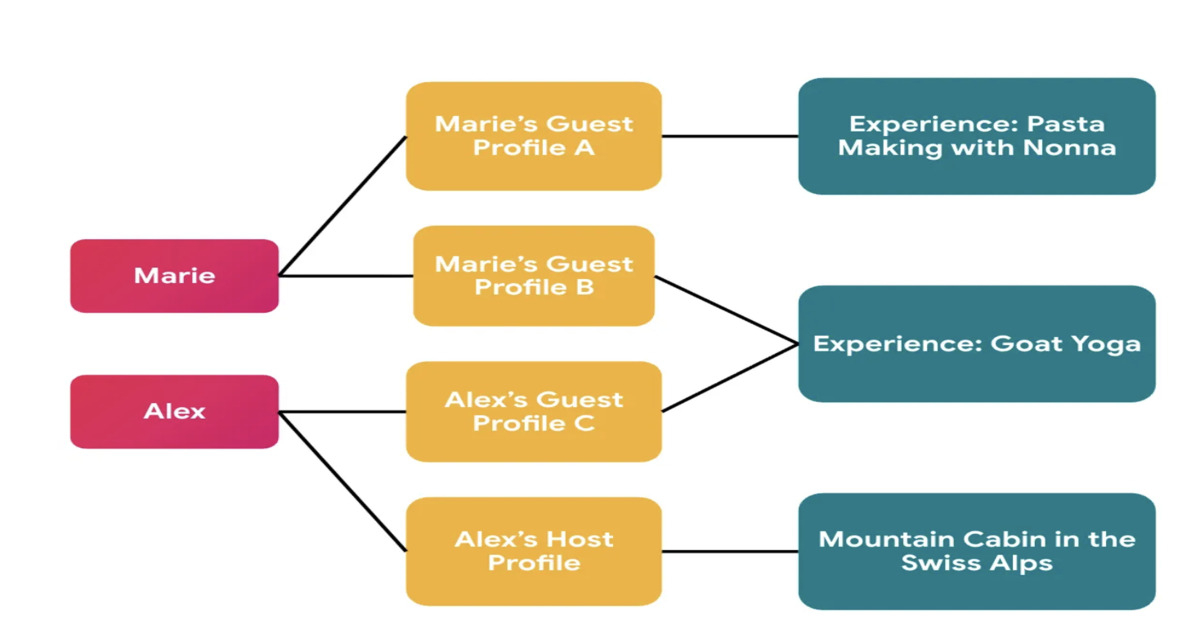
Airbnb has redesigned its identity system to support privacy-first social features in Experiences. The platform introduces context-specific profiles that separate global user identity from externally visible profiles, preventing cross-context linkage. The migration leveraged automated auditing, manual validation, and AI-assisted refactoring to enforce correct identity usage across services.
By Leela KumiliJEP 533 Tightens Exception Handling in Java's Structured Concurrency for JDK 27

JEP 533, Structured Concurrency, has reached integrated status for JDK 27. It refines exception handling and type safety in its API, particularly focusing on exception flow with a new ExecutionException type. Changes include an updated Joiner interface and a new open overload for easier configuration. The steady evolution signals ongoing development as feedback shapes the API.
By A N M Bazlur RahmanPresentation: What I Learned Building Multi-Agent Systems From Scratch

Paulo Arruda discusses Shopify’s evolution in AI adoption, moving from simple chat tools to a sophisticated swarm of specialized agents. He explains the transition from massive "all-in-one" prompts to lean, narrow-focused agent microservices that slash task times from hours to minutes. He also shares a future-looking hypothesis on using filesystem-based adapters to solve context bloat.
By Paulo ArrudaArticle: The Mathematics of Backlogs: Capacity Planning for Queue Recovery

Backlogs in distributed systems are arithmetic problems, not mysteries. This article provides practical formulas for calculating backlog drain time, sizing consumer headroom, and setting auto-scaling triggers. It covers key failure modes — retry amplification, metastable states, and cascading pipeline bottlenecks — plus when to shed load instead of draining.
By Rajesh Kumar Pandey
© 2026 Created by Michael Levin.
Powered by

